Category Archives: Personal Growth

How to become more effective in your own life

My Apology to You

My husband Mark’s feedback to that last post on The Art of Apologizing ~ In 5 Calming Breaths? “Way too long!”

Fortunately for me, I know Mark loves me and his criticisms are usually on the mark (pardon the pun!). That last post  was a whopper.

“It’s tough for folks to get through all that – you need to bite-size ‘em,” he says.

True.

Screen shot 2013-06-10 at 12.31.49 PMSo here’s my apology to you in advance.

If you subscribe, you will notice five more emails, over the next five days, in the form of five tighter “Art of Apologizing” posts. I’m publishing them  “one calming breath at a time.”  I’ve added in a small segment on how each step fosters personal growth – for people on both sides of the incident. I truly believe that each one of us has a choice, in any given moment, about how we perceive, and tell ourselves the story about,  what is going on around us.

My process is not for the faint of heart. It’s a big ask for both parties. But it will, when practiced  over time, build character and eliminate the victim/bully dynamic that can often creep into to relationship dynamics.

You may feel frustrated (“Wish Gemma would think her stuff through more before she lobs it out there); and irritated “(Too much from her already”).  Please know I am genuinely sorry. It would be much better if I pre-planned more and tightened things up from the get-go. Totally avoidable.  Before you unsubscribe in a fit of pique, is there anything I can do to woo back your loyalty?

OK.

I’m applying some heavy editing. The first of the newly scripted five posts will come over soon.

Gemma

The Art of Apologizing ~ in 5 Calming Breaths

Screen shot 2013-06-07 at 2.35.49 PMWhen someone you love does something that hurts you, it’s quite common to find you are caught between two opposing desires:

  • Revenge – make ‘em pay for your hurt
  • Forgive – and forget as quickly as possible to remove the pain.


However, neither revenge nor forgiveness are the best idea on their own, since they can both block genuine reconciliation. This is the place where each of you gets to do some emotional homework .  Screen shot 2013-06-07 at 12.51.58 PM


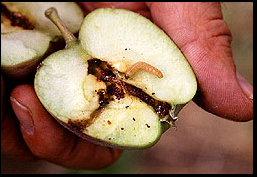
If the hurt partner stays in revenge, it will eat away at their soul, heart and mind and destroy them from within like a worm in an apple.

Screen shot 2013-06-07 at 3.22.45 PM


If the hurt partner is too quick to jump to forgiveness, they run the risk of losing their voice, and becoming  dis-empowered, like it feels when someone offers you a limp-fish handshake.


This is where the Art of the Apology comes in.

A genuine, full heartfelt apology – coupled with the self-awareness this process fosters – can actually serve to bring two people closer.  While the person who has been accused of doing (or being) hurtful can do an awful lot of reparation using the Breaths I suggest below, if the two of you get fully engaged, you can use this episode to create a deep and genuine reconciliation.

I use the metaphor of the Breath (rather than the Step) for two reasons:

  1. When we are stressed it really helps to breathe: Keep breathing!
  2. There are in-breaths and out-breaths.  To stay alive, you need both.  This process works to bring two hurting people closer because it softens those edges between in and out, right and wrong, accused and accuser,  victim and culprit.

This is what makes apologizing an art form. With practice you can cultivate this ability to mastery. And as you do, you’ll be modeling the process for your partner and your children. And they, in turn, can model it for theirs. Lord knows, we need more reconciliation on the planet!

NOTE: Each of the Five Breaths has a role for both the Accuser and the Accused. Try on both roles from some past issue. Walk yourself through how the process might have gone had you tried it.  What do you notice?

Breath 1  ~  STORY

ACCUSER   Just let it out!  Tell your partner the story of why you are so upset  ~  Give as many details as you can to help the accused see things from your point of view.

“I’m never ever going to an office party with you again! You abandon me the moment we get there, you schmooze with everyone and don’t introduce me to half of them. And then, at dinner, you sit next to that new woman and spend the whole night in quiet conversation leaving me across from you between two crashing bores whom I didn’t even know!”

ACCUSED   Listen quietly to the accusation  ~  Face your accuser. Breathe deeply. Give this issue your full attention. Do not, under any circumstances, explain, justify, defend or deny. Zip it and listen. If your mind is busy doing anything other than listening, you’ll miss too much.

Breath 2  ~  FEELINGS

ACCUSED   Acknowledge the other person’s FEELINGS  ~  Put yourself in your accuser’s shoes and imagine how they felt, even if they have not expressed any feelings beyond anger. Until you have done this they have no interest in anything you have to say. Trust me! It will not help them one iota for you to tell them:

  • But I didn’t mean to . .
  • You have no idea the pressures I was under!
  • Hey, you could have  . . .
  • No, I did not do these things!
  • In fact, I did the opposite of this most of the time.

So, do not. Instead, try this ~

“Oh Fiona, you felt awful that night!  You felt abandoned by me when I did not introduce you to those folks we were talking to. And then at dinner, it sounds as though you felt jealous that I had someone to talk to – and it did not help that it was a woman – and you were stuck between two folks you did not enjoy.  And for sure you don’t want to get put in a situation like that again. Did I get this right, or am I missing some parts still?”

ACCUSER    Continue to clarify your  FEELINGS   ~  Did they express accurately how you were feeling? Do you need to have them understand any aspect of that painful event more fully?  Now is your chance to see if you feel genuinely and fully understood. It’s your job to help the accused understand you – there is only so much they can guess.

“Well, you’ve got most of it right. I did feel abandoned and jealous. I think what made it worse for me is that you know how vulnerable I feel amongst your super-smart financial market friends. Right in the midst of my six month parenting leave and all I can think to talk about is Sylvia sitting up and how cute she is. I ended up feeling boring, dumb and unattractive.”

ACCUSED   Repeat Breath 2  ~  Keep going around by inviting the accuser to say more about feelings while you continue to acknowledge what they are saying.

Again remind yourself – you are not pleading guilty. You are simply helping someone in pain name their symptoms.

Breath 3  ~  REPENTANCE 

ACCUSED   Say Sorry  ~  If you can hold-on to the idea that this person is simply telling you they are hurt; and if you can refrain from taking the focus back to you by explaining,  justifying, denying, or accusing*,  you may be able to offer a heartfelt. . .

“I’m so sorry! I’m so sorry you felt abandoned by me and jealous and boring and all those awful feelings you just shared with me.”

ACCUSER   Receive their sorrow  ~  Listen with your heart. If the accused has genuinely sought to understand how dreadful you felt, you can most likely be sure that they are genuinely sorry you felt that way.

Breath 4  ~  OWNERSHIP

ACCUSED   Accept responsibility for the parts you feel you can genuinely accept responsibility for. This empowers you to see how you could have done things differently  ~  Not everything is 100% within our control so the trick here is to take ownership of what is  Own up to the parts you can own up to.  You do not have to lie down and be a whipping boy. If there are things beyond your control, or actually more within your accuser’s control, don’t take those on.

“Fiona, I totally see how I blew it with the introductions. Truth was I blew it even more by not remember those guys names. I could have just spoken up and said ‘Hey – I’d like you to meet my wife” and hoped they’d have offered their names! And I did get way too interested in the things Betty had to say – that woman you spoke of. She’s from corporate so I was being a bit of a brown-nose I know. I can see how that must have looked to you.”

ACCUSER   Listen as your partner accepts responsibility  ~  You’ll know if this is genuine. You may find he or she is not taking responsibility for absolutely everything.  This is actually good. If you choose to notice what items were left on the table, you could – under calmer conditions – explore the extent to which you could have done something to help yourself under those circumstances. Own your own piece.

“Well thanks. I know I blame you for the two bores I sat between too – but I see I could have asked them about their kids and maybe sparked some sort of conversation I was interested in. Hey – I possibly could have asked to swap seats with someone after coffee too.”

Breath 5  ~ RECONCILIATION

ACCUSED   Seek forgiveness  ~  After you’ve heard the story and understood the feelings, after you’ve repented and taken ownership for what went down and how things could be different next time, you may want to ask for forgiveness.  I have noticed that when this process has moved successfully through these four stages, not everyone feels the need for this final step.  However, it can’t hurt!

“Fiona – I’m really glad we talked about this today. I want us to be close again. I’d love it if you could forgive me. Is there anything else  I need to do? Will you tell me?”

ACCUSER   Offer forgiveness when you are ready  ~  You may need some time;  you may not. Sometimes it helps to have a little ritual – like the confessional for Catholics when the priest dolls out “Five Our Fathers and Three Hail Marys”. 

“Yes. I’m glad I got this out. I felt so hurt I thought it was the beginning of the end for us. But I see things much more clearly now.  So – I’d say forgiveness will cost you dinner for two at that new wine-bar next week!”

That’s it. Give it a go. I’d love to know if you have anything to add.

*  So what to do with all your pent-up desire to explain, justify, deny or counter attack?  I’ve noticed one of two things might help.

  1. You may just be able to let them go. The whole point of all that was to try to make your accuser feel better and not think you were a jerk – right?  Well, now they feel better and probably feel great about you too. Can be best to just dump ’em.
  2. If you feel stuck, then one day – when the issue has cooled down a bit – you could bring these up more as a reporter of the event than protagonist.  “You know, I find I still hang on to wanting to let you know why I didn’t introduce you to those chaps at the office party. Funny really. I guess I wanted you to know I didn’t intend to hurt you. Can I tell you about things from my perspective, now that it’s all behind us?”


Kaizen

The tag line for this website – cultivating great relationships with family, friends and self – comes close to expressing what I offer. But I guess much depends upon one’s definition of “cultivating”.

I love these definitions from The Free Dictionary . Cultivating is to ~

  • Improve and prepare (land), as by plowing or fertilizing, for raising crops; till.
  • Loosen or dig soil around (growing plants).
  • Grow or tend (a plant or crop).
  • Promote the growth of (a biological culture).
  • Nurture; foster.
  • Form and refine, as by education.
  • Seek the acquaintance or goodwill of; make friends with.

This implies that together my clients and I seek to ~

  • Improve the context of their lives (plow the land);
  • Soften any rigidity in the Self (loosening the soil);
  • Introduce new ideas (plant new seeds);
  • Promote new habits (water and feed and weed those seeds);
  • Provide support (nurture the growth);
  • Care and fuss a bit  (take pride in and monitor growth);
  • Teach new skills (introduce new ideas);
  • Grow together (befriend one another).

These are good. In my role as relationship therapist / couples counselor / coach I do all these things.

And, I want to add a nuance I’ve come to appreciate in my own life. That of Kaizen.  Literally this is a Japanese word meaning “good change”. However, it has become the embodiment of a philosophy for Japanese business meaning  “continuous small improvements.” It’s deliciously non-Western since there can be no arriving at perfection.  No end-point.  No noun. Only the verb – to improve. Only process.

Like my mother before a dinner party. She’d have everything looking perfect (to my eyes) about an hour before guests would be due. And then she’d kick-in to her own Kaizen space. She’d move slowly through the house since, by now, she’d look like a million dollars with the hair just so, the heels and jewelry on – not a time for rushing. With great elegance, and a slowness bordering on contemplation, she’d touch up the house. Picture frames would be gently swiped with a soft cotton cloth. The shiny-with-age loose-covers on our ancient wing-back chairs would be smoothed once more. The piano bench would be snuggled up into the piano.  The cushions would be tenderly plumped.  The enormous vase of flowers in our entry hall would be turned, ever so slightly, to showcase the prettiest bloom.

It drove me nuts!

As a child I thought “Shoot me now! If my life ever diminishes to the care and nurturing of loose covers and picture-frame-dust-management  just put me out of my misery. There’s gotta be more!”

Now – ah age! – I see it as a prayer. As a nod toward the idea that each one of us, each day, has a little dust to brush off, a little tightness to smooth, a little plumping-up here and there, a stunning flower to showcase. It’s love-as-verb, in miniature.

Now, as my clients and I cultivate great relationships (with family, friends and self), I’m noticing that it can be the smallest moves – the gentler tone; a squeeze of the hand; a quieting of the inner critic; a heartfelt “Thanks Honey!”; the choice to listen not speak – these continuous small improvements we practice in our relationships,  which bear the tastiest fruits.

What Matters Now

I’m in the change business.

I’m guessing you are too, or you’d not be investing time here.

I wonder if you’ve also noticed, as I am increasingly, that there’s a very fine line between working on oneself and working on the greater good? Chicken and egg, right?  To the extent I learn to manage my anxiety, calm my temper, or deepen my awareness I know others benefit.   And, to the extent I  share a smile with a scary-looking stranger,  comfort a crying child who has been bullied, or work wonders facilitating a meeting, I know I benefit as well.

So, in the spirit of chicken and egg, I’m sharing a wonderful new resource I discovered today thanks to  Seth Godin, who writes:

Now, more than ever, we need a different way of thinking, a useful way to focus and the energy to turn the game around. I hope a new ebook I’ve organized will get you started on that path. It took months, but I think you’ll find it worth the effort. (Download here).

Here are more than seventy big thinkers, each sharing an idea for you to think about as we head into the new year. From bestselling author Elizabeth Gilbert to brilliant tech thinker Kevin Kelly, from publisher Tim O’Reilly to radio host Dave Ramsey, there are some important people riffing about important ideas here. The ebook includes Tom Peters, Fred Wilson, Jackie Huba and Jason Fried, along with Gina Trapani, Bill Taylor and Alan Webber.

Check it out here ~ What Matters Now [it might take a moment to download]

As Seth encourages us to do, please feel free to share.


Getting Unstuck

Dear Readers,

I’m back.

For four blissful weeks I was visiting friends and family back in Idaho, Oregon and Washington State (USA). Since May 20th however, I’ve been back in New Zealand stuck in the Mire. Stuck good and tight.  Mute. Helpless. With nothing to say.

However, as life deliciously often does, I was thrown a lifeline in the form of a client who was also stuck. We get to teach that which we must learn.

So, now I’m unstuck. Back on the page, communing with you with enormous joy and I figured I’d share my teaching about getting unstuck. I’ve boiled it down to six steps. (I love steps….as if you’ve not noticed that about my little teachings by now!) But hey – I’ve seen nothing quite like this and I have to say, it works. Not just for me and my client of this past couple of weeks. But for others upon whom I’ve tried versions of this before. I’d love to hear your feedback if you try this too. So – here goes.

Step 1 ~ EXPLORE STUCK

OK – so you’re stuck. What kind of stuck? While being stuck usually means you’re not doing something you wish you’d do, as long as you’re alive, you are actually doing something else instead. So, get curious about what you are doing. Could be something like this:

  • I’m spinning my wheels not writing
  • I’m hanging on to this old relationship
  • I’m too cuddly for my own good
  • I’m parked in this dead-end job
  • I’m overly accommodating to my overbearing boss

Step 2 ~ APPRECIATE STUCK

Counter-intuitive maybe, but we tend to do things because they work for us in some way. Look at what you noticed you are doing in this place of stuck, and ask yourself,

“How is this benefiting me?”

  • I’m spinning my wheels not writing, which is actually giving me a chance to turn over some new ideas and examine what it is I want to say next.
  • I’m hanging on to this old relationship, which means I don’t have to be alone on weekend nights and I have someone to go to parties with.
  • I’m too cuddly for my own good, and I get to enjoy being the Bon Vivant everyone knows me to be, pooh-poohing those skinny Minnies and living wholeheartedly.
  • I’m parked in this dead-end job, which I can do with my eyes shut so all my creative juice is pent-up and ready for my music when I come home.
  • I’m overly accommodating to my overbearing boss and she really likes me and I never get into those power struggles I see the others enduring.

Step 3 ~ EXPLORE UNSTUCK

You’ve uncovered the judgment about stuck (Step 1) and the benefits of being stuck (Step 2) so now it’s time to explore what life would be like if you were not stuck.

  • If I stopped spinning my wheels not writing, I’d be back in the service game, adding content to my Blog and providing useful resources for clients and readers.
  • If I stopped hanging on to this old relationship, I’d discover more about myself — my feelings, needs, anxieties and desires now, after this stressful 3 year on again / off-again relationship.
  • If I stopped being too cuddly for my own good, I’d listen to this emerging new me who loves food and parties as much as anyone, but who wants to be slim and healthy as well.
  • If I stopped being parked in this dead-end job, I’d take that risk to work in the music world.
  • If I stopped accommodating my overbearing boss, I could practice being assertive and work toward a promotion out from under this boss.

Step 4 ~  MEET THE TWO YOUS

You have now identified two inner voices – right?

Inner voice #1 (let’s call this person Fearful Self) is all too familiar with the safest path and fully understands (indeed, advocates for) the advantages of being stuck. Inner voice #2 (let’s call this Wholehearted Self) sees (and advocates for) the bigger picture that would unfold with becoming unstuck.

These voices uncover the very real possibility that you have two selves. Two ways of being. Each version of you is lovable and perfect in its own way, but they promote different paths simultaneously.

And this is a problem.

The road ahead Ys and you are trying to make forward progress down both arms of the Y at the same time. Fearful Self is pulling you toward the safe path. Wholehearted Self is pulling you toward the wide new horizon… meanwhile you’ve stopped in at the agreeable pub on the corner to duke it out.

Corner Pub(Thanks to  Steve Reed from whom I adopted this photo)

Step 5 ~ CHOOSE

Let’s just track back to reality, shall we.

You’re stuck.

You’ve had the guts to name it (Step 1)

You’ve had the insight to see why being stuck feels good (Step 2)

You’ve had the wisdom to see why getting unstuck is so appealing (Step 3)

You’ve identified that you have mixed feelings, two voices, two yous with valid opinions. (Step 4)

So?

How you get unstuck is to climb up on a platform above your debating selves and choose a winner.

Right there in the pub – as you knock back another “for the road” – you get to decide whose view of the future you are ready for.

And the way to decide is simple.

You’ll know when you answer the following question.

Which “me” do I want to be right now?

Do I want to be Fearful Self who plays a small, safe, easy, low stress but wickedly constricting game?

Or do I want to be Wholehearted Self, who is ready to expand, to play a bigger game, to bust out of dodge and show up with your whole united, brave, courageous self?

Step 6 ~  BE KIND

It may seem as though I have scripted this as though there is a right answer: Wholehearted Self ought to “win” right?

But here’s the magic of this approach.

This is not always true.

When you do yourself the favour of really listening to yourself, you’ll know where you are in your own process.  There is a time for fallow. For stuck.

And when you are ready to allow Wholehearted Self to take the reins, you’ll do so whilst simultaneously comforting Fearful Self. You’ll have met with your shadow, bought him/her a drink, acknowledged the fears, mitigated the pitfalls.

Now, when Wholehearted Self announces it is time to show up, your two selves will link arms and stride down the path toward the bold new horizons, taking comfort in the understanding, union and determination. And when that happens – world watch out!


Dating~How to call it quits

By it’s very nature dating is a temporary state.  When was the last time you saw a greetings card for “Congratulations on 17 Years of Dating!”

You see her across the Bistro. He invites you for coffee. Maybe you go running together. Then dinner. Maybe a weekend away. By and by you decide not to date other people. You’re in that “I like what I see. I’d like to keep the competition at bay while we have a chance to see where this leads. Will we find more and more in common, get closer and find it easy to be with and talk to one another, or will we stall out  in stagnant-ville, or will we lurch into a nasty, belittling downward spiral of misery, pain and suffering?”

You have no idea at the get-go. That’s why you date. You’re dipping your toes into the relationship. At some point you’ll decide to go fully in or fully out in which case you’ll need to make a transition out of dating and into:

  1. Long term commitment (see NOTE below)
  2. “Mutually-Ex” ~ either you know from the start that the relationship has a built-in expiration date due to other life circumstances –e.g., finishing college, distant graduate schools, work overseas, military service, etc; or you both agree it’s time to move on and part ways amicably.
  3. “Unhappily-Ex” ~ when only one party wants to end the relationship.

This article is for those facing Option #3. You’re dating but feel the relationship is not right long-term. You want to end it. But how?

Obviously there are dreadfully heart-wrenching breakups  (which perchance can be lucrative if you channel that pain – think Taylor Swift, Adele or indeed any one of the writers of the 50 greatest breakup songs of all time). But there can be breakups which are dignified-if-bittersweet. Endings which are firm-but-gentle, with a genuine nod to what “might have been”, and an acknowledgment of good-times-shared and lessons-learned, even as you guide your soon-to-be “Ex” through the transition from “main squeeze” to “former squeeze”.

As a relationship therapist I’ve come to understand 3 important truths which may help you here – as you contemplate your farewell:

  1. You have 100% control over how you behave in this transition
  2. You have ZERO control over how your soon-to-be Ex behaves
  3. Having compassion both for yourself, and your friend, makes a huge difference

When you bring a relationship to a close with compassion, you’ll be able to see ~

  • You are both good folks
  • You’ve probably both been bruised a bit by life
  • You’ve probably both said and done dumb things
  • Dating is dating – it’s OK to move on if you want to
  • This is an opportunity for some good learning
  • Learning is a choice not everybody makes
  • Bitterness, blame, vengeance and anger hurt the person who feels them way more than the person toward whom these emotions are directed
  • You will always have what you two had – the good, bad and ugly
  • You are now simply this person + these experiences

So, practically speaking, how does one break up?

The Five Stages of a Principled Break Up

  1. You begin to have doubts
  2. You try to fix things
  3. You realize it’s not going to work
  4. You declare it’s over to your partner
  5. You learn, heal  and try again

Let’s break it down.

1.  You begin to have doubts

Whether it’s her habits or his disorganization; the way you fight or your differing loyalties to families-of-origin; her ambition for med school or his desire to take his bagpipes and busk through Europe, but somewhere along one sunny afternoon you’ll be visited by an inkling of  “I’m not sure this will work.”  Some intuitive, gut-clenching, heart pounding, sad dawning will flutter across your consciousness and you’ll find yourself seeing your sweetie in a new, less certain, light. You’ll feel suddenly alone. A chasm of possible mis-match has thrust its way between you and now, for the first time, you experience some doubt.

Compassion Point:  When you are first in love you see your partner through rose-tinted specs.  As your love matures you’ll encounter genuine power struggles as you each need to get back in touch with who you are in this relationship. Doubt is common as this stage. It’s normal.

2.  You try to fix things

This is where your relationship goes through some heavy lifting. Hopefully you’ll have the awareness to begin to name the differences you notice and discuss them. This can open up a rat’s nest of course, since discussing differences is tough even for seasoned couples.  But you’ll notice one of 2 things: your discussions will bring you closer or drive a wedge between you. Pay attention to which it is.

It is very typical for dating couples to cycle through a Beatles’ play list:

Repeat . . .until you’ve become jaded by the cycle and “Yesterday” becomes your background theme tune more often than not.

Compassion PointAll couples go through this cycle. You are going along. You  bump into some differences. You try to figure them out. You muddle through. Until the next time. You go around again. If, however, you begin to feel like you’re trapped in a situation you can’t improve, or your differences mostly lead to painful fights which are driving a wedge between, you’ll need professional help, or to move on. 

3. You realize it’s not going to work

Professional help failed, or you know your paths are leading to different horizons and you’ve come to the conclusion it’s time to move on. This post on “When to call it quits” might be helpful here. This can be a lonely time. For some couples it can be helpful to have an honest conversation about how you feel, at this stage. Your partner might be relieved, admit to the same realization and you can shift to parting more or less amicably. If there is a chance this could be a mutual parting, then some sort of conversation about “How do things feel to you? Are you hopeful we’ll pull through these differences, or not so much?”

Or, you may know that your partner is much more committed than you are and you’ll have to take charge of the transition. If you are to make Stage 4 successful (when you tell your partner you are leaving the relationship) you need to do your homework here.

Ask yourself the following questions  (because your partner is going to ask you)

  1. What do you feel for your partner?
  2. What emotional needs are not being met?
  3. Have you tried to get these needs met with your partner?
  4. What is causing you to give up on the relationship?
  5. Why now?
  6. Is there anything your partner could do that would make enough of a difference that you’d stay?

Compassion PointAs you answer these questions, keep your focus on YOU – your feelings, your needs. These are not up for discussion and cannot be dismissed even by a potentially angry or grieving partner.

4. You declare it’s over to your partner

When you know you are through; you’ve tried and tried again; and you’ve done your homework (above) it’s time to tell your partner, firmly but gently, that you are moving on. The following tips might help.

  1. Call and ask to have some time one morning / afternoon / evening.
  2. Go to their home – in this way you have control over your departure and they do not have to drive.
  3. Let them know you’ve come to a decision and want to let them know.
  4. Keep your opening statement simple: “Mary, we’ve been dating for 2 years now. I’ve loved getting to know you and the fun times we’ve had. However, these past 9 months of fighting and name-calling and drama have been pretty tough. The way we are together isn’t good for either of us. We’ve both tried – I know that. But I’ve come to the decision that I need to move on. I’ve come to say goodbye.”
  5. Be prepared for all sorts of possible responses – anger, pain, tears, shouting, a speedy invitation to “get out and never come back” – you can imagine how your partner might react.

If your partner behaves badly ~ lashing out with verbal, physical or emotional abuse, take your leave quickly. Let them know if they want to have a more reasonable goodbye later, you’d be open to that. But for now protect yourself and leave calmly. Do your very best not to get caught up in more drama – this is why you are moving on.

If your partner becomes unglued ~ and you fear for his or her emotional stability, let them know you are worried about them and you’ll be calling in their friend (helps if you know someone who cares for your ex whom you can call).  Leave them with this person for comfort – not you.

If your partner behaves well ~  and the two of you can process your relationship’s evolution – wonderful. Have the conversation. A great deal of healing can come as the two of you sit together, side by side, and mourn what was.

Compassion Point:  Given the sudden quality of this news, your partner will be plunged into a shocked, reactive state. They will not be at their best.  They need you to be the adult – so be one.

DO NOT ~

  1. Go back and forth, “OK, you want me to stay through your exams?”
  2. Cultivate dependence of any sort – it’s only good for your ego, not their Self-hood;
  3. Forget that your partner was successfully single before they met you and will be successfully single after you as well;
  4. Bad-mouth your “Ex” to others;
  5. Agree to lingering connections that feel sticky like “We’ll still swap cars next Thursday right?”  “Will you still feed my cat? Come to my performance? Celebrate my parents’ wedding anniversary-they do love you! Attend cousin Chloe’s wedding, we’ve already accepted!”  Those arrangements were for you as “date” not you as “Ex”. Your “Ex” needs to know they can survive without you more than they need you at these events. Honestly.

If you are living together, things are more complicated certainly – you’ve got to deal with your shared living space, possessions, pets, and finances.  However, all the work you’ve done to become clear about your decision will be the same.

5. You learn, heal  and try again

You may be in considerable pain, even though it was your decision to move on.  You are likely to feel a whole bucket full of complex emotions – guilt, loneliness, embarrassment, anger, loss, frustration, relief, excitement, sorrow.  Trite as it sounds, let it be. Let the feelings wash over you.

Undertake a deliberate course of self-care ~

  • Start a blog / journal
  • Take up a new sport
  • Consider martial arts
  • Take a class  – Japanese cooking, singing, French, archery
  • Get into nature
  • If necessary, schedule one or two sessions with a relationship therapist to process what you’ve learned

Let yourself rebuild trust in the idea that relationships can be happy, equally satisfying, nurturing and positive. Start gently though and definitely wait a few months before “going steady” with someone again.

Compassion Point: If you find you are telling yourself a story that is filled with how dreadful your “Ex” is and what a victim you were, see if you can change that story. As long as you are Victim in one story it’s hard to be Heroic in another. Work to understand what you were responsible for in your old relationship. If you avoid this introspection, you may find yourself getting a chance to re-learn that lesson next time around.

NOTE (from beginning of Blog)

Obviously “Happily Ever After” belongs in story books.  Just because someone makes a transition from dating to long-term-commitment does not mean the relationship is – as they say in New Zealand –  “done and dusted.” These fizzle half the time as well. But working through the breakup/divorce of a long-term committed partnership is a tiger of a different stripe.  Maybe for another blog mini-series.

Dating~When to call it quits

Twelve Questions to ask yourself if you’re wondering whether you are dating the right person

Show up honestly to these twelve questions and really listen to your answers. If you are still not sure, seek a few sessions with a good relationship therapist since possibly some family-of-origin ghosts are getting in your way.

1. Do you like who you are in this relationship?

2. Think of someone who loves you very much (parent, sibling, grandparent, coach, your child…) would they think this was the best you could do relationship-wise? If not, what’s getting in the way of that?

3. Are you growing in a way you like, or stuck in a place you dislike?

4. After a fight, can you get back together and talk about what the real issues were until you each understand what precisely each of you was upset about? In other words, do your fights bring you closer or build a wedge between you? *(see NOTE below)

5. Is there a healthy balance of give and take? If any of these statements are true, read number #6

  • “I show my love by fixing my sweetie’s problems.”
  • “My sweetie is just going through a rough patch.”
  • “Love is all about giving.”
  • “I’m sure my turn to receive will come.”

6. Do you know the difference between healthy helping & enabling helping? Healthy helping is stepping in when someone really can’t manage on their own, like driving someone to the hospital when they are sick. Enabling helping is preventing someone from experiencing the consequences of their own behavior or choices, like endlessly listening to your friend kvetch and complain about how much they hate their life – so you run around endlessly trying to make the edges better – when actually, your friend needs to make some drastic changes.

7. When you think about yourself 3 years out – do you feel excited at the thought you’ll still be with this person, or  poundingly depressed?

8. Do you know, in your heart of hearts, you need to move on, but can’t bear the pain this might cause the other? If so, read #9.

9. As a parent, will you let your kid’s teeth rot in their heads rather than expose them to the dentist? Will you continue to enable this person to live a lie? If they’d be devastated by you moving on, they must think you love them more than you do. Respect them enough to tell your own truth. You will both be the better for it.

10. Are you stuck because you made some dumb decisions that have you all muddled up financially – like buying something big together (house, car, boat, time payments on a costly trip?)  If yes, see #11.

11. Debt together is different from life together. Grow up, get out the spread sheets and talk to a lawyer if you need to get some teeth into independent repayment plans for these once joint financial commitments.  You get to enjoy the consequences of your action which means you won’t make this mistake again – right?

12. Do you keep circling around to “But I love him/her?”  Love is so much more than a fuzzy feeling. It’s a verb in the most life-affirming sense. Love is a crucible for growth like no other. If – despite your fuzzy, lovey-dovey, achingly addictive feeling – you can also check these boxes…

  • It brings out the best in each of you;
  • Your friends and family see you expand in confidence;
  • You care enough to drill down to understand your differences;
  • You willingly try on new ways of being;
  • You allow one another to take risks and to comfort one another when you fall – you don’t wrap each other up in cotton wool and hide;
  • You savor the moment and feel optimistic about the future;
  • Your expression of love and your experience of love are fully congruent;
  • You can show up wholeheartedly and truthfully;
  • As a team you are more powerful than you were as two individuals;
  • Your love is emotional (and chemical) yes, but also born of intellect (you’ve thought this through) and spirit (you choose to grow within this co-created crucible) and flesh (you willingly surrender your precious body into those arms for cherishing);

. . .  why then, you might be on to something very valuable.

*NOTE ~ While the content of each fight can vary, the values you each hold that might have been compromised are often the same ones.  So, if you can’t figure out what the real issue is now – before you make a long-term commitment  – it’s like jumping into a swimming pool with alligators in. If you know there are there – better to get them out first.

Coming:  Dating~How to call it quits


POST ~ My Gifts

Practice One Small Thing (POST)

Loving Myself #1 ~ My Gifts

Too many words .

My “only 500 word blog posts, I promise” have crept up.

My excuse? Some of these topics have demanded some serious space.

  • Narcissism
  • Suicide
  • Communication
  • Talking to kids

These have deserved some depth. So, what to do to provide readers with ~

  • shorter posts
  • practical content
  • actionable tips
  • in areas of potential interest, i.e., relationship focused

. . . whilst I’m on the road?

Ah – I have to mention the “on the road” bit.  My husband Mark, our daughter Mona and I will be leaving New Zealand on April 19th to spend a month back in the United States to celebrate our son’s graduation from the University of Willamette . Hooray for him!  So, I’ll be posting less regularly.

I’ll also be swept up into a deliciously hectic series of events and even though I’m expecting to be very happy, I know myself well enough to remember it will help me to have some sort of grounding practice: writing, planning, thinking, – a focus for my thoughts.  A possible win-win is this idea.  A series short, tight POSTSPracticing One Small Thing – to forward my overall theme of “Cultivating great relationships with family, friends and self” which I’ll create for my own focus, and then share with you here.

I’ll post 3 times a week, with one idea each time so that, if it seems to serve, you might try one of them as well to deepen your relationship with ~

  • Yourself  –  see the topic Loving Myself
  • Your family — see the topic Loving My Family
  • Your friends  –  see the topic Loving My Friends

OK – for the first sample lets start with loving ourselves:

Today’s POST ~ Enjoying My Gifts

We are each gifted in a unique and important way. It is our privilege and our adventure to discover our own special light.

Mary Dunbar

Right now, just to yourself, name 3 things you know you are good at that you also love to do. If you’re a good hydrogeologist but it’s not what really floats your boat, then don’t claim that. If you’re a good singer/songwriter (even if you’re not Roger McGuinn) and you love it – then go ahead and claim singer/songwriter as a Gift. (Yes Mark – I’m looking at you!)

Go on – risk it.

For me – really quickly, no thinking, no editing?

  1. Generating ideas
  2. Connecting with people
  3. Writing

And for you?

  1. Baking?
  2. Fixing things?
  3. Creating order?
  4. Listening?
  5. Creating Community?
  6. Making connections?
  7. Design?
  8. Playing guitar?
  9. Drawing?
  10. Juggling?

OK – got your 3 things?

PRACTICE ONE SMALL THING

Today – commit to being consciously engaged in one of your gifts. Maybe you use your Gift all the time like my friend Richard who’s gifted with a design-eye and works as an architect. OK, so today, swim around a bit in the ease and joy design can bring.  Maybe it’s been hard for you to get time for expressing your gifts today – let yourself  have a few minutes for YOU.

As you do so, notice how good you feel.

Just play in the garden of your own delight.

It is enough!

(It’s no coincidence I write a blog now is it – I LOVE writing!)

Suicide Survivor

When someone you know and love deliberately ends their own life you get a free, lifetime membership into the not-so-very-exclusive  “SOS Club” club. Comes with this fine label too: you are now forever a Survivor Of Suicide, or a  “suicide survivor.”

If you lose someone to death by natural causes, or even if your loved one is murdered, you’re not called a “someone-murdered survivor” or  a “death-by-natural-causes survivor.” Only suicide brings with it such a complicated mourning, and the following bewildering array of  emotions:

  • “Shock is often the immediate reaction to suicide, along with a physical and emotional numbness. These are the ways of temporarily screening out the pain so that it can be experienced in smaller, more manageable steps.
  • Depression may appear as disturbed sleep, fatigue, inability to concentrate, change in appetite, and the feeling that nothing can make life worth living.
  • Anger may be part of the grief response, whether directed towards the deceased, another family member, a therapist, or oneself.
  • Relief may be a part of the reaction when the suicide followed a long decline into self-destructive behavior and mental anguish.
  • Guilt often surfaces as the feeling, “If only I had done.”, “If only I had said or not said.”
  • Why? Many survivors struggle long and hard with this question”

Taken from the American Foundation for Suicide Prevention.

Possibly because so many people kill themselves (twice as many as are murdered in many countries) and possibly because the rule-of-thumb wisdom is that each death impacts at least 6 other people deeply, (which gives us almost a quarter million new “suicide survivors” a year in the USA and 3 to 4 thousand new suicide survivors in New Zealand) there is a lot of very helpful information already published on the web.

Downloadable right here [ SOS_handbook ] is the Handbook of Survivors of Suicides, a wonderful small booklet, written by Jeffrey Jackson, and published by the American Association of Suicidology.  I quote from the beginning:

This is a book for people who have lost a loved one to suicide, written by someone who has suffered the same loss. I lost my wife, Gail, to suicide several years ago. She was 33 when she took a deliberate overdose of pills.

And downloadable right here is  [ Surviving a Suicide Loss-resource_healing_guide ] , published by the American Foundation for the Prevention of Suicide.  The following words are from the front page:

We encourage survivors to gather, to remember, to speak aloud the precious names of those lost to suicide. You are in a safe place with those who understand. If you are very new to the tragedy of suicide loss, despair may be your companion. We hope you find some time to rest your burden and share it with those of us who need no explanation. There is no map on this path to becoming whole. It is the most painful of journeys — full of twists and turns, bruised hearts and misunderstandings. Small wonders appear on this path but we may be too sore or fragile to recognize them. But there will be a day when you can look back and know that they were there. We share your loneliness. We share your sorrow. We share your questions. We honor those we love who have been lost to suicide. May the radiance and beauty of their lives never be defined by their deaths.
Survivors are the most courageous people we know. Be well, be peaceful, be hopeful.

Resources for those in New Zealand

For  The Newly Bereaved After Suicide

Support Groups around New Zealand for people bereaved by suicide

Resources for those in United States

American Foundation for the Prevention of Suicide

  • The American Foundation for Suicide Prevention (AFSP) is the nation’s leading organization bringing together people across communities and backgrounds to understand and prevent suicide, and to help heal the pain it causes. Individuals, families, and communities who have been personally touched by suicide are the moving force behind everything we do.
  • We strive for a world that is free of suicide.
  • We support research, because understanding the causes of suicide is vital to saving lives.
  • We educate others in order to foster understanding and inspire action.
  • We offer a caring community to those who have lost someone they love to suicide, or who are struggling with thoughts of suicide themselves.
  • We advocate to ensure that federal, state, and local governments do all they can to prevent suicide, and to support and care for those at risk.

The American Association of Suicidology   whose  mission is to:

  • Advance Suicidology as a science; encouraging, developing and disseminating scholarly work in suicidology.
  • Encourage the development and application of strategies that reduce the incidence and prevalence of suicidal behaviors.
  • Compile, develop, evaluate and disseminate accurate information about suicidal behaviors to the public.
  • Foster the highest possible quality of suicide prevention, intervention and postvention to the public.
  • Publicize official AAS positions on issues of public policy relating to suicide.
  • Promote research and training in suicidology.

Thanks for visiting. You can find the the rest of this mini-series on suicide here:

Suicidal Friend?

If you know someone who may be talking about taking their own life – read on.

This article is part 3 of a 4-part mini-series on suicide, inspired by the recent loss of a dear friend – Simon “Sketch” Ellis – who took his own life in early 2013. This piece is dedicated to friends out there all over the world who might – one day – have the opportunity to help someone they know and love to make a different choice.

Given that for every murder you hear about in the news, there are 2 to 3 successful suicides, a suicidal friend might be much closer than you think.

If you’re worried about a friend, pay attention to ~

THEIR WORDS:

  • “Nothing brings me pleasure any more.”
  • “You’d all be better off without me.”
  • “Life’s pretty pointless.”
  • “I’m in so much pain.”
  • “I can’t face another Christmas like this.”
  • “It’s too late – I’ve nothing to live for.”
  • “Nobody understands.”

THEIR ACTIONS:

  • Have they given loads of stuff away lately?
  • Have they bought something expensive like a boat even when facing financial hardship?
  • Do they have wild mood swings from very low to very manic?
  • Are they overdoing drugs or alcohol?
  • Are they reading about suicide?
  • Are they hoarding pills or buying weapons?

THEIR HISTORY:

  • Have they ever attempted suicide before?
  • Have they just ended a close relationship?
  • Have they lost a loved one to suicide?
  • Have they had a recent “bad-news” medical diagnosis?
  • Have they been recently discharged from hospital?
  • Have they been recently discharged from prison?
  • Have they been through a painful, ugly divorce?
  • Has someone close to them just died?
  • Have they recently been in a war zone?
  • Have they been bullied?
  • Have they recently “come out” as LGBT and been met with hostility?

 Any one of these alone isn’t enough to lead a person to suicide, but if you begin to connect the dots and have some inkling your friend is in deep emotional pain,

REMEMBER THESE 3 THINGS

  1.  Very few people are 100% committed to ending their life. This means they will have mixed feelings: part of them just wants to end the pain, but part of them is scanning for any signs of hope and help. You’ll be speaking directly to that part of them that wants to live.
  2.  Talking about suicide does not make someone suicidal.
  3. You won’t get this wrong if you care.

WHAT TO SAY

Part 1 – Connect

  • Ask for some time with your friend.
  • Share what you’ve noticed (see the indicators or clues above).
  • Let them know you are concerned.
  • Ask them what’s going on.
  • Listen very carefully.

Part 2 – Understand

  • Work to understand all the things troubling your friend.
  • When you think he or she has said everything, ask “What else is troubling you”?
  • Stay warm, empathic and attentive.

 Part 3 – Ask the 5 Questions

If the list of painful feelings and events is getting pretty long and you can tell your friend feels overwhelmed, ask each of the five questions below,  pausing between each question to listen to the answers:

  1. “Are you thinking of killing yourself?”
  2. How do you plan to take your life?
  3. Do you have what you need?”
  4. Have you ever tried before?” If so, when and how?”
  5. What’s the hurry? Why now?”

Part 4 – How “LETHAL” [to themselves]  is your friend?

If your friend answers “Yes – I have been thinking about suicide actually” notice how the answers to the next four questions will frame what you do next in terms of how LETHAL their plan is.

You ask   “How do you plan to take your life?”

  • Low lethality response:   “Well, you know, I wish I could just take a few too many pills one night.”
  • High lethality response:   “I plan to shoot myself.”

You ask   “Do you have what you need?”

  • Low lethality response:   “I’ve got a few tramadol, but I guess I’d have to get a prescription for a whole lot more.”
  • High lethality response:   “Yes, I have a loaded gun in my house.”

You ask   “Have you ever tried before?” If so, when and how?”

  • Low lethality response:   “Oh no – I’ve felt bad from time to time like this, but even though I talk about it – just as a way to feel like I could end the pain, you know – I’ve never tried anything.”
  • High lethality response:   “Yes. Took an overdose 6 months ago – ended up getting my stomach pumped since I didn’t take enough and my wife found me. This time I’ll make sure I finish the job.

You ask   “What’s the hurry? Why now?”

  • Low lethality response:   “I’m not sure why now – I’ve been slipping in to a lower and lower mood I guess, but come to think of it, I’d like to see my granddaughter’s Christmas play.”
  • High lethality response:   “Well, tomorrow is the 5th anniversary of my son’s death over in Afghanistan. I’ve never forgiven myself for pressuring him enlist. Told him he’d amount to nothing if he didn’t get some discipline. The wife left me over it. I told myself last year when she left me, that I couldn’t face that anniversary again.”

You get the picture right – the person who is thinking about maybe getting a prescription is not in the same urgency bracket at the second man – whose pain is exquisite, and whose means and timeframe are immediate.

If you are still not sure however, you can always ask

“On a scale of 1 to 10, where 1 is no way will you kill yourself any time soon and 10 is you don’t plan to see tomorrow, where are you?”

Part 5 – Take Action

Remember – you are talking to that part of this person who wants to believe there is hope for a future. Hope for the pain to pass. Even the broken father in the scenario above will have a small % of himself clinging to life.

If your friend’s plan is on the low lethality spectrum, let them know~

  1. You are concerned.
  2. You care about them and want them to find more happiness.
  3. You know they have mixed feelings – part of them just wants to end the pain and part of them wants to believe life can be good again.
  4. Ask them if they will commit to getting some help – seeing their local doctor, talking with family, meeting with you again,  etc.

If your friend’s plan is on the high lethality spectrum, let them know~

  1. You are very concerned.
  2. Even though it seems as though they are hell-bent on ending their lives, let them know you know there is some small % of them that wants to live.
  3. Tell them you are talking to that part – even if it is only 2% of them.
  4. Tell that part you are taking them to the hospital right now.
  5. On the way, brainstorm for the names of any other beings on the planet who might be devastated if this person killed themselves – grand-kids, spouse, children, siblings, dear friends, dog… hunt for whatever you can that will connect this person to life.
  6. Remember – IF you’ve had this conversation it has clearly all been with the part of him or her who wants to live. If your friend wants to kill himself, he still can. Another day. Not on your watch.

Part 6 – Take Care of Yourself

Whether your friend is successfully helped and ends up living a happier life, or becomes one of the “successful” suicides, you’ll probably need to talk about this with someone yourself. By all means use the resources below to get some help.

WHAT NOT TO SAY

Avoid the following ~

  • I know just what you mean.”  You don’t, and it’s not about you just now.
  • Don’t worry – things will all work out.” Again, you don’t know, so don’t lie.
  • You do it then – just go ahead and kill yourself!” Bluffs won’t make you feel good when they are carried out.
  • You’re so selfish to even consider suicide – you’ll just mess up your family.” Someone considering suicide is at the end of their rope, already strangled by guilt, and feeling un-entitled to pretty much even their next breath. Adding a guilt trip (however true this may be) will not help alleviate their mood of despair.
  • But you have so much to live for!”  Again, you are not talking to a resourceful, rational being here.

SUPPORT FOR FOLKS IN NEW ZEALAND

  • Lifeline: 0800 543 354
  • National Healthline  0800 611 116
  • Depression helpline: 0800 111 757
  • Youthline: 0800 376 633
  • Samaritans: 0800 726 666
  • Great web site for depressed teens

SUPPORT FOR FOLKS IN THE USA

(I’ll add more as I find them – especially for the USA)

Other Articles in this Mini-Series