Category Archives: Personal Growth

How to become more effective in your own life

Identity Lies

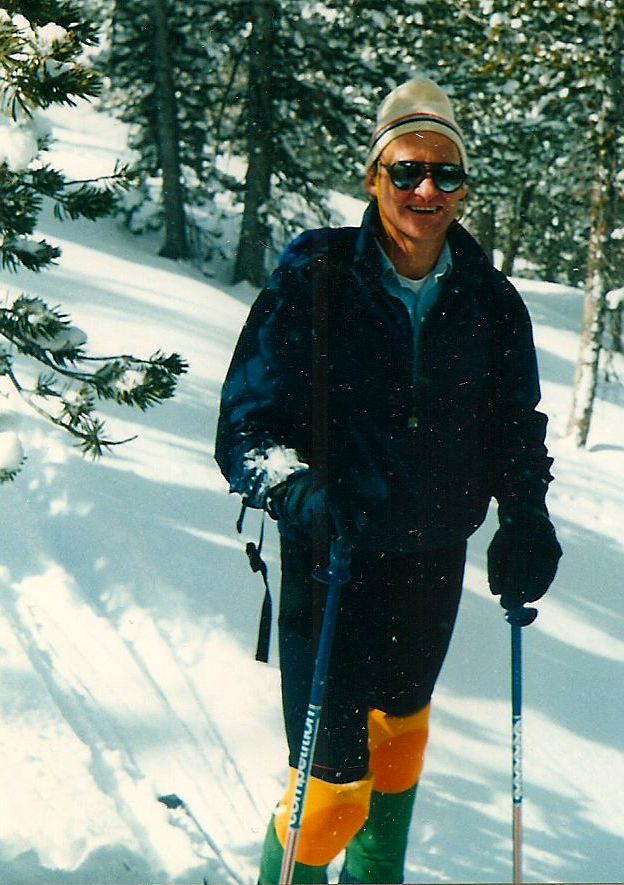
For about five years, in our late 40s, Mark and I tried ‘Pretirement.”Mark on Grand Ronde

Never heard of it?

It’s where you live as if you’d retired, even though it’s not sustainable.

This meant that Mark stopped wearing casual-but-smart slacks and shirts while working as a reasonably well paid hydrogeological consultant with Pacific Groundwater Group, (which he co-founded with 2 friends in our living room in 1987) , and instead  wore whatever he wanted while rafting, playing, hiking, biking and working part-time taking care of a few rental homes we’d managed to buy in Boise, Idaho. 

I stopped working in the trenches at a community mental health center, re-trained as a Life Coach, and took on  painting and gardening at the rentals.

So, we didn’t really put our feet up so much as become totally flexible. Most days we could work to a human rhythm. Breakfast and walks to school with the kids; tea and toast after school for our two, plus any friends of theirs who needed a second home. We could play in the big back-yard wilderness of southern Idaho according to the season’s dictates – biking, rafting, hiking, and skiing. All close by and affordable*.

So – why in the midst of living the “good life” did we lie?

Remember – we were new to Boise, Idaho and had left family, community and professions in the Pacific Northwest. So, here’s how it looked to start with:

  • New friend #1          Hey Mark, so what do you do?
  • Mark Utting               I’m, er, a Hydrogeologist.
  • New friend #1           Oh, with which firm?
  • Mark Utting               I had my own company up in Washington State.
  • New friend #1           So, you’re commuting, or starting Boise branch?
  • Mark Utting               No, right now I’m, well . . . managing some rental  property.

Note – the initial need to identify himself as ~

  1. his profession (Hydrogeologist)
  2. his most recent success (company owner)
  3. the most acceptable form of work he could muster (managing rentals)

We began to notice ourselves not speaking the truth of our new lives in all sorts of ways. 

We were shocked to realize how much we had bought into the status anxiety of our times. We apparently still believed it was somehow preferable to identify ourselves by our professional titles and past successes. We were embarrassed to tell the truth – that we’d had enough of the fast track and had chosen to dramatically simplify, foster our creative sides, work on some rentals, re-tool, downsize – call it what you will. But we were massively guilty of lying-by-omission.

So we took a long hard look at our choices and ourselves and decided to embrace our new life by telling the truth.

  • New friend #2           Hey Mark, so what do you do?
  • Mark Utting                Have fun!
  • New friend #2            Yea, but where do you work?
  • Mark Utting                You know, I don’t identify myself by my work right now. I’m committed to following my own path to see where it leads. I play music in a group, I write songs, I ride my bike, raft and hike in summer, and ski in winter. We swapped out our nice single-family home in Port Townsend for a tiny one and some rentals, which we’re fixing up. We’re long on time and short on cash – but I’m having more fun now than I ever have!
  • New friend #2             [Responses ran the gamut! From pity to envy and lots in between]
  • Mark Utting                And you, what makes you happy?

So – my questions to you today are these:

How do you identify yourself?

  • married
  • doctor
  • divorced
  • sister
  • therapist
  • engineer
  • cancer survivor
  • college graduate
  • high school senior

Are these enough? Is it enough to be defined by what you’ve done (high school or college) or what you do (doctor or therapist) or what you’ve survived (cancer, divorce)?

And is this identity big enough to hold the all of you?  Not just the you who goes to work, but the you who loves, cares, creates, raises kids, walks dogs, grows petunias, feeds wild birds, dreams, grows?

If not – what else might you call yourself?

And, can you tell this truth to anyone, or is this still your closet self?

Rocky Canyon* “Affordable” skiing? Yes, if you back country ski you drive to snow, stick skins on your skis and hike up what you plan to ski down. Mark shot this photo of me about 5 miles from our home in Boise. When you wake up to this it’s wonderful to have a flexible schedule!   Also, if you live in Boise it costs all of $228 USD for an early purchase discount pass to Bogus Basin .

Imagine

Screen shot 2013-06-28 at 2.56.51 PM

IMAGINE you have a core, abiding Self;

a Self beyond the hubbub of the inner voices and distracting monkey-mind chitchat.

Screen shot 2013-06-28 at 3.00.20 PM

IMAGINE this core Self is as pure, unblemished and perfect as it was at the hour of your birth;

before you wrapped it all around with layers of protection and ways of coping.

Screen shot 2013-06-28 at 3.06.08 PMIMAGINE this core Self is what you meet through ~

  • meditation
  • Yoga
  • absorbing pursuits
  • prayer
  • deep presence

and remember you have felt it before ~ as a pang of beauty, a quiet bliss, a deep connection, a pure joy.

  • Imagine this core Self is accessible to you at any moment.
  • This moment.
  • Imagine relating to yourself, and your loved ones, from this place.
  • Not all the time maybe, but more than you do now,
  • even without the Yoga or meditation ~ just by shifting your attention.

Slowly slowly, always coming (as my Yoga teacher says) I work to help clients reconnect to this place within themselves, so they might be happier in their relationships with themselves, and those around them, little by little, day by day.

If you’ve stumbled upon this post, please feel free to enjoy the others in this series ~

1. “I lived with Mother Theresa and Simon Cowell” about acknowledging all the inner characters who used to drown out my abiding core Self.

2. Meet Colin, the first person I met who lived connected to his core Self much of the time.

3. Hear how Colin achieved his form of inner peace and happy living.

And still coming ~ more about Internal Family Systems and how we can help ourselves, and one another, connect to our abiding core Self more often.

How To Silence Your Inner Critic #2

You met my house mates (the yammering inner voices) here.

Then Colin (who’d silenced his inner critics and loved himself down a mountain) here.

Today I’ll share what I learned from Colin about loving oneself.

So, how to silence one’s inner critic (task-master, slob, pessimist, skeptic, saboteur et al)?

The way Colin described it to me I figured I needed to chunk things down into five steps so I wouldn’t feel overwhelmed and give up before I started. Plus, you know I love steps, right!

  1. Listen
  2. Name
  3. Understand
  4. Thank
  5. Lead

Step 1  LISTEN

Screen shot 2013-06-27 at 2.04.24 PMColin told me that for years he’d been trying to ignore the inner chatter.  The messages all seemed so mean, random, relentless and contradictory it never occurred to him to listen to the content.

However – he told me  – one weekend after a particularly horrendous bout of inner self-flagellation, a light bulb went off.


“I’m just like my Ex!” he told me.

“Excuse me?” I asked.

Screen shot 2013-06-27 at 2.08.02 PM “Yes, it used to drive me nuts. Elaine was a nice girl but she hated herself too. She’d get going on something she hated, like her hair. She’d moan about how thin and straight it was and then, right when I’d be thinking of something OK about her hair she’d skip to bashing her hips: too big. Her breasts: too small. Her chin: too pointy. Her career: too dull. Her family: too unsupportive. And so on. She’d never stop anywhere long enough in her spiral of self-loathing for me to help her figure out if she wanted to do anything about all of this.  She’d end up with me agreeing with her – she was hopelessly and forever flawed.”

“And this connects to your issue how, now?” I asked.

“I’ve played this inner game of pass-the-parcel. As soon as one negative thought comes in and stings, I’ll nudge it out-of-the-way with another nasty thought; but just nasty in a different way. Like Elaine would bash her hair like I bash my comments in a meeting. But before I can really address how dumb I was in that meeting, I’ve got another voice telling me it’s not that I’m dumb, it’s that I’m not ambitious enough. I should be in a whole different level of work. And then when I think that, another voice says I’ll never amount to anything and should bag all this and wash dishes…”

“So, I got that I needed to be not like Elaine.

“And the best way to be not like Elaine that I could think of was to slow down the messages and let myself listen to them before the next one came in.”

So Colin told me he decided to slow things down and listen to the messages – even though they were painful. He had no idea if it would help, but at least it was something different and totally the opposite of what he had been doing unsuccessfully all along.

He said he started letting each thought run its course.  They stayed mean, random, relentless and contradictory but he made sure he really understood what each voice was saying.

As he did this, he began to notice different themes. Different voices, if you will. Almost as though there were different people inside with entirely different points to make. So he decided to name them.

Screen shot 2013-06-27 at 2.13.03 PMStep 2  NAME THE VOICES

Colin said this part was fun!

In order to give these voices names, he had to step back and listen to the content with a view to identifying what sort of person would say such a thing.Humm… now he was curious.


Was this the voice of a ~

  • pessimist
  • lazy slob
  • critic
  • sergeant major
  • jester
  • saint
  • or sinner?

Colin told me first he identified these sorts of characteristics and then he gave them  names.

Let’s look at my inner community that day, climbing the Sun Valley hills.

 

Screen shot 2013-06-27 at 2.19.12 PMVoice 1  [Roaring…]

Can’t you pick up the pace. Look, Mark’s been breaking trail for ages.  You’re such a mooch… step it up there

Maybe a sergeant major.   [Or bossy fitness coach?]



Screen shot 2013-06-27 at 2.29.11 PMVoice 2  “ This is hard work. It’s OK to slow things down. Maybe call for another chocolate break

Definitely a slob.   [Maybe just someone who is tired?]

Screen shot 2013-06-27 at 2.26.45 PM


Voice 3  “I should have opted to stay home. I’m in a filthy mood right now. None of this snow is going to be any good by the time we turn around anyway

Whiny victim.   [Maybe someone who recognizes I love to be home alone?]

 

Screen shot 2013-06-27 at 2.32.25 PM

Voice 4  “And you’ll be last down the hill as well as up. You’ll fall the whole way down and be an utter disgrace as usual. How long have you been learning how to ski now? When are you going to get it down – eh?”

Sounds like the mum who screams at her kid “You get any closer to the fire and you’ll get burned. Don’t touch the knife, you’ll get cut.” that sort of energy. So maybe I’ll think of this as deeply ineffective Mother.   [Maybe someone who loves me but sure expresses it in an off-putting way?]

I went one step farther here – by linking my inner folks to public or well-known fictional characters so I could describe them to other people more vividly.

Step 3  UNDERSTAND THEIR POSITIVE INTENT

Colin showed me how – as he listened to his inner voices and could identify the sort of person who might say these things to him – he was able to discern a potential positive spin in each message. You can probably see it above in the secondary explanations I give in the [brackets].

Now, having done these voices the courtesy of listening to them, identifying their perspective and discerning a positive flip-side to their messages, he had to grant that they each had a decent point: they just made their points appallingly!

In my case let’s see once more how I could understand a positive intent from each message.

Voice 1/ Sergeant Major / Fitness Coach

Says  “Can’t you pick up the pace. Look, Mark’s been breaking trail for ages.  You’re such a mooch… step it up there

Positive Intent could be   “Keep this up. You’re doing well. Be inspired by Mark and keep on trucking.”

Voice 2/ Slob / Tired Person

Says  “ This is hard work. It’s OK to slow things down. Maybe call for another chocolate break

Positive Intent could be   “Boy this is hard. Check your energy – do you need anything?”

Voice 3 / Whiny Victim / Voice of Solitude

Says   “I should have opted to stay home. I’m in a filthy mood right now. None of this snow is going to be any good by the time we turn around anyway

Positive Intent could be   “Yes, you had mixed feelings about how to spend this day. Part of you wishes you were home in a deliciously quiet cabin with no agenda right now, right?”

Voice 4 / Ineffective Mum / Caring Mum

Says   “And you’ll be last down the hill as well as up. You’ll fall the whole way down and be an utter disgrace as usual. How long have you been learning how to ski now? When are you going to get it down – eh?”

Positive Intent could be    “Boy I see how hard it has been for you to learn how to do these telemark turns. You worry that your friends will judge that you should be better at this already. I just worry you’ll judge yourself harshly and get your feelings hurt.”

OK – I understood this.

That I needed to understand the voices.

Step 4 – THANK THEMScreen shot 2013-06-27 at 2.38.54 PM

  • Really?
  • Yup.

Colin said that once the negative voice was tamed by a name, and understood for the possibility of deeper, kind intentions he was grateful for the message.

The voices really were trying to help.

And that perspective changed everything.

Screen shot 2013-06-27 at 2.42.23 PM

Step 5 – LEAD THE PACK

Once you’ve come to recognize your inner perspectives – listened to them, named them, understood them and appreciated their positive intent – you get to experience being the leader. You get to invite the inner characters to come forward and share their presence with you when you are ready for them. If you are trying to be brave, you invite your inner coward to step back and focus on your inner Sargent Major (for example)! And you can certainly coach them to share their points of view with more kindness.

I’ll talk more about the implications of all this tomorrow – for they are huge.

But if indeed you can begin to see yourself as the one who watches these inner characters, or who listens to these inner voices, you may find yourself asking ~

  • Who is the One watching?
  • Who is the One listening?

the answer to which leads us directly toward the path of self discovery.

NOTE

I am sure some readers will be appalled at the idea of listening to these inner voices. What if they are telling you to hurt yourself or others? What if these voices are urging to you cut, binge, purge?

I have wondered about that myself, until I recently came upon the work of Dr. Richard Schwartz and the therapeutic work he terms Inner Family Systems.

He came upon ideas like Colin’s and after years of research, and successful work with clients, he is convinced we are all profoundly good at our core. He believes these self-generated voices (he calls them parts) are motivated by positive intent.  I’ll be writing more about these ideas – I’m hooked!

How To Silence Your Inner Critic #1

Last post I described my house mates.

More my “head mates” really.  Personifications of the voices that used to yammer away inside.

A few of you have shared you live with some of these as well ~

  • The critic
  • The task-master
  • The slob
  • The pessimist
  • The skeptic
  • The saboteur

and you’re keen (to quote one reader, thanks  Carrie!) to know  “how the hell do I get them out of here?”

I’ll tell you, I promise.

But first, I want this post to be an inspiring look at what life can be like without the inner dysfunctional family having a constant go at you.

Meet Colin.Scanned Image

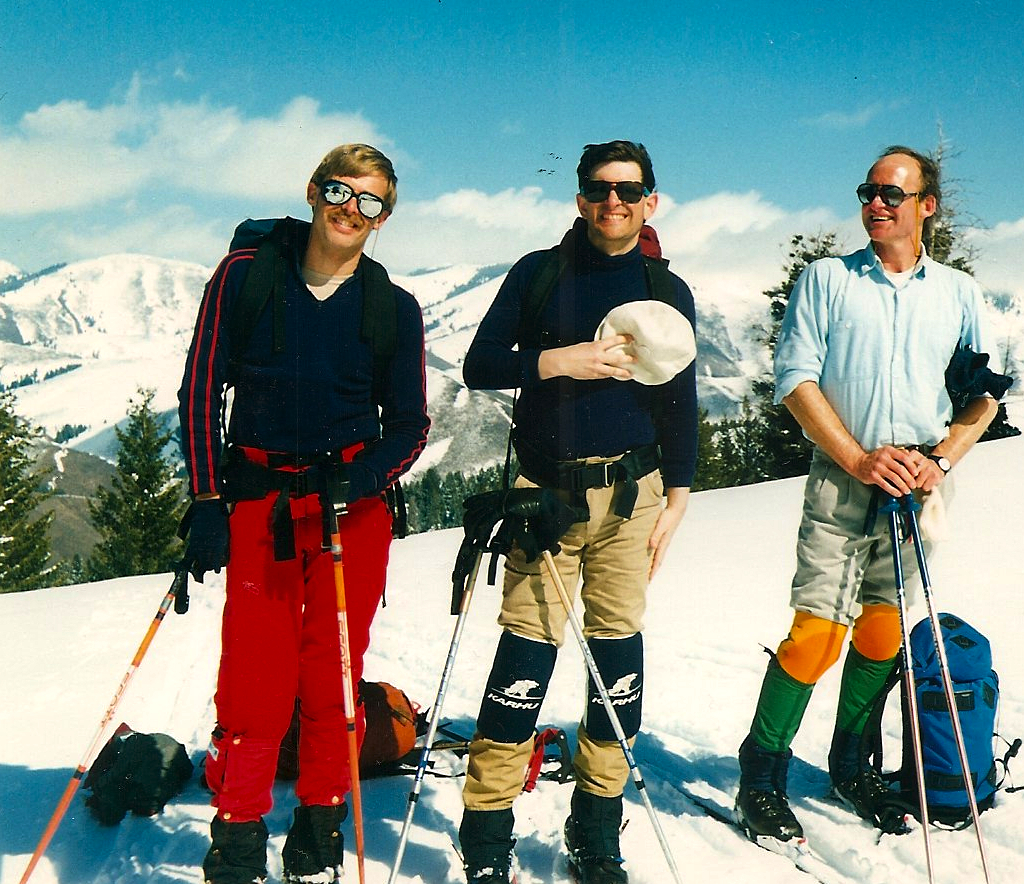
Here he is, climbing up a peak near Sun Valley Idaho one sunny March day back in the late 1980s.

Can you tell from this photo how unusual he is?

I couldn’t, at first anyway. As we climbed a snowy hill together I had no idea what an impact he would have on my life.

Until I watched him ski.


Three things became apparent once we reached the highest point.

  • The only way out was down
  • Colin had neglected to mention that he hadn’t skied before
  • He was totally up for the challenge.


The trailLearning something new, under duress, with an audience has never showcased my best self, I gotta admit.  So, not optimal conditions for Colin.

He was a visiting Kiwi (those of you who know New Zealanders will recognize this as a code term for up-for-anything) whose Bucket List included some snow time. He’d accepted an invitation to play in the mountains around Sun Valley on borrowed equipment and it had never occurred to him (nor us, apparently) to talk about how to use the darn stuff. We all used thin, highly cambered, light-weight cross-country skis, long poles, and low leather lace-ups. (Remember – we’re back in the 1980s all you hard-core mountain folk who ski anything today on short, wide skis and knee-high plastic boots).


Here we are near the top, still smiling.Mark, Karl, Colin

Climbing skins off the skis, we’re ready for the descent. Colin’s looking at Karl (middle) and my husband Mark (left).

We’re laughing because Colin’s just mentioned he hasn’t skied before.

We’re sure he’s pulling our legs and will soon zoom down in a series of elegant linked telemark turns.

Meanwhile, my inner nay-Sayers have been hard at work all day:

Task-master       ~  Can’t you pick up the pace. Look, Mark’s been breaking trail for ages.  You’re such a mooch… step it up there.”

The slob              ~  This is hard work. It’s OK to slow things down. Maybe call for another chocolate break.

The saboteur     ~  “I should have opted to stay home. I’m in a filthy mood right now. None of this snow is going to be any good by the time we turn around anyway.

The pessimist       ~ “And you’ll be last down the hill as well as up. You’ll fall the whole way down and be an utter disgrace as usual. How long have you been learning how to ski now? When are you going to get it down – eh?”

So when Colin, still chuckling at our disbelief, pointed his skis down the hill and crashed spectacularly into a shrub about 30 feet below us, we all paused.

He couldn’t ski!

I won’t describe how Mark skis. To this day it’s slightly depressing. He’s smooth, elegant, flawless and constantly grinning. He’s in his element. Karl and I were on a perpetual learning curve. We all joined Colin at the bush and now I was curious and my inner voices were having a field day:

The critic                ~  “Well, at least you won’t be the worst on the hill for a change.”

The task-master    ~  “Better pick your game here girl, so you can show Colin a thing or two.”


Here’s what Colin did.

He picked himself up and said, with a mix of excitement and curiosity, “So, teach me how to do these turns, they look beautiful!

We all gave our versions of how to (essentially back then) genuflect down the mountain. I found a fun old video if you’re interested!  And Colin applied himself. He did what we suggested and of course, fell down a few times. It’s a tough turn to master on smooth terrain, and here was Colin on a wind-swept mountain.

I watched him for a long time. He’d pick himself up from the latest crash and say, partly to himself and partly to us,   “OK, so I think I forgot to bend my downhill knee but I stepped into the turn well and feel I’m getting the weight distribution right. What do you think?”

We’d make a few pointers and he’d try again.

Within about 300 feet of the summit, he was linking his first few turns.

Karl and I had taken some spills too and was I speaking so gently, thoughtfully and constructively to myself?

Hell no!

The critic        ~  “Good heavens girl you’re a hopeless bundle of muscle-free, uncoordinated body parts. You know how to do this and here you are totally shown up by  a total newbie. Come on!”

Versions of this went on for the entire descent.

Colin, who had no experience of using the telemark turn on cross-country skis, loved himself down the mountain. At each turn he was celebrating accomplishments and gently correcting his setbacks. He was never mad at himself, only curious and brave and confident he would eventually master the turn.

There was I, hating and berating myself down the hill, same as I had for the previous six years of learning how to ski. I doubt my skills advanced at all that day.

Colin mastered a new skill by allowing his core Self to take the lead.

This core Self (which we all have by the way) is ~

  • Calm
  • Clear
  • Compassionate
  • Connected
  • Courageous
  • Confident
  • Curious
  • Creative

and ever so much more fun to live with!

Over a warm drink later that night I asked Colin how come he wasn’t disgusted with himself when he fell, or critical of himself when he didn’t get something right, or grumpy or pushy or skeptical or any of the voices I seemed to activate in the face of a typical day.

He laughed.

“Oh I had ‘em all in there alright.  It was crowded and nasty and I was pretty miserable through my twenties. But everything changed when I tried a whole new approach…”

Next: How Colin silenced his inner critic (and all those other tough inner-relations) and learned how to lead from his Core Self.


.


I lived with Mother Theresa & Simon Cowell

I used to live with Mother Theresa and Simon Cowell.

Honestly.

Screen shot 2013-06-24 at 11.17.38 AM

Mama T (as I came to call her) prefered an austere cell in the basement. I’m sure she did not mean to do this, but having her around lent an ever-present un-nerving sense of futility to everything I did that was not directed at saving lives.

I mean – it’s hard to have a good laugh over tea and biscuits when Mama T’s off gathering up the starving elderly.


Screen shot 2013-06-24 at 11.19.50 AMSimon took over the master suite. Despite having the best digs, he was never content.

“I don’t  mean to be rude,” he’d say,
“But…”

Most things (about me) were wrong, flawed, hopeless or maybe salvageable after daunting amounts of hard work.


Screen shot 2013-06-24 at 11.22.29 AM


Now and again Hilary Clinton stopped by.

She was good value. Elevated the conversation.  She brought astonishing tales of her life-experiences and life-changing accomplishments. She packed more self-possession in her little finger than the rest of us had in our entire bodies.

Screen shot 2013-06-24 at 11.25.49 AM

Bono, singing “I am the Eggman” from Across the Universe (perhaps my all-time favourite musical) would take to making random, uninvited, utterly impromptu appearances.

He was distracting (to say the least), poking fun at us, hinting at deep meaning, being obscure. His presence  however, was greatly relieving.

Gives the rest of us a break, I guess.


Screen shot 2013-06-24 at 11.34.46 AM


Bella Swan from Twilight (fess up – you’ve read the book or at least seen posters for the movie) moved into the living room.

She was tough to live with. One always felt she was working hard on something worthwhile – but at the end of the day I’d have to agree with Simon, there was never any evidence of forward progress in any one direction.


Screen shot 2013-06-24 at 11.42.33 AM


We all loved it when Mary Poppins stayed.

She brought with her a warmth, whimsy and overall sense of all’s-well-with-the-world.

I did, however, notice she tended to help the neighbours more than me so I confess to a little resentment from time to time.


One day, they all went out at the same time.

The saint, the critic, the effective politician, the randoms, the victim, the loving nanny…

All of ‘em.

Gone.

I was left alone.

Just me, myself, and I.

My Self.

In the utter silence of that place I glimpsed it.

That place of perfect stillness inside.

The bedrock where the “I” dwells.

That still point of calm, clear, compassionate, confident and creative connectedness.


Oh, they came back by and by. But over time I’ve begun to cultivate some boundaries.  Some guests are allowed in for a certain amount of time with certain ground rules.  I find I can hear what my Self has to say more clearly these days. It’s blissfully invigorating.

Are you curious about who is left when all your house guests leave for a moment?

Try it some time.

I’ll help you through the process this week.

Warmly,

Gemma


Fifth Breath of Apology ~ Forgiveness

If you’ve just stumbled upon this post, it will make more sense if you read the summary below, and then Breath 1, Breath 2, Breath 3 and Breath 4.

If you’ve read all this, skip down to the parrots below.

Summary

When someone you love does something that hurts you emotionally, it’s quite common to find yourself caught between two opposing desires:

  • Revenge – make ‘em pay for your hurt
  • Forgive – and forget as quickly as possible to remove the pain.

Neither is great.

If you practice revenge you reinforce your own pain since (think about this) emotional pain arises from our story about an event – not the event itself.

If you rush to forgive, forget and avoid having an honest conversation with yourself and whoever hurt you, you practice being a coward in the face of your true experience.

A robust reconciliation, based upon an artful apology, avoids both these problems. In my work I’ve found there are five stages or “breaths” you need to take. Why “breaths”?

  1. When we are stressed it really helps to breathe: Keep breathing!
  2. There are in-breaths and out-breaths.  To stay alive, you need both.

A reconciliation between 2 people that avoids revenge or victim-hood needs both these perspectives.
Breath 5  ~ FORGIVENESS

Screen shot 2013-06-15 at 4.37.40 PMACCUSED

Seek forgiveness.

After ~

  • you’ve heard your loved-one’s tale of woe;
  • you’ve listened to all the dreadful feelings this incident evoked for them;
  • you’ve shared a heartfelt “sorry!”
  • you’ve taken ownership for your role in this affair

it can be terrifically liberating to seek some sort of forgiveness ritual.

Not everyone needs this. For many, the first four strategies bring about so much shared understanding and individual light-bulb moments that the need for forgiveness seems moot.  However, as a child of Catholicism, I get the catharsis of penance!   So – if it seems as though closure would be useful, try it.

“Fiona – I’m really glad we talked this through. I feel we know one another a bit more. Understand things we didn’t before.  I’d love to feel this was really behind us though. Do you forgive me now? Is there anything else I need to do so you can let this go and we can move on, both feeling better?

Screen shot 2013-06-15 at 4.45.38 PMACCUSER

  • Forgive when you’re ready
  • Check in with yourself.
  • Can you let this go?
  • Really?
  • Do you need some sort of final ritual?

 “Yes. I’ve appreciated this too. I felt so hurt I thought it was the beginning of the end of us. But I see things much more clearly now. I feel I’ve un-muddled what was me and what was you – I’m ready to move on.  So hummm, I’d say forgiveness will cost you a dinner for two at that new Thai place next week!”

 This is the last of all five posts on The Art of Apologizing in Five Calming Breaths. Thanks for following this series. Let me know if you have another thorny issue you’d be interested in exploring with me.

Fourth Breath of Apology ~ Ownership

If you’ve just stumbled upon this post, it will make more sense if you read the summary below, and then Breath 1, Breath 2 and Breath 3.

If you’ve read all this, skip ahead to the crazy duck below.

Summary

When someone you love does something that hurts you emotionally, it’s quite common to find yourself caught between two opposing desires:

  • Revenge – make ‘em pay for your hurt
  • Forgive – and forget as quickly as possible to remove the pain.

Neither is great.

If you practice revenge you reinforce your own pain since (think about this) emotional pain arises from our story about an event – not the event itself.

If you rush to forgive, forget and avoid having an honest conversation with yourself and whoever hurt you, you practice being a coward in the face of your true experience.

A robust reconciliation, based upon an artful apology, avoids both these problems. In my work I’ve found there are five stages or “breaths” you need to take. Why “breaths”?

  1. When we are stressed it really helps to breathe: Keep breathing!
  2. There are in-breaths and out-breaths.  To stay alive, you need both.  A reconciliation between 2 people that avoids revenge or victim-hood needs both these perspectives.

Breath 4  ~  OWNERSHIP 

Screen shot 2013-06-14 at 8.25.11 AM

ACCUSED

Accept responsibility for the parts you feel you can genuinely accept responsibility for. This empowers you to see how you could have done things differently.

Not everything is 100% within our control so the trick here is to take ownership of what is. Own up to the parts you can own up to.  You don’t have to lie down and be a whipping boy however. If there are things beyond your control, or actually more within your accuser’s control, don’t take those on.

Fiona, I totally see how I blew it with the introductions. Truth was I blew it even more by not remember those guys names. I could have just spoken up and said ‘Hey – I’d like you to meet my wife” and hoped they’d have offered their names! And I did get way too interested in the things Sonia had to say – that woman you spoke of. She’s from corporate so I was being a bit of a brown-noser I know. I can see how that must have looked to you.”


Screen shot 2013-06-14 at 8.23.24 AMACCUSER  

Listen as your partner accepts responsibility.

You’ll know if this is genuine. You may find he or she is not taking responsibility for absolutely everything.  This is actually good. If you choose to notice what items were left of the table, you could – under calmer conditions – explore the extent to which you could have done something to help yourself under those circumstances. Own your piece.

Well thanks. I know I blame you for the two bores I sat between too – but I see I could have asked them about their kids and maybe sparked some sort of conversation I was interested in. Hey – I possibly could have asked to swap seats with someone after coffee too.”

This is Part 4 of 5.

Check back tomorrow for Fifth Breath of Apology ~ FORGIVENESS

Third Breath of Apology ~ Compassion

If you’ve just stumbled upon this post, it will make more sense if you read the summary below, and then Breath 1 and Breath 2.

If you’ve read all this, skip ahead to the photo below.

Summary

When someone you love does something that hurts you emotionally, it’s quite common to find yourself caught between two opposing desires:

  • Revenge – make ‘em pay for your hurt
  • Forgive – and forget as quickly as possible to remove the pain.

Neither is great.

If you practice revenge you reinforce your own pain since (think about this) emotional pain arises from our story about an event – not the event itself.

If you rush to forgive, forget and avoid having an honest conversation with yourself and whoever hurt you, you practice being a coward in the face of your true experience.

A robust reconciliation, based upon an artful apology, avoids both these problems. In my work I’ve found there are five stages or “breaths” you need to take. Why “breaths”?

  1. When we are stressed it really helps to breathe: Keep breathing!
  2. There are in-breaths and out-breaths.  To stay alive, you need both.  A reconciliation between 2 people that avoids revenge or victim-hood needs both these perspectives.


Breath 3  ~  COMPASSION

ACCUSED

Say Sorry  Screen shot 2013-06-12 at 1.01.54 PM

It’s a lost art.

But here’s THE most effective way I’ve found to re-connect to a heartfelt “Sorry!”

Ask yourself, “Am I sad that this person, whom I love, is in a whole heap of pain?”

You’ll probably answer “Yes!”  Yes you are sorry they are in pain.  It’s that sorry you can say out loud.  It’s effectively “I’m so sorry you’re hurting!”

I’m not suggesting you rush in and apologize for everything you said or did that may have been the trigger for this pain (not yet anyway).  Nope – just that you pause to empathize that this person is in the midst of some perfect-storm-of-hot-button-vulnerabilities that were ignited by something you did or didn’t do – unwittingly or otherwise.

This is compassion – right?

You are there with (com) [their] feeling (passion).

Again, this is not about you.

You do not need to show up with guilt, judgment or a repair-kit.

Just compassion.

“I’m so sorry! I’m so sorry you felt abandoned by me and jealous and boring and all those awful feelings you just shared with me.”


Screen shot 2013-06-12 at 1.12.15 PMACCUSER

Receive the compassionate “Sorry!”

Listen with your heart.

If the accused has genuinely put themselves in your shoes, and has sought to understand how dreadful you felt, you can most likely be sure that they are genuinely sorry you felt that way.

I can imagine you may not feel all done even after you hear “the magic word” (which isn’t always “Please” ).  You are doing SO well! This is a process, not a magic bullet.  Do your best to resist the urge to say something like  ~

  • “Sorry doesn’t fix it.”
  • “It’s always like this with you – you’re fabulous and then you blow it big time.”
  • “How can I trust you won’t do this again?”

You are still smarting. You need more. You need to know the other person sees that even if he/she understands how much you’re hurting, and even if you both know you’re doing a certain amount of this to yourself (it’s the story you’re telling yourself about the trigger that’s hurting you so much) you still need for this person to get a hold on their words or deeds. Absolutely!

Hang in there.

The Fourth Breath of Apology talks about ownership – who takes responsibility (and is thus accountable for) what; and the Fifth Breath invites some ritual of forgiveness.  You can do this – you’ll both benefit so much if you do.

This is Part 3 of 5.

Check back tomorrow for Fourth Breath of Apology ~ OWNERSHIP

Second Breath of Apology ~ Feelings

If you’ve just stumbled upon this post, it will make more sense if you read the summary below, and then Breath 1.

If you’ve read Breath 1 – skip down to Lucy, below.

Summary

When someone you love does something that hurts you emotionally, it’s quite common to find yourself caught between two opposing desires:

  • Revenge – make ‘em pay for your hurt
  • Forgive – and forget as quickly as possible to remove the pain.

Neither is great.

If you practice revenge you reinforce your own pain since (think about this) emotional pain arises from our story about an event – not the event itself.

If you rush to forgive, forget and avoid having an honest conversation with yourself and whoever hurt you, you practice being a coward in the face of your true experience.

A robust reconciliation, based upon an artful apology, avoids both these problems. In my work I’ve found there are five stages or “breaths” you need to take. Why “breaths”?

  1. When we are stressed it really helps to breathe: Keep breathing!
  2. There are in-breaths and out-breaths.  To stay alive, you need both.  A reconciliation between 2 people that avoids revenge or victim-hood needs both these perspectives.

Breath 2  ~  FEELINGS

Screen shot 2013-06-11 at 1.14.34 PM

ACCUSED  

Acknowledge the other person’s FEELINGS  ~

Put yourself in your accuser’s shoes and imagine how they felt, even if they have not expressed any feelings beyond anger. Until you have done this they will continue to have no interest in anything you have to say.

Trust me!

It will not help them one iota for you to tell them:

  • But I didn’t mean to.
  • It wasn’t my intention to hurt you.
  • Let me just explain.
  • You have no idea the pressure I was under.
  • Hey, you could have done something.
  • I did not do this on purpose for heaven’s sake!
  • Can’t a person make a mistake?

In fact,  these tend to make things worse. Have you noticed?

So, resist the urge – which will be strong!   Instead, try this ~

Oh Fiona, you felt awful that night!  You felt abandoned by me when I did not introduce you to those folks we were talking to. And then at dinner, it sounds as though you felt jealous that I had someone to talk to – and it did not help that it was a woman – and you were stuck between two folks you did not enjoy.  And for sure you don’t want to get put in a situation like that again. Did I get this right, or am I missing some parts still?”

ADVANTAGES?

Cultivating the will-power to curb your righteous-indignation and make the effort to see a situation from another person’s point of view is like weight-lifting for the soul. It’s very hard, takes vast effort, is super good for you, and (I promise) gets easier with repetition. If you can start by practicing this with people you love – your children, partner, family members and friends – one day you might find yourself being able to empathize effectively with someone at work. Or , you might even find yourself being able to talk down an angry, violent person who simply needs someone to listen to them. You never know how this sort of inner strength will come in handy.

Screen shot 2013-06-11 at 1.08.53 PM ACCUSER   

Continue to clarify your  FEELINGS ~

Did the person who triggered your pain manage to express accurately enough how you are feeling? Do you need to have them understand any aspect of that painful event more fully?  Now is your chance to see if you feel genuinely and fully understood. It’s your job to help the accused understand you – there is only so much they can guess.

Well, you’ve got most of it right. I did feel abandoned and jealous. I think what made it worse for me is that you know how vulnerable I feel amongst your super-smart financial market friends. Right in the midst of my six month parenting leave and all I can think to talk about is Sylvia sitting up and how cute she is. I ended up feeling boring, dumb and unattractive.”

ADVANTAGES?  This is a gift for you. When someone has – inadvertently or otherwise – triggered some hot buttons for you, being invited to name and share your feelings will help you get over your pain more quickly than any other way I know of.  You can help the pair of you by staying present. What are you feeling?  Need help identifying your feelings? Click here – parrott-emotions-tree-2001(3).  Remember, emotional pain arises from our story about an event – not the event itself. You are in pain because of these feelings which have been triggered in you. This means your way out, is through.

Screen shot 2013-06-11 at 1.44.02 PM

ACCUSED   Repeat Breath 2  ~  Keep going around by inviting your accuser to say more about their feelings while you continue to acknowledge what they are saying.

Again remind yourself – you are not pleading guilty. You are simply helping someone in pain to identify precisely how they are in pain, so they can feel better. You did not plant these feelings. These feelings were triggered by the other person – it is important they feel them so they can start to understand how they were triggered and maybe how to not have them be triggered next time.

This is Part 2 of 5.

Check back tomorrow for Third Breath of Apology ~ COMPASSION

First Breath of Apology ~ The Story

Summary

When someone you love does something that hurts you emotionally, it’s quite common to find yourself caught between two opposing desires:

  • Revenge – make ‘em pay for your hurt
  • Forgive – and forget as quickly as possible to remove the pain.

Neither is great.

If you practice revenge you reinforce your own pain since (think about this) emotional pain arises from our story about an event – not the event itself.

If you rush to forgive, forget and avoid having an honest conversation with yourself and whoever hurt you, you practice being a coward in the face of your true experience.

A robust reconciliation, based upon an artful apology, avoids both these problems. In my work I’ve found there are five stages or “breaths” you need to take. Why “breaths”?

  • When we are stressed it really helps to breathe: Keep breathing!
  • There are in-breaths and out-breaths.  To stay alive, you need both.  A reconciliation between 2 people that avoids revenge or victim-hood needs both these perspectives.

First Breath ~ THE STORY

Screen shot 2013-06-10 at 1.22.45 PMACCUSER   Be brave and speak up

Feel entitled.  Say “Listen to me!”  Let your story out. Tell your partner what is going on for you and why you are so upset.  Give as many details as you can to help the accused see things from your point of view.

I’m never ever going to an office party with you again! You abandon me the moment we get there, you schmooze with everyone and don’t introduce me to half of them. And then, at dinner, you sit next to that new woman and spend the whole night in quiet conversation leaving me across from you between two crashing bores whom I didn’t even know!”

ADVANTAGES?   In any reconciliation process, the person who has experienced something painful needs to tell their story.  It’s a bit like rounding up the all the loose edges of a tumour in surgery. If you leave tendrils of cancer behind, the cells will re-grow.  Telling your story as fully and honestly as you possibly can will allow you to eventually let it go.

Screen shot 2013-06-07 at 2.35.49 PMACCUSED   Close that beak & listen quietly to the accusation.

Face your accuser. Breathe deeply. Give this issue your full attention. Do not, under any circumstances, explain, justify, defend or deny. Zip it and listen. If your mind is busy doing anything other than listening, you’ll miss too much.

ADVANTAGES?   This step is the key to your success. As long as someone is feeling hurt they will have no interest in hearing anything from you: no whys, excuses, justifications or pleas for forgiveness will trump their need to just spit out the pain.   All the things we usually do actually make things worse. This is not about you. This is about the impact something you have done (or not done, or said)  has had on someone else. Sure, you may feel they have over-reacted or might not feel so dreadful if they only understood things from your point of view.  Maybe. However, given that “ultimate reality” is up for grabs in any given situation, what I’m advocating for here is “what is most helpful in this situation right now?”  This step is the most helpful thing you can do.

This is Part 1 of 5.

Check back tomorrow for Second Breath of Apology ~ FEELINGS