Category Archives: Couples

How to connect more effectively with your partner.

Your Friend’s Affair

While the number of couples getting divorced (or ending their civil or de facto unions) is down a bit in New Zealand from over 12 per 1000 married couples in the late 1990s to below 9.8 per 1000 married couples in 2011,  most of us are touched at some point by the divorce, separation or infidelity of a friend or relative.

How friends and relations react when a couple is in crisis makes a huge difference, often for the worse.  I am dedicating this week’s blog space to addressing the five types of couple distress I see most regularly, with tips for how family and friends can help, not harm, the hurting couple

Part 1 of 5 HOW TO HELP WHEN ~ An Affair Strikes

While it can make a difference to how you feel about your friend if you know whether they are the unfaithful or the hurt partner in an affair, the following tips apply to both scenarios.

  1. Resist the urge to judge. Not all affairs are all bad. As I tell couples who come to me, affairs can be the death knell of a relationship, or the wake up call. When affairs are first discovered it is hard to know which way things will go and certainly there are two sides to every story. If you, as a dear friend or relative, sit in vocal judgment you may well interfere with the genuine insight, growth and healing that can come out of an affair.
  2. Be their friend, not their shrink . By all means be a good friend and listen, empathise, ask clarifying questions and be non-judgmentally supportive, but seeing your friend through the aftermath of an affair – no matter what role your friend played – goes over and above the bounds of friendship.  Hug them, cry with them, then help them find a good professional – you’ll both be glad of it in the end.
  3. Don’t succumb to gossip.  Betraying trust and trafficking in endless opinions about what’s happening, who’s right, who’s wrong and what “should” be done, does not help anyone.  Let your friends know you trust the couple is getting help and change the conversation by discussing ways to support both of them.
  4. Extend invitations to your friend… repeatedly. Often a therapist will suggest the couple touched by an affair take some time apart. This does not indicate divorce any more than going to bed with the flu indicates death, so don’t treat your friends as though they were highly contagious.  It can be a lifeline to know that friends are still reaching out, still care, and are willing to choose human decency over judgmental ostracism. Even if your friend turns you down repeatedly, keep asking. Whether you invite him or her for dinner next week or a cup of tea right now, even if the answer is “No thanks!”  they will see you care.

Love as Acceptance

Part 5 of 5 How to Win At Love – in Five Easy Stages

STAGE  #5 ACCEPTANCE~ your partner is perfectly imperfect.

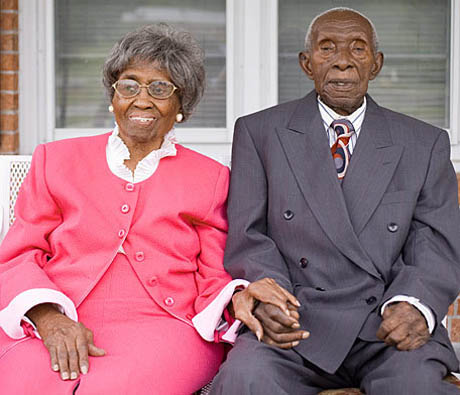
What is this stage like?  Figured I’d show ya rather than tell ya. Gratefully re-posting this lovely interview with the worlds oldest couple. See original here:

“Meet Herbert and Zelmyra Fisher of North Carolina. They have been married 85 years (86 in May) and hold the Guinness World Record for the longest marriage of a living couple and get this…. Zelmyra is 101 years old and Herbert is 104.

The happily married couple teamed up with twitter this Valentine’s Day to answer some relationship questions. Check out their take on finding love, getting through hard times and more. Good read.

1. What made you realize that you could spend the rest of your lives together? Were you scared at all?

H & Z: With each day that passed, our relationship was more solid and secure. Divorce was NEVER an option – or even a thought.

2. How did you know your spouse was the right one for you?

We grew up together & were best friends before we married. A friend is for life – our marriage has lasted a lifetime.

3. Is there anything you would do differently after more than 80 years of marriage?

We wouldn’t change a thing. There’s no secret to our marriage, we just did what was needed for each other & our family.

4. What is your advice to someone who is trying to keep the faith that Mr. Right is really out there?

Zelmyra: Mine was just around the corner! He is never too far away, so keep the faith – when you meet him, you’ll know.

5. What was the best piece of marriage advice you ever received?

Respect, support & communicate with each other. Be faithful, honest & true. Love each other with ALL of your heart.

6. What are the most important attributes of a good spouse?

Zelmyra: A hard worker & good provider. The 1920s were hard, but Herbert wanted & provided the best for us. I married a good man!

7. What is your best Valentine’s Day memory?

Zelmyra: I cook dinner EVERY day. Herbert left work early & surprised me – he cooked dinner for me! He is a VERY good cook!

Herbert: I said that I was going to cook dinner for her & she could relax – the look on her face & clean plate made my day!

8. You got married very young – how did you both manage to grow as individuals yet not grow apart as a couple?

“Everyone who plants a seed & harvests the crop celebrates together” We are individuals, but accomplish more together.

9. What is your fondest memory of your 85-year marriage?

Our legacy: 5 children, 10 grandchildren, 9 great-grandchildren, and 1 great-great grandchild.

10. Does communicating get easier with time? How do you keep your patience?

The children are grown, so we talk more now. We can enjoy our time on the porch or our rocking chairs – together.

11. How did you cope when you had to be physically separated for long periods of time?

Herbert: We were apart for 2 months when Z was hospitalized with our 5th child. It was the most difficult time of my life. Zelmyra’s mother helped me with the house and the other children, otherwise I would have lost my mind.

12. At the end of bad relationship day, what is the most important thing to remind yourselves?

Remember marriage is not a contest – never keep a score. God has put the two of you together on the same team to win

13. Is fighting important?

NEVER physically! Agree that it’s okay to disagree, & fight for what really matters. Learn to bend – not break!

14. What’s the one thing you have in common that transcends everything else?

We are both Christians & believe in God.Marriage is a commitment to the Lord.

We pray with & for each other every day.Image

Love as Attachment

Part 4 of 5 How to Win At Love – in Five Easy Stages

STAGE  #4 ATTACHMENT ~ work, house, debt, kids, pets, oh – and love…

By now in Stage 4 , in Dr. Helen Fisher’s  terms, you’ve formed an attachment. A stage of calm, companionable love, the sort we see all around us with  birds and  bees well, – mammals actually – and it looks like you’d imagine:

  • Building your nest together
  • Defending your nest together
  • Sharing parental chores
  • Sharing home-making chores
  • Bringing home the bacon
  • Missing one another when you are apart
  • Finding security in one another’s love
  • Feeling calm and comforted in the knowledge of your partnership
  • Feeling a sense of belonging.

All these rewarding behaviours are promoted in your brain by the release of two hormones in particular – oxytocin (yup, the same hormone that floods new Mums also promotes trust and satisfying sex) and vasopressin (increasingly associated with positive social behaviour, sexual motivation and coping with parenting stress). These evolutionary aides exist to help people stay together long enough to effectively birth, raise and educate their utterly helpless human young.

While each stage has its challenges, this one’s tough. Most divorces occur here with an up-tick at 3 years (when couples have that first baby), at seven years (kids and boredom) and again at 12 or 13 years (more kids, more boredom?). It is terrifically hard to prioritize your relationship when all about you are impending domestic, physical or financial emergencies.

What to do?

Savour the moments you can!

Whether or not you have kids and pets, you are right slap dash in the middle of life and busy days speed by all the faster.  Try these ~

TIP 1 ~ Do one thing each day for you.  Self-care in all things is not only a sensible way to go into your hectic, giving, caring, other-centered days, but it is actually a very thoughtful gesture. No one wants to live with a depleted martyr. Whatever replenishes your spirit each day – commit to it. A run; yoga; a hot bath and candles; a gym workout; writing for 30 minutes; 10 minutes of meditation. Try it!

TIP 2 ~ Do one thing a day for your partner. Remember who you are doing all this nesting and attachment loving with? A warm “Welcome Home” hug; a text or two at work; picking up his/her library book or dry cleaning; choosing his/her favourite wine or beer for dinner; a neck rub over the evening news; a five minute snuggle after the alarm goes off at 6:00am.

TIP 3 ~ Do one thing a week for your relationship. Ask yourselves “What can WE do together for US?” As a couple, what brings you closer? Can you plan an adventure? Invite friends over? Start a book or movie club? Take up Tango? Commit to boot camp as a team? Set compellingly exciting financial goals? Sponsor a worthy cause together?

Love as Power Play

Part 3 of 5 How to Win At Love – in Five Easy Stages

STAGE  #3 POWER STRUGGLES ~ your “Perfect One’s” imperfect?

Well gol darn, who replaced your sweetie with this demanding, bossy, opinionated, selfish, hard fighting or painfully aloof creature who looks unnaturally like your beloved?

Not quite “buyers remorse” but akin to it, this next stage is the rude awakening that befalls all lovers as their self-inflicted chemical high wears off a bit and they begin to see one another without the rose-tinted specs.

You need this stage – you really do! The reason you and your sweetie have seemed like paragons to one another is probably because you were on your best behaviour, and the few little slip-ups were written off as exceptions to the my-partner-is-perfect myth you’ve been living with. But you’ll be hard pushed to be on your best behaviour for years. At some level your ego knows this too and pops out from behind the “best-behaviour” mask to seek an answer to the increasingly pressing question:

  • “Will you love me as I really am? Warts and all?”

Now is when compromises stop and you begin to fight for what you really want. She’ll stop cheering at the games she swore she loved attending; he’ll swing by the pub for a few with his mates on Friday evening; she’ll share her day first with her mum and social media “besties” and be on-line when he gets home; his “slight” interest in World of Warcraft will revert to the obsession it was; her adorable wardrobe which looked terrific on her won’t look so good covering the floor of their shared space; his inability to see a filthy floor won’t seem so cute either. And so on. This is the gloves-off stage when you start to hammer out what you each need and want on the home front.

What to do?

Speak up!

This phase lasts as long as it’s needed so the sooner you are willing to talk to one another right as issues present themselves, the more likely you are to move through this stage to the next – which feel less like a body-slam and more like a Reel.

How to win at POWER STRUGGLES

TIP 1 ~ Speak up for what really matters to you. Seemingly little issues – how long to read in bed, tidiness preferences, food, money, hobbies, time with friends and relatives – are what make up your days. Can you talk to one another about what you want, even if you end up disagreeing about some of these?

TIP 2 ~ Unite Against Your Differences You’ll never agree on everything. Instead unite with one another against the impossibility of 100% agreement. “It’s a shame we can’t be with both families this Christmas isn’t it.”  (More about this in a future Blog).

TIP 3 ~ Notice What IS Working. For all you notice your differences, don’t forget to highlight what you love about one another. Remember – that which you focus upon expands.

Love as Romance

Part 2 of 5 How to Win At Love – in Five Easy Stages

STAGE  #2 ROMANTIC LOVE ~ you’ve found “The Perfect One”

Lust (Stage 1 – see yesterday’s post) has its place to get you up and out of your comfy zone and into the daunting domain of dating, but it can take you only so far – right?  A few too many maddening mismatches, beastly blind dates and embarrassing evenings and you’ll either give up dating for a while to lick your wounds, or you’ll fall madly for The One.

Finally you’ll meet someone who is utterly unlike all the others. Everything about this person is perfect. Her smile, his eyes; her moves, his laugh; her wit, his jokes. You’ve found your soul mate; the one whose existence makes the sun brighter and the moon more mysterious. Think Romeo to your Juliet (or visa versa).

As much as this feeling of love brings out your most noble self, it too is simply a function of our evolutionary journey, according to Dr. Helen Fisher.  While lust and attraction get you looking for sex with anyone remotely appropriate, fueled by androgens and estrogens, this second stage of Romantic Attraction washes you in a different chemical bath. Now you become drunk on a heady mix of dopamine, testosterone, norepinephrine  and endorphins. You become obsessed by an intense craving for your beloved and typically enjoy more energy, an upbeat mood, and a sense that you and your beloved can take on the world together.

What to do?

Enjoy it!

This phase only lasts from 2 to 24 months and is the shortest (and most intense) of the five stages of love. The goal of this stage of your love relationship is to build the fire so bright and so hot that it’s warmth will see you through the rougher stages to come.

How to win at ROMANTIC LOVE?

TIP 1 ~ Be romantic. Recognize this stage for what it is and give yourselves fully over to it. Take those adventures overseas together. Be a little bit wild and crazy. Open up to new ways of appreciating being alive. Read aloud, dance, play, skip, swim naked, cook together, visit the zoo, take risks. Listen – you are children in the garden of delight so please – go for it!

TIP 2 ~ Avoid responsibilities. In an ideal world, don’t take on a family or mortgage too soon – they can kill romantic love so fast. Sure, second marriages sort of “come with” the family and mortgage stage, so work hard to carve out some play time for yourselves before signing your beloved onto your mortgage papers or having your sweetie discipline your kids.

TIP 3 ~ Dream a little. Plant some seeds for the future. Set goals, create Bucket Lists. Discuss what excites you about tomorrow. When the chemicals wear off, you’ll be glad of some solid ground upon which to stand, together.

Love as Lust

Part 1 of 5 How to Win At Love – in Five Easy Stages

STAGE  #1 LUST ~ You’re on the hunt

What is it that gets a perfectly happy guy who is otherwise content to swill some beers over sport talk with his mates, to eschew the bar, clean up and hang out with a woman while she asks ~

  • his opinion on her girl-friend’s boy-friend’s jerk behaviour (TIP: agree he’s a looser)
  • whether or not she should pierce her navel (TIP: tell her she’d look great either way)
  • whether these shorts make her look fat (TIP: nothing makes her look fat – how could it?)
  • for a movie date with The Notebook (TIP: let her cry on your shoulder and offer her some clean tissues you’ve packed along just in case)

What is it that gets a perfectly happy gal who is otherwise content to snuggle the cat in sweatpants whilst simultaneously “chatting” to her mother, and at least 3 other girl friends, to climb back into her heels, pop on the eyelashes, shimmy into the hip huggers and head on over to ~

  • watch the game with his mates (TIP: be enthusiastic when his team does well)
  • grab a bite to eat (TIP: be flexible on the first date – it won’t always be Take-Away)
  • go fishing on the weekend (TIP: take Dramamine, avoid makeup)
  • play competitive mini-golf (TIP: you could decline…..)

Evolution – that’s what!

According to Dr. Helen Fisher we humans have evolved three core brain systems to successfully mate and reproduce our species. This first one, of lust and attraction,  is the drive we all need to leave our comfort zones and head out and mate. If you really stop and consider how very different men and woman can be, it makes sense that our ancestors with the strongest desire to get out there and have sex are the ones whose genes have been most successfully replicated.

So –whether you want to simply indulge your sexual appetite, or you are hunting for a long term companion until  death do you part, if you’re single and don’t want to be, you’ll need to mingle.

How to win the LUST Stage?

TIP 1  ~ Be clear about what you want. Just sex?  Be alert & safe, but you don’t have to be too fussy. If it’s sex and a possible relationship, then be safe but try and meet someone who shares some interests – see below.

TIP 2 ~ If you’re kinda-sorta interested in meeting the right person get out there and do stuff you enjoy; or try speed dating; participate in singles networks and watch how successful “attractors” go about it.

TIP 3 ~ If you are super-serious about meeting someone for the long haul, go to Chemistry.com,  take their free personality test and discover the sort of person you are statistically most likely to be attracted to, and then get back out there!

(Let me know if you find a good catch this way.)

Separate Honeymoon Anyone? Part 2

Part II – The Solution For (our Honeymoon &) Your Family!(Continued from Part I)

In the face of multiple, competing and divergent family interests, did you identify anyone in your family (or yourself) as ever behaving like a Martyr, Bully or Pleaser?

Is there another way?

If there were another way, what would it look like?

Is it possible for very different people, with different ages and interests, to figure out what to do together in a way that no one has to compromise, bully or cajole so much that people feel lost, bossed or herded?

Indeed, is there a way that the planning can be part of the fun whilst building intimacy and connection?

Yes there is ~ meet

Style #4 The Mediator.

Looks like:  “OK, we’ve got six people and nine great ideas between us. Let’s decide right now that we’ll make it a great day no matter what we end up doing. I’ve got an idea that might help – are you guys up for hearing it?  How be if we each share our best idea and why it’s important to us? Let’s really listen to each other because what we can’t do today we could perhaps do another day. It’s important that everyone speaks up because it’s good to know what we each enjoy. We’ll hear one another out and see if one or two ideas seem best for this group on this day. If most of us can agree on what to do, let’s commit to doing those other ideas this year so over time we’ll all get to influence the group and feel good about our shared decision.”

Pro – Everyone has a chance to check in with themselves to see what sounds fun and why, and to put it out there. Everyone also gets the chance to listen to the others so you get to know one another more fully. The process of talking and choosing can be great fun – loads of improbable ideas can be tossed out and laughed over.  Even “the losers” (those whose ideas are not decided upon for this day) know they are not long term losers because their ideas have been heard and are now on the agenda for another day.

Con – This approach takes time. It can get messy in the middle with pre-schoolers thinking of nutty things and teenagers saying “whatever” until you gently invite them to be more specific. It assumes a level of kindness amongst group members. It requires the group to value the process as well as the outcome.

Upshot – No matter which idea is chosen, everybody wins in 3 ways:

  1. You get to know yourself better (by checking in with what you feel and want)
  2. You get to know those around you better since you hear what they feel and want.
  3. You get to practice connecting to one another, which minimizes the chances you’ll become enemies or strangers over time.

If you are interested in being The Mediator next time your family has a group decision to make, here’s a process you may find helpful:

Family Mediation in 5 Easy Steps

1. SET THE INTENTION.

If you see a situation that could easily turn to custard – such as a group of quite different folks all trying to agree to a plan – take charge and immediately raise the bar by stating an exciting or compelling intention. In the example above the Mediator said

Let’s decide right now that we’ll make it a great day no matter what we end up doing.”

Another way is to pose this question: “

Is it possible for us as very different people, with different ages and interests, to figure out what to do together in such a way that no one has feel lost, bossed or herded?”

2. PROPOSE A WIN-WIN SOLUTION.

Since it will immediately be obvious to everyone that not all the ideas on the table can be undertaken, there’s the possibility of some tension – particularly if you’ve got a handful of competitive sorts who are tuned in to the idea of winners & losers. By letting your group know you’ve got an idea that has benefits for everyone no matter whose ideas are acted upon, you might get some buy-in for your plan.

I’ve got an idea that means we all win. Even if your idea isn’t the one we all agree to today, it will be put on the agenda for another time. So, are you up for hearing it?

3. EVERYBODY CONTRIBUTES BY SPEAKING & LISTENING

By inviting everyone to weigh in with what is genuinely true for them  – even your surliest teen and Gran who always puts everyone else first – you will accomplish two very important tasks. First of all everyone gets to take responsibility for how his or her day goes. If everyone puts an idea forward it has a chance of being chosen – if not today then soon. If someone has no ideas at all,  can he or she agree to see if someone else’s idea sounds good and support it as their own? It is always easier to knock an idea than generate one – right? Same with choosing what to do. This practice of inviting everyone to contribute avoids the issue of people defaulting to one person’s idea and then grumbling.

How be if we each share our best idea and why it’s important to us? Let’s really listen to each other because what we can’t do today we could perhaps do another day. For me, I’d love to split the day between a leisurely brunch since I’m famished, and then I think a zoo trip would be wonderful. Who’s next?”

4. WORK THROUGH GRIDLOCK

After everyone has had suggested an activity and why it might be fun for him or her, each person in the group will have a better sense for what might be best. Maybe little sister reminds the group she wanted to fly a kite last time you did this and it wasn’t possible because there was no wind, so on this blustery day her idea might be a good one. Whilst maybe your idea of a leisurely brunch wasn’t well received since the kids had all been snacking all morning and were full of energy. See if you can get a few people to sum up what seems to be the fairest and best-for-all ideas and propose them. You need to name the ideas that are to be shelved for now (like little sisters kite flying was last time). If there are still two quite different activities being championed by two or more people, go a bit deeper. Ask each person things like;

So Mandy, you’re keen for us to cycle over to Kelly Tarltons and then on to St. Helliers for ice-creams because Kelly Tarltons has that special on and you adore ice creams on hot days. OK. And for you Danny heading over to hike in the Hanuas with a picnic lunch is more fun because you hate cycling on busy roads and want some shade? Can anyone think of a way to shift these two ideas a bit so everyone is happy?”

Opening it up for everyone to weigh-in once more might elicit some good compromises everyone can live with – like a shady Hanua (Danny’s wish) hike with ice-creams (Mandy’s wish) and a commitment to schedule Kelly Tarltons soon.

People dig their heels in and get stuck when their ideas and reasons remain unheard.  Try it – really listen to what people want, acknowledge it, commit to meeting that request as best you can in the near future – and see if this person is willing to become more flexible.

5. THIS WILL HAVE BEEN FUN FOR ME TODAY IF…

This is key to bumping into happiness on all sorts of occasions. If – at the beginning of an undertaking – you identify what will make you particularly happy about this project as you undertake it, and then if you look back on this project and remember how you achieved what you said you wanted to achieve – you will feel happy about it.   No matter who suggested the activity your group ends up committing to, each member of the group can think about one thing they are especially excited about. So – Mandy who wanted the bike trip and ice-creams can anticipate the ice-creams on route to the hike. Gran, who does not hike much and who plans to take a folding chair and bird watching book so she can be in the hills but not hiking, might say “I hope to see those cute Fan Tails – I’ve heard they love this area.” And usually sullen teen might say “I’ll take the stop watch – save me doing track tomorrow if I run some of this trail.”  You get the idea, right? You are inviting everyone to buy-in to the day with their own unique set of reasons.

 GOOD LUCK!

 Oh yes – the honeymoon?  It’s hard to keep these blog posts to around 1000 words (my goal!) I’m at over 1400 already.

I’ll write a fuller blog about the honeymoon if anyone is interested. But, in brief, Mark and I planned an open-ended adventure through Europe and the Middle east. We’d saved about $5,000 USD (good money in 1982); sold the Subaru after driving from Seattle (top left on the map of the United States) to Florida (bottom right on the map), for another $1200 and flew off to London where we cajoled our 1974 VW camper into a road-worthy first home. We allowed the adventure to take shape and when, after about 5 or 6 months we found ourselves voicing different priorities for the summer of 1983 – we “invented” this process, with a twist.

1. We sent an intention to create a marriage in which our individual passions could still flourish. We had stated in our vows that we wanted our union to make us bigger people, not smaller ones.

2. We committed to finding a win-win solution.

3. We talked about what we each wanted and why.

4. In the face of apparent gridlock we discovered the idea of taking a month apart at the same time – Mark for his German adventure and me for my French one.

5. We identified goals we each wanted to achieve and tell one another about upon our reunion – at a suitably romantic little Inn in Annecy.

It worked. We both had quite delightful adventures.

And the rest, as they say, is history!


Separate Honeymoon Anyone?

Part 1 – The Problem

As my fiancée and I started planning our honeymoon (and life) together, we pretty quickly came to the conclusion that we both wanted to include some activities and adventures that the other wasn’t so interested in.

Mark’s got reasonable German and wanted to stride about the Austrian alps – “Macht schnell“.  I fancied strolling through the Ardèche river valley in SE France sampling baguettes, local wine and cheese – “Bon appetit!”

Before I tell you what happened to us on our separate honeymoons (yes we did marry, we did separate on our Honeymoon and we are still together), it occurs to me now that this is a universal problem all families must face. As Mark and I discovered before we got married and started a family, just because you love one another doesn’t mean you actually will want to do everything together all the time.

Can this be OK?

If so, how?

This question is alive and well as a small sample of some recent issues from my therapy office shows:

  • A long-married couple is struggling to adapt as the wife finally admits she actually dislikes sitting with her husband every night watching TV: she is longing for more intellectual pursuits;
  • Two partners (one from NZ and one from the USA) are trying to understand what each means by “let’s party!”
  • The assumption “when we’re a team we do everything together” is getting a challenge as a couple can’t agree over how to design and build a planter box and they wonder if this is a slippery slope toward some fundamental incompatibility.

So, whether you are trying to agree on how to throw a dinner party, create a shared garden space, spend your evenings, plan an upcoming long weekend with the kids or design your ideal Honeymoon the fact is there are times when you’ll want one thing and your partner will want another. Throw in a few kids with different ages and interests, the in-laws or some house guests and the odds are good that you’ll never please all of the people all of the time.

In my experience people choose one of three broad approaches to try solving this issue. See if these feel familiar.

Style #1 – The Martyr

Looks like:  “Oh, I’ll just go along with what the others want. I don’t really mind. It’s OK with me. I just want everyone to get along and stop arguing. If someone won’t compromise we’ll never do anything!

Pro – If you are apparently willing to do “whatever” then the odds do improve that your “sacrifice” will take one voice out of the equation and maybe un-complicate things enough for the most persuasive person’s idea to take form.

Con – If you get into the habit of not speaking up you run the risk of disappointing yourself by doing things you don’t enjoy and disappointing the group since it’s not much fun to be around Martyr’s – they can be a bit half-hearted and self-righteous.

Upshot – Practiced frequently, you’ll start to forget what you genuinely enjoy. Every time you bring out the Martyr behaviour you will disappear a little bit. You’ll get cut off from what you genuinely feel and need. You’ll become a bit more of a stranger to yourself and your family. If you lose touch with what makes you happy (which is a big part of who you are) you run the risk (at an extreme end of these decisions over time) of living an inauthentic life and becoming angry and bitter in your later years.

Style #2 – The Bully

Looks like:  “Oh for heavens sake be quiet and listen to me. I’ve got a great idea and if someone around here doesn’t take charge we’ll never get anywhere. He’s what we’ll do. Come on!”

Pro – If you have the energy and leadership to rally the troops in this single-minded way you will most likely get them up, out and doing something.

Con – With this “lets just get on with it” approach, you run the risk of rallying troops into an activity none of them actually wants to be part of. Is this gaining maximum happiness?  Is just “doing something no matter what whilst minimizing the discussion and planning up front” preferable to a more inclusive approach?  Is this approach more or less likely to have folks looking forward to the next shared occasion?

Upshot – Your forceful enthusiasm or “bossiness” tends to do some damage along the way. Sure you all made it to the beach, mountain, boat, park, museum or zoo where you may even have had moments of fun. However, those who feel “bullied” might be making quiet resolutions to themselves to cut you out of the equation by planning an activity without you next time.

Style #3 – The Pleaser

Looks like:  “OK everyone, I want us all to be happy so is there one thing we can all enjoy? How about the beach and ice creams? Oh – you can’t sit in the sun Gran? How about we get you an umbrella? What? Tim – you’re desperate to skateboard? Could you bring it and scoot about on the footpath? Well maybe we can have a shady coffee and then some beach time and head over to the skateboard park? Oh for heaven’s sake John you can’t add fishing today as well! Honestly it’s like herding cats to get you lot to agree to anything!”

Pro – At least you are trying hard to herd those cats! You might actually come up with a pretty extensive list of activities to be squeezed into a day and a couple of folks might actually have fun. As a Pleaser you are more likely to have more people having fun than the Martyr or the Bully.

Con – If it is only you exhausting yourself in trying to make sure everyone is happy you are actually creating a blend of Martyr (since as Pleaser you often forget to think about or include what you want to do) and Bully (since when the impossibility of pleasing everyone becomes apparent you will tend to snap out a final decision) and there is an overwhelming sense of exasperation.

Upshot – With this frenetic start to a day the group tends to set off on a pretty exhaustive agenda with little buy-in from people and a general sense of how hard it is to find overlapping interests. There is often a back-lash emotion along the lines of “Lordy Me!  I’ll do something on my own next time – this was way too hard!”

If you identify (or live) with a Martyr, Bully or Pleaser you are not alone. Every week I end up having conversations with people who have been hurt – usually unintentionally – by loved ones in these sorts of unsuccessful attempts at connecting with one another. So, while each of these approaches can get a family out of the house and off doing something for a day or long weekend, each approach also takes it’s particular toll on the relationships between those involved. So, the question I’ve been asking is ~ “Is there a way that helps families figure out how to have more fun together whilst also improving relationships along the way?”

And, based upon the results of our experimental two-track Honeymoon, I’d have to say “Yes, there is!”

Check in soon for ~

Part II – The Solution For (our Honeymoon &) Your Family!

Help For The Holidays

As a Relationship Therapist I’ve noticed that my phone gets busy in December. And, over time, I’ve noticed there are three quite different sorts of cries for help: see if one of these fits for you:

1.         The “Into Christmas” Group   

You more or less like the holidays. You go along – whether with wholehearted enthusiasm or because you feel it is the right thing to do for the kids – and end up buying gifts, decorating the house, fixing large meals, visiting family, entertaining the neighbours, celebrating in your place of worship, and making merry as you go.

The price of all this is a maxed-out credit card, too much on your plate (literally and figuratively), family fights, hangovers, disappointment and enormous stress occasionally off-set by wisps of delight and fleeting moments of searing joy.

What you could use right now might be a couple of ways to maximize the joy and minimize the stress. Keep reading!

2.         The normally “Into Christmas Group” Who Can’t Celebrate This Year

Whilst you hold the vision of a loving and happy holiday season, there has been too much sadness this year so nothing is the same. Maybe you’ve lost a loved one; recently divorced; been diagnosed with an illness; had an accident; lost your job; hit bottom as an alcoholic or any number of things that can come up in life to throw you off course.

Whilst all around there seems to be joy and delight, for you there is just this huge gulf between what you want life to be like and how it really is. It is all the harder to be crying alone when everyone else is making merry.

What you could use right now is a high level course in radical self-care. Keep reading!

3.         The “It’s Just Not My Holiday” Group

For any number of highly legitimate (and possibly painful) reasons, this is THE toughest time of year for you.

As you observe the rising crescendo of jolly behaviour all around, and as the media and advertisers encourage ever more flamboyant spending opportunities, you find yourself wanting to move to an alternative parallel universe in December.

Maybe what you could use right now is some peace and quiet, and the understanding and permission to live this month according to your own beat. Maybe you want to party. Maybe you want to be silent. Maybe you want to take off and hide. Maybe you don’t want to wish anyone Happy Anything. Maybe you want to go on a 3-day organizing rampage. Keep on reading!

3 Ideas for the “Into Christmas” Group

1.         Know what you want

All this holiday hoopla happens because you, and those around you, are seeking to re-create a feeling. What is that feeling? Connection? Magic? Kindness? Awe? Tradition? Faith renewed? Quite often however, amidst all the busyness, the season comes and goes and you realize  you never made time for the one thing you were really looking forward to.

To make sure this does not happen, complete the following sentence:

“This Christmas will have been absolutely wonderful for me if _________ .”

Think about your answer, and then ask the people you live with what they would say.

For me a wonderful holiday season includes reading Truman Capote’s A Christmas Memory aloud with the family. My husband likes to make sure we cut our own Christmas tree – normally in deep snow, but in the Auckland rain is fine too. For my son it’s our Christmas morning routine of opening gifts from Santa one at a time and enjoying each gift with rounds of “what can it be?” followed by loads of improbable guesses. For my daughter it’s squeezing her small dog once more into the dreadful stripy knitted  elf costume she gave the poor pup a while back, and then having her portrait taken with said small dog.

When you identify, and share with those around you, the one thing you absolutely know you want to have happen this year there are two great benefits:

a) You’ll make these “Must dos” a priority, &

b) As you make sure you do the few things that  bring each of you the deepest joy you will know – even if things turn to custard and all is not perfect (yet again)  – that it was a wonderful holiday season after all!

2.         Lighten up!

Yes it’s a lovely idea that everyone will drink in moderation, give and receive great gifts, stay friendly, appreciate the beautiful food and more or less seem to be having a good time – but hey – if this is not what’s happening, release your need for control and perfection. Accepting what IS can be far more memorable and liberating than having a tantrum or voicing your disapproval. If things go seriously awry the best approach is a post holiday de-brief where, if need be, you set things up differently for next year.

3.         Listen more than you speak

For many, when the extended clan gathers it is pandemonium. Everyone has a tale, a funny story, a grievance, a whine. Most everyone is out to be heard. However, if you’re interested in having a more meaningful holiday, try listening. Ask questions of your family members. How has their year been? What were the highlights? What are they grateful for? How might they make some needed changes in 2013? If you consider this an opportunity to get closer to one or two of your family or friends, it’s a gift you’ll never forget.

3 Ideas for the normally “Into Christmas Group” Who Can’t Celebrate This Year

No getting around it – this will be a tough year. The good news is, this pain will pass. The bad news is, it will be with you for this holiday cycle. Since the culture at large will not know of your suffering, the only recourse you have is to take matters into your own hands and be extra kind to yourself.

1.         Ramp down your expectations

Knowing that you’ll be sad, unwell, fragile in your sobriety, lonely or not yourself for a myriad of other reasons, tell yourself it is OK not to embrace the holidays this year. It is OK for you to turn down parties; opt out of gift giving; skip a tradition. The key is to check in with yourself and ask, event by event, “Will this bring me happiness and relief?”

Only take part in things that receive a clear “Yes!”

2.         Ask what you need this year

Depending upon what is dampening your joy, your needs this year will be different. If you are sick – maybe you need to be around people who give you energy rather than those who drain you. If you are divorced maybe it would help to be with friends who have come through divorce in a way you respect. If you have lost a loved one, only you’ll know if it would be more helpful to surround yourself with others who are missing this person, or if you’d be better off amongst complete strangers in an entirely new setting. In other words, pay attention to your own process and do your best to make sure you take care of you. It is doubtful others will do such a good job!

3.         Help those who are worse off than you

The best remedy for self-pity or sadness is to look up and notice others who might be worse off. To whatever extent it is possible – can you find a way to help someone who is suffering in a similar way? Someone else who is newly sober, newly bereaved, newly alone, newly diagnosed?  In reaching out with kindness and care to this other person you will find your own burden is lifted.

3  Ideas for the “It’s Just Not My Holiday” Group

If the alternative parallel universe worm-hole opened but you missed it, there are still things you can do to stay centered as those around you become ever more frenzied.

1.         Create your own ritual

If you aren’t into celebrating, December 24, 25 and 26 can be tough: Most stores are closed, there’s nothing great on TV and everywhere you go there are reminders of what a wonderful time other people seem to be having.  So – plan for your own version of wonderful and make these 3 days your annual snooker / fishing / fasting / yoga retreat / movie marathon  and have at them with relish.

2.         Volunteer

Since most establishments make December 24, 25 and 26 mandatory days off work, why not use them for some great Karmic return and volunteer for a cause you love? If you plan ahead there will be heaps of things you could invest 3 days of uninterrupted time into. If you prefer spur-of-the-moment, then check on-line for shelters, soup kitchens, senior centers, animal shelters or refugee agencies – they are always in need of a few good men (and women).

3.         Organize the Year’s End

How often in the course of a year do you have three days with   nothing on your agenda? How lucky you are NOT to be part of the frantic shopping, gifting, feasting and celebrating crowds. For you these 3 days are a total gift. No work. Minimal distractions. You can get all those end-of-year chores behind you: sort out your taxes, go through old files, clip articles from the pile of old magazines, re-think your subscriptions, clean out drawers, put up next year’s calendar, do some long-range goal-setting, plan your next vacation. What a gift!

****************************************************************************************************************

Whatever happens for you this December, the bottom line is this:

You always have a choice in how you respond to reality.

Live consciously,

Choose carefully.

Enjoy!

“Wicked” Camping to Celebrate 30th Wedding Anniversary

Image

OK – thanks so much for all the suggestions!

In the end, practicality and zest won the day.

 New Zealand’s “Grab One” deal showed up just in time to deliver one “Wicked” Camper for 2 people, for a ten day rental with pickup in Christchurch and return to Auckland — including the Blue Ridge Cook Straits Ferry  which is usually between $255 and $364) — for only $99. Done deal!

 Mark and I fly to Christchurch Wednesday morning to visit dear friends whom I met on an Israeli Kibbutz in 1974 and with whom I’ve been friends ever since. In fact their first daughter is my namesake (Hi Gemma!).  Then, we have ten days to re-enact a small portion of our 18 month original Honeymoon, in which we lived in a VW camper and traveled in Europe and the Middle East.  This time we’ll mostly explore New Zealand’s South Island, and visit friends in Nelson as we head north.  And, during the drive, Mark and I can hatch some new directions and priorities for our next 30 years.

 Stay posted.