Values Worth Fighting For

When you feel a surge of anger, very likely one of your values has been compromised.

I discovered this when another driver took my husband’s parking spot one day.

Screen shot 2015-08-26 at 3.36.37 PM

The perfect storm: a downtown office appointment in a busy city on a hot day. We probably should have taken public transport.

Anyway, Mark finally found a parking spot and pulled past it to reverse in (good parallel parking behavior). As he was in the process of reversing in, someone came from the other direction and zipped into the spot. Almost hitting our then-reversing car.

My even-tempered sweetie morphed into a ranting, raging mad-man. He jerked on the brake, hopped out of our car and started yelling at the “jerk” who’d pulled into “our” parking space.

Needless to say, this did not change the behavior of the parking man. He got out. Locked up his car. Gave Mark the finger and strode off.
Screen shot 2015-08-26 at 4.49.54 PMMarks tells me he nurtured fantasies of sticking spikes under each tire but instead we drove off, went around the block, found another space, parked and got on with our day. It took a while for Mark to flush out all that adrenaline, but later that night we discussed why he’d lost his usual cool.

Mark knew immediately. “It’s the unfairness! I was clearly going for that space. There are certain rules of decency on the road and that guy violated them.

Now of course, to this day we don’t know the other chap’s back-story. Was he in a rush to save the world and our judging him as “unfair!” missed some greater good?

But more relevant to our lives was this lesson about our own values.

We went over other times when one or other of us seemed to loose it out of the blue. We revisited some old fights. Thought about family members and friends. It seemed true to say that for the most part (for folks without a serious anger issue, and for folks who were not living in unduly stressful situations) when we got angry, we could trace it back to a value that had been compromised.

  • Because I value beauty and calm, I can get grumpy and irritable when things are cluttered and dirty;
  • Because I value seeking to understand, I get very triggered by partial truths or secrets;
  • Because I value kindness, I can get triggered by couples whom I perceive are unkind to one another;
  • Because I value authenticity, I get really put-off when I feel someone is acting, or being fake.

You get the idea.

But here’s the neat thing about values.

  • We don’t get to use them to beat up other people because they don’t live our values.
  • We get to use our flash of judgmental anger to identify our values for ourselves.
  • And then we get to honestly ask if we are living our values.

So, when I’m grumpy in the face of clutter and disorder, I get to acknowledge to myself how much I value calm and clean.

Then, maybe I can take it another step and practice this value? If it’s a friend’s home – maybe not. If it’s my own place? Might be time to let myself tackle some decluttering.

This is a tiny example.

But there may come a time in your life when you’re eaten up by an angry knot of judgment about a person or situation. Nothing seems to shift this dead weight inside. I know I go there. It’s like walking around having swallowed a cannon ball.

I humbly offer this exercise as a way to start softening the lead weight inside so you can bit by bit release the power this heaviness holds on you. Not because I’ve mastered this I hasten to add, but because I’m thick in the midst of working the issue.

1. Feel for where you hold the tension or weight in your body.

  • Is it in your gut?
  • Jaw?
  • Shoulders?
  • Fists?
  • How do you sense it?

2. Focus on this area.

Feel the discomfort. The tightness. The clenching. Really let that knot come into focus in your system. This can be painful. Acknowledge that too.

3. Find out what story you are telling yourself.

As you keep your attention on this tight area, let yourself listen to your judgments.

I hate it that X treats Y so badly. It’s unkind. It’s petty. It would take so little for X to be generous and kind…”

Whatever this tight part of you is feeling and judging, let yourself listen without judging yourself as a rotter for thinking these things. You are not putting this on Facebook for heavens sake – just listening to your own fury wash over you.

4. Flush out the Values.

In the critique of X & Y’s relationship above, is it the absence of kindness, big-heartedness and generosity that is fueling the fires of my judgment? Do I value Kindness? Big-heartedness? Generosity?

5. Investigate this.

If you notice your anger seems fueled by your assessment that someone is behaving unkindly, ask yourself: “Do I really value kindness? Could it be I’m so mad because I hate to see folks being unkind to one another?”

For as many possible causes for the anger you discover, see if you can find a value you hold that’s been compromised.

6. Turn It Around

If you discover what seems to be one of your core values, ask yourself:

“Where in my life am I not living up to this value myself?”

As we master this sort of self-awareness, that old familiar (and perhaps unwanted) flash of anger can be put to good use.

Play with the idea.

  1. Next time you experience that flush of rage, stop.
  2. See if you can discover what value of yours has just been violated.
  3. Then, rather than waste energy being mad that this person or triggering event is not honoring one of your core values, turn it around more quickly.
  4. With a hug of self-compassion, let yourself see if there is some area in your life right now where you are not living up to this core value of yours.

Not too sure what your values are?

Here’s a quick way to begin to discover – or remember – what you value.

Print out this List of Values

Read it through (this feels strangely good – to be reminded of all the wonderful ways we humans can show up).

Circle the values that flutter your heart. The words that seem to call to you as worthwhile.

If you have circled more than ten values, read through what you have and see if you can whittle the list down to just ten.

OK – that’s it!

My hunch is that bringing these top 10 core values to mind will allow you to enjoy living them out.

And, it’s a neat way to enjoy all that judgmental anger!

FIRST TIME HERE?

This is the latest article in a year-long series on the “12-most-important-relationship-skills-no-one-ever-taught-me-in-school-but-I-sure-wish-they-had.”

Click the box for the full list.  →Top 12 Relationship Skills
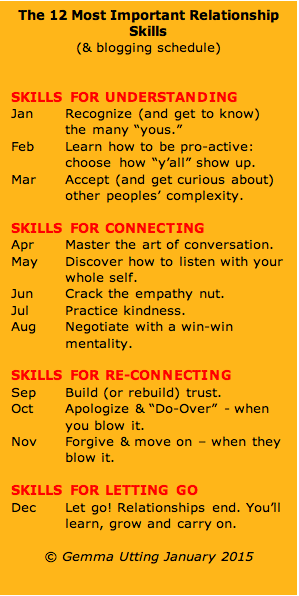
If you’re interested in reading this blog in sequence, below are links to the series to date, beginning with the first posting at the top.

OVERVIEW

SKILLS FOR UNDERSTANDING

SKILL ONE ~ Recognize (and get to know) the many “yous.”

SKILL TWO ~ Learn how to be pro-active: choose how y’all show up.

SKILL THREE ~ Accept (and get curious about) other peoples’ complexity

SKILLS FOR CONNECTING

SKILL FOUR ~ Master the Art of Conversation

SKILL FIVE ~ Learn How To Listen With Your Whole Self

SKILL SIX ~ Crack The Empathy Nut

SKILL SEVEN ~ Practice Kindness

SKILL EIGHT ~ Negotiate with a Win-Win Mentality

How To Negotiate The BIG Stuff

Learning how not to sweat (but to quickly and easily negotiate) the small stuff in your marriage is a darn good idea. I wrote about that last week in How To Negotiate The Small Stuff.

This week, what about the big stuff?

Well, what IS the big stuff?

At some level I want to say the big stuff includes things like:

  • where to live
  • if and when to start a family
  • whether to buy or rent your home
  • budgeting the big ticket items
  • where your kids go to school
  • where and how to spend the important holidays
  • whether and where to worship.

However, from years in the trenches helping couples navigate some stormy waters, I’ve come to see the definition of “big stuff” differently.

For most of us, the big stuff we have to negotiate in our long term relationships gets defined by what matters to us as individuals that we disagree about as a couple.

That could look like the list above, for sure.

But what if you and your partner both feel similarly about these things?

Then those things – like buying a house and whether to have kids – become the small stuff because the process of negotiating the hows and whys and whens are non-issues. You both agree. No problem!

But, what if you disagree about one of those, or even;

  • how to fold the towels
  • whether to join a Bank or a Credit Union
  • whether it’s funny or rude when the kids burp at the table
  • whether to clear the table completely each meal or leave mats out and salt & pepper in place (don’t laugh  that’s me!)
  • and a host of other things that you and your partner might disagree about, whether they seem objectively large or small?

These then become the “big stuff.”

Now what?

Screen shot 2015-08-20 at 6.25.04 PM

The rather well-worn old Chinese-character-for-crisis metaphor works well here.

Areas of disagreement are both a danger and an opportunity.

The dangers include ~

  1. having a win-loose or right/wrong mentality
  2. losing sight of the long-term benefits of cultivating a great relationship over achieving the short-term benefits of “winning” an argument
  3. doing damage by the way you go about negotiating for what you want.

The opportunities include ~

  1. getting to clarify what really matters to each of you, and why
  2. getting to expand your thinking
  3. getting to build your creativity as a couple as the two of you co-create a both/and solution that brings you closer, inspires cooperation and confirms your mutual respect.

So, here’s the “How-To-Negotiate-The-BIG-Stuff” method I recommend.

In blue type is an example of what by any “normal” standards would be a “small stuff” item. But see how it became a “Big Stuff” for one couple.

#1   Describe The Problem

Usually “Big Stuff” only becomes “Big Stuff” after a few rounds of unsuccessful negotiations. Two people won’t know what they disagree about until they disagree. So, after a few rough and unsuccessful attempts to have things go as you wish, you might decide you want to have a real conversation to sort things out. A real negotiation to put this issue to rest. Not by “winning” I hasten to add. But by coming together as fellow explorers, fellow solution-seekers, to see what you can both learn about one another and discover about how to move beyond whatever the gridlock is.

For couple Frank and Heidi their differences regarding how to treat their dining room table after meals went from “cute” to “amusing” to “touchy” to “frosty” to “All-out-hostile” over the course of a few years.

Heidi loved a “Zen” space. She wanted the dining room table cleared off after each meal. She needed the salt and pepper or sugar put away; the mats shaken and taken off the table and the table wiped down.

Frank hated having to put out for every meal what should have been out since the last meal. He loved having the salt, pepper, ketchup, sugar, mats and even extra cutlery out and on the table. Why create work?

At first they found it sort of quaint that they felt so differently about this. They initially did what the other wanted. Frank would put stuff away while singing a song about the department of redundancy department. Heidi would leave stuff out – but way too much stuff… things that might go off like cream, mill and OJ.

But after a couple of years the battle lines were drawn. Frank never put anything away at the end of a meal. Heidi put everything away at the end of a meal. Someone was always unhappy.

#2   Get curious about why this bothers you.

Here are some questions to guide your curiosity.

  1. What precisely is this flare of disagreement about for you?
  2. What do you wish your partner would do instead of what they actually do?
  3. What value of yours seems to be compromised by the actions of your partner?
  4. What story do you tell yourself about your partner when things don’t go as you wish?
  1. As FRANK thought about what pissed him off  it was the inefficiency.
  2. He wished Heidi would see things from his point of view and leave the meal-time-necessities there on the table.
  3. He valued investing his precious life-energy in things that had immediate and observable feedback – which mico-managing the salt and pepper did not! He valued efficiency – yes!
  4. He told himself that Heidi was wasting his time over nothing.
  1. HEIDI was on overwhelm. She was super busy. Frank was beyond busy. It was as if their lives were about to fly off the handle and unravel totally. What she needed was some small ritual that demonstrated they were OK.  
  2. She wished Frank would simply take the 3 minutes it took to clear the table at the end of a meal.
  3. Her values for calm and beauty were being massively stomped on.
  4. Heidi told herself that a messy table meant they were heading downhill as a couple. They were loosing the battle for the things that mattered – which was home and family.

#3   Get curious about why this might bother your partner.

Even though your partner might well be doing what you’ve just done – getting curious about him or her self – it can help to imagine how they might answer this. Knowing what you know about your partner, what might be happening as they appear to resist your request for how to handle this situation?

  1. What might your partner wish you’d do in the face of this situation?
  2. Do you have any feel for what story your partner might be telling him or her self about you and your actions over this issue?
  3. What value might your partner have that could be compromised by what you are doing?

Frank thought long a hard. What might Heidi want? He knew she wished he’d clear the table – but he really was not about to concede his valid point. Yet.  He figured her clean-table thing had to do with, humm,  . . what? Third-grade rules? He could see no value to her request and felt angry and clueless.

Heidi thought about Frank, and his life and how full each day was and she figured he was going for efficiency. She knew he wished she’d just let this bone drop…. But she had standards, after all.

#4   Ask for some time to talk about the issue.

Engage the old grey-matter here.

If you launch into your partner with some hot-blooded diatribe like

  • “You’re such a [insert personal attack here. “Slob” says Heidi / “Neat freak” says Frank]
  • You always [insert globalizing accusation here “Create a mess” says Heidi / “Make unnecessary work” says Frank]
  • I wish you’d just [Insert one-sided demand here “Take 5 minutes and clean” says Heidi /  “Relax, sit a talk to me for 5 minutes” says Frank]
  • Or I’ll [insert ultimatum here “Eat alone without you” says Heidi / “Eat at work without you” says Frank.]

These do not work – right?

So before you launch the one-sided attack, followed by the global accusation, followed by the one-sided demand, followed by the ultimatum, simply say:

“I’ve noticed we have this on-going issue about the dining room table. Would you be willing to set aside some time for us to resolve it?”

#5   Share what you’ve been thinking

Tell your partner about your inner homework. Share what you’ve noticed about your values.

“You know Heidi, I’ve been thinking. I’m so full-on at work, I’m really about eliminating anything that does not feel vital. For me, clearing the table of things we’ll only use again in a few hours seems like madness.”

“You know Frank, I feel I want to take one small stand against all the busy-ness we are both in the midst of and for me, that is symbolized by the small effort it takes to clear up after a meal.”

#6   Invite your partner to share what they have been thinking.

  • “Heidi, tell me more about what you’ve been thinking.”
  • “Frank, tell me more about what you’ve been thinking.”

#7   Zero-in on the values

Just that. The “Big Stuff” is always about core values. Get curious. What is underneath this stand your partner is taking?

“Oh” says Frank. “For you Heidi you have a value around not acting as if we are so full tilt busy that we can’t even clean up after a meal? You value not letting this sort of small ritual fall away even though we are moving so fast?”

“Humm”, says Heidi. “Frank, given how fast your days are you have come to value being super efficient, and it makes no sense for you to move stuff on and off the table when it seems not to matter at all that stuff stays in place?”

#8   Brainstorm some solutions

Just this. How might the two of you honor one another’s values but do something different?

FRANK SAYS

“OK Heidi. I get that. We both are moving way faster than we ever have and we’re both maxed out. But for you, this small thing (not that it always feels small to me mind you) about having a clean table, makes you feel calmer? How about this idea? Since you really value it clean between meals, you go ahead and clear the table and leave it empty and clean. That honors your values of zen and high standards, right? And since I like having stuff around me while I’m eating so I’m not jumping up and down fetching things all the time, I’ll stop grumbling about putting things out before a meal and just do it?”

HEIDI RESPONDS

“Yes, that could work Frank. But on weekends, or when we have friends over and there’s lots of stuff out at the end of a meal, I’d appreciate your help then. And, you know, could we make gathering all the meal-time-stuff up easier? Maybe a tray or caddy for salt, pepper, sugar, and another one for fridge stuff?”

And so they are off. Each now informed about why this matters to one another. Now they can negotiate respectfully towards a win-win, instead of the old win/loose.

It’s not always this simple or this easy obviously. But the thing to remember about “Big Stuff” is that what makes it Big is not the objective assessment of the money or effort involved. What makes an issue big between people is the issue’s connection to competing core values. Frank’s value of efficiency clashed with Heidi’s value of calm and clean. Unless you get to the root of these deeper issues, you’ll never find peace.

And if negotiations don’t go so well? If some of those less-wise words slip out – like the attacking, accusing, demanding and ultimatum-type language? Do what you can always do when things aren’t going well ~

  • Stop.
  • Comment on the fact that neither one of you is up for the conversation right now ( in ohter words, don’t blame anyone).
  • Suggest you take a break.
  • When you are ready, say sorry for your part in the melt down.
  • Try again.
  • Remember – keep your eyes on the prize: a long term happy relationship where each of you continues to learn about what matters to one another and to seek to honor those things that each of you values.

FIRST TIME HERE?

This is the latest article in a year-long series on the “12-most-important-relationship-skills-no-one-ever-taught-me-in-school-but-I-sure-wish-they-had.”

Click the box for the full list.  →Top 12 Relationship Skills

If you’re interested in reading this blog in sequence, below are links to the series to date, beginning with the first posting at the top.

OVERVIEW

SKILLS FOR UNDERSTANDING

SKILL ONE ~ Recognize (and get to know) the many “yous.”

SKILL TWO ~ Learn how to be pro-active: choose how y’all show up.

SKILL THREE ~ Accept (and get curious about) other peoples’ complexity

SKILLS FOR CONNECTING

SKILL FOUR ~ Master the Art of Conversation

SKILL FIVE ~ Learn How To Listen With Your Whole Self

SKILL SIX ~ Crack The Empathy Nut

SKILL SEVEN ~ Practice Kindness

SKILL EIGHT ~ Negotiate with a Win-Win Mentality

How To Negotiate The Small Stuff in Marriage

Sure, you can toss a coin, or play “Rock-Paper-Scissors,” or pick-a-card-from-the-deck-&-closest-to-Ace decides.

And maybe there are times in a marriage or long relationship where making a decision about something small using these playful things is fun, and makes sense.

But over the long haul, each of the zillion tiny decisions you make together, day in and day out over the years, is doing one of two things: bringing you and your partner closer together or pushing you farther apart.

You get closer together to the extent you learn something about yourself or your partner that you did not know before, and you share this, and you find the process of deciding things is respectful, informative, even exciting.

You grow farther apart to the extent you stay small, dig yourself into a rut, confirm a negative stereotype about yourself or your partner, and find yourself being bruised by a one-sided decision-making process.

Is there a better way?

Screen shot 2015-08-12 at 3.30.33 PMAndy and April want to go out to the movies together.

She’s keen to see Train Wreck, and he’s excited about Mission Impossible.

How will they decide?

Screen shot 2015-08-12 at 3.33.46 PM

Brian and Belle fancy eating out together.

She’s been craving Thai. He’s more wanting a burger.

How will they decide?

Screen shot 2015-08-12 at 3.39.06 PMCarol and Cindy are redecorating their living room. Carol thinks a high-color accent wall would be fun.

Cindy’s into calming ivory tones on the neutral spectrum.

How will they decide?

Couples face small-stuff decisions like this day in and day out for decades.

I mean – I’m just getting started here, right!

  • Is turning left or right the fastest route to where we’re heading?
  • The chicken or the fish?
  • Lights on or off?
  • The jazz or the classical music over dinner?
  • Walk the pup now or after doing the dishes?

Back in singles-ville you probably didn’t even notice you were making 1001 small decisions every day because no one brought you a counter point.

You knew what movie, meal, or room color you wanted and got on with it.

You knew how to get where you were going, what airplane meal to “enjoy”, what lighting and music and dog-walking preferences you had, and you got on with them.

Ah – bliss!

Here are three simple strategies (and attendant questions) for resolving these decisions in your relationship before they become deal-breakers.

Strategy 1 ~ Eyes on the prize!

Remember – we’re talking small stuff here.

In the big scheme of things, what matters most is the relationship. Keeping your eyes on the prize of a loving, happy, mutually giving and receiving relationship, ask yourself this question:

Question 1 ~

Can I freely, joyfully and lovingly accept my partner’s influence here and go with his or her choice with absolutely NO resentment? Would it give me pleasure to meet my partner’s needs in this way?

If the answer is an unconditional YES, choose that.

If the answer is more nuanced, not to worry. I get that. Here are some of the reasons these “small stuff” issues begin to look bigger.  See if any of these thoughts came to your mind as you considered question #1 above:

  • I always give in
  • It’s his / her turn to go with my preference
  • This really matters to me
  • I actively dislike my partner’s preference
  • I enjoy getting clear about how important our preferences are to one another, I don’t want to cave in just yet.

OK – proceed to ~

Strategy 2 ~ Get Curious

Being in a relationship is a great way to learn more about what matters to you, and why.  And of course, what matters to your partner, and why. It’s also a great way to clarify your values and to notice which values are most important.

Question 2 ~

Ask yourself how strongly you really feel about the options before you and then grade your preference with an A, B or C with the following criteria.

A = “Must have”. In truth there are very few “A”s and the ones we rank as A tend to have to do with core values, Bucket-List type things and one-off opportunities.

It might be you are in a city well known for it’s fabulous Thai restaurant so your desire to eat Thai food that night, whilst you are in this city with this particular opportunity, might be an A for you.

Or maybe you’ve longed to have a soft, gentle neutral living space with high ceilings and just the right touch of light, and your new homes needs to be painted so it feels so much like “now is the time” so you decide to make your desire an A.

Know that you can’t make every desire an A – it’s not fair!

Know that you need to be able to make an exquisitely compelling case to your partner for why your choice is an A to you.

B = “Strong preference.” So, it’s not an A but you really have been excited about Mission Impossible and – if you remember correctly – you went to a chick-flick last week and need an action-movie-fix.  So, it’s not a core value, or Bucket List thing, but if the decision was yours to make, it would be Mission Impossible over Train Wreck for sure.

C = “No Real Preference. As you think about the choices in front of you and really check in with yourself, you find you are genuinely open to all of them. Or maybe you are just too tired to form an opinion.

This evaluation often takes very little time and you will get better with practice.

Once you know what is true for you, go to ~

Strategy 3 ~ Negotiate using Your A, B, Cs.

Question 3 ~ Invite a mutual sharing of which letter grade you and your partner have given to your stated preferences.

An A will trump a B or C.

A B will trump a C.

Two A’s will cause each of you to have a conversation about core values which becomes an interesting game-changer.

Maybe you will both realize that these A preferences are so important you need to find a way to allow both people to achieve their A choice together – doing things sequentially for example.

Maybe one of you comes to recognize, as you listen to your partner’s rationale for why something is an A for them, that in comparison yours is really a B+. You can back down.

Two B’s will invite a conversation too of course, wherein you each get to be clear and specific as to what you each want, and why.

As you do this, remember Strategies #1 and #2: keep your eyes on the prize of your relationship prevailing over the long haul, and remain curious about one another.

* * * * * * * * * * * * * *

That’s it!

Mark and I came up with this idea somewhere along the years and have been using it successfully for those 101 daily decisions that end up in the “small stuff” category.

Oh – hang on, we’ve got a BIG decision to negotiate. Think I’d rather go off and toss that coin . . .

NEXT WEEK?

How To Negotiate The BIG Stuff in Marriage

FIRST TIME HERE?

This is the latest article in a year-long series on the “12-most-important-relationship-skills-no-one-ever-taught-me-in-school-but-I-sure-wish-they-had.”

Click the box for the full list.  →Top 12 Relationship Skills

If you’re interested in reading this blog in sequence, below are links to the series to date, beginning with the first posting at the top.

OVERVIEW

SKILLS FOR UNDERSTANDING

SKILL ONE ~ Recognize (and get to know) the many “yous.”

SKILL TWO ~ Learn how to be pro-active: choose how y’all show up.

SKILL THREE ~ Accept (and get curious about) other peoples’ complexity

SKILLS FOR CONNECTING

SKILL FOUR ~ Master the Art of Conversation

SKILL FIVE ~ Learn How To Listen With Your Whole Self

SKILL SIX ~ Crack The Empathy Nut

SKILL SEVEN ~ Practice Kindness

SKILL EIGHT ~ Negotiate with a Win-Win Mentality

The #1 Reason Marriages Fail

And no, it’s NOT what you think!

Despite the fact that numerous couples interviewed after divorce cite things like ~

  • Incompatibility
  • Adultery
  • Boredom
  • Abuse
  • Marrying Young

(from Legal Zoom)

and despite the fact that numerous autopsy studies after a divorce cite things like ~

  • Getting in for the wrong reasons
  • Lack of individual identity
  • Becoming lost in the roles
  • Not having a shared vision of success
  • The intimacy disappears
  • Unmet expectations
  • Finances
  • Being out of touch … literally
  • Different priorities and interests
  • Inability to resolve conflicts

(thanks to Your Tango)

these remain symptoms of a much deeper problem, not the problem itself.

Screen shot 2015-10-26 at 11.55.54 AM

It’s as simple and as challenging as that!

Here’s why.

Core human needs will ultimately trump everything else.

What are core human needs?

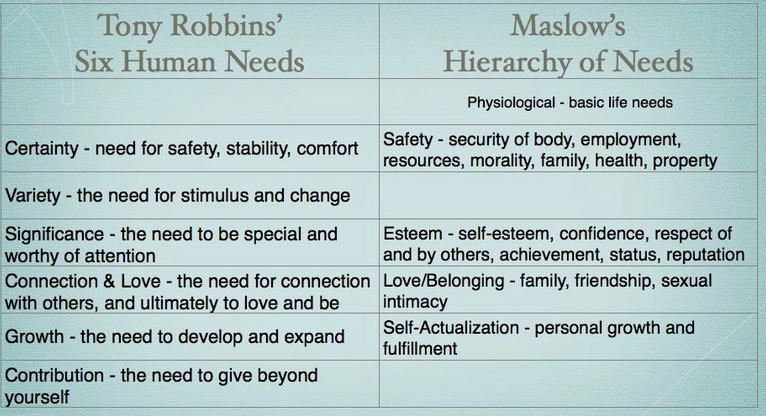
I love using Tony Robbins’ list. It’s short, memorable and in alignment with Maslow – the “grandfather” of needs identification.

Screen shot 2015-08-05 at 7.30.12 AM

Below are some simple stories illustrating how these needs might be unmet in a relationship. I use the six terms Tony Robbins uses:

  • Certainty
  • Variety
  • Significance
  • Love and Connection
  • Growth
  • Contribution

I use actual examples from my clinical practice, with identifying names and circumstances changed, to build my case that it’s not the specific “crime” that brings the relationship down. It’s the inability of partners to negotiate, to advocate for their needs.

CERTAINTY / VARIETY

Max and Ira were international circus performers (yes – I meet fascinating clients!). They met when Ira was hired by the same prestigious group of performance artists and spent three years traveling the world with the group. They fell in love. They committed to one another and spent nearly every waking moment together for five years. Somewhere along the way, Max’s capacity for constant shift and adventure took a toll on another deeper need he felt for stability. For nesting. For settling down into a lifestyle he could count on. He wanted to be sure he’d know where he’d be 3, 6 18 months into the future. He wanted to put down roots. And he wanted Ira by his side.

Ira was still enchanted by the lifestyle that circus performing gave him; international travel, astonishing highs, a degree of fame. That almost lottery-ticket thrill of not knowing exactly what his apartment or city would look like 6, 9, 18 months out. He adored international vagabonding and performance art and he wanted Max by his side.

They knew other couples in their circus community who managed marriages and even families, but they could not negotiate a solution.

Max’s need for certainty, and Ira’s need for variety were, for these two, the stumbling blocks that ended their relationship.

As an interesting aside, the fastest growing segment of the population getting divorced is the over 50 set. It’s super high over 65. But, as Bridgid Schulte writes in The Washington Post  “More than half of all gray divorces are to couples in first marriages. Indeed, 55 percent of gray divorces are between couples who’d been married for more than 20 years.”

Folks have been unable to negotiate sufficient variety in their lives or marriages… they’ve been drowning in their own long-outdated need for certainty!

SIGNIFICANCE

Oh, I could name scores of couples here where one partner was unable to communicate to their spouse / lover / former adored chosen-one how much they ached to be really seen. To be considered as relevant. As special. As worthy of time and attention.

But I’ll tell you the story of Cassandra and Rex. The classic beginning, they met in med school. Rex was a rare male going into Psychiatric nursing while Cassandra had a knack for surgery. They courted in the exhausting crucible of residency and first jobs and both were initially deeply supportive. They had a wide circle of friends, were generous and social, and married with a showy bash funded by Cassandra’s wealthy parents.

They came to me about seven years later. Their careers were flourishing. They were both superb at what they did, well paid, articulate, well-respected in their fields.

The core issue?

Underneath it all, Rex believed Cassandra did not value him, who he was, or his profession. He noticed how certain unkind comments slipped out at gatherings; how she said the word “nurse;” how she’d blow off commitments they had as couple with his friends, for non-emergency get-togethers with her friends (all surgeons).

The way Cassandra treated Rex fed into his own core insecurities. Rex had a core Part of himself who felt insignificant in his own eyes. This part needed Casandra to value him all the more. Meanwhile, Cassandra too had a powerfully insecure part cultivated in her high achieving family home. This part leveraged a sense of significance by looking down on Rex.

The way forward for them as a couple would have been for them each to meet and heal their core insecurities. They each needed to feel significant in their own eyes first. Absent that, their way of meeting their personal need for significance was coming at the expense of their partner.

But because they had spent so many years hiding from themselves, because the system they had evolved had Cassandra managing her insecurities by letting Rex see her as highly significant and Rex managing his insecurities by having Cassandra as his wife, they had caused one another too much pain and decided to divorce and move on.

CONNECTION AND LOVE

Because the need for love and connection is so central in relationships, it’s the inability of partners to negotiate  this prime need that brings most couples in to see me.

Once that loving feeling has worn off, how do two people continue to express and receive love from one another?

We may have moved into the 21st century, but Della and Rob’s situation is repeated with subtle variations in (dare I say this?)  many couples in the USA?

Once the post-romantic-love high has worn off, couples settle into the business of living. Earning a buck. Making a home. Raising a family. Both Della and Rob love their work and in fact, increasingly, getting out the door in the morning to go to work is the highlight!

It’s on the home front that things are a battleground. Della has been totally unable to get Rob to see that “if he loves her” he will ~

  • Pick up his laundry
  • Fold the towels and put them away
  • Do the dinner dishes
  • Cook occasionally
  • Help her teach manners to their hyper-active toddler
  • Help her discipline their overly-sassy-pre-teen
  • Vacuum
  • Be OK with her time spent with girl friends on weekends

And Rob is increasingly loosing the battle to negotiate for the two things that spell love for him ~

  • Weekly sex
  • Weekend TV sports

As these individual but differing recipes-for-love go un-expressed and un-negotiated, they remain unmet. Each partner feels increasingly alone in the marriage, and they begin to drift apart.  By the time Della and Rob  came to see me they were ready to hit the “eject” button out of their marriage without having done the work necessary to prevent them from re-creating this same scenario again. The work? To figure out their core needs and learn how to negotiate for them fair and square.

For too many folks it seems easier to just start over with pockets full of hope than to do the important inner work that no one has taught them how to do anywhere along the way. (Yes, you hear my frustration with our educational system!)

GROWTH

Healthy couples allow space and room for each partner to grow. When one person wants to get a degree, start a business, travel the world, fly airplanes or learn Arabic and work with the International Rescue Committee – how they negotiate this expansion is key.

Both sides have work here – the one negotiating for the new thing will be wise to be mindful of their partner’s needs (maybe for certainty, maybe for significance after this new event) and the partner being invited to embrace these expanded horizons will need to manage their own fears and perhaps invite their own aspirations.

Elise and Frank came to see me on the brink of divorce, but are now in some solid negotiations with themselves and one another.

Elise has a promising break with her acting career which could take her to New York. Frank is heading for tenure at a good University in the mid-west. It’s a crux move in their marriage. Fortunately they are both willing to look inside themselves to see what triggers these two opportunities are igniting, and what needs these opportunities are meeting for each of them, and one another. Thus informed, their negotiations are grounded in self-awareness and understanding which is allowing them both to be creative, flexible and willing to do the work necessary to have a marriage in which growth is not only possible, but supported with enthusiasm.

CONTRIBUTION

Maybe with a twist of irony, think American Sniper here. For those who don’t know the story, here’s a summary lifted from the Amazon publicity spiel on the link above.

From 1999 to 2009, U.S. Navy Seal Chris Kyle recorded the most career sniper kills in United States military history. His fellow American warriors, whom he protected with deadly precision from rooftops and stealth positions during the Iraq War, called him “The Legend”; meanwhile, the enemy feared him so much they named him al-Shaitan (“the devil”) and placed a bounty on his head. Kyle, who was tragically killed in 2013, writes honestly about the pain of war—including the deaths of two close SEAL teammates—and in moving first-person passages throughout, his wife, Taya, speaks openly about the strains of war on their family, as well as on Chris.”

Clearly it sounds as though this couple did a remarkable job of negotiating a way to allow Chris’s desire to contribute to his fellow Seals to continue as long as it did. And, it put enormous strains on their marriage and family.

Living with a “legend” isn’t always easy…

***********************************

So if – as I have come to believe after nearly 20 years of working with couples – the #1 reason marriages fail and relationships end is because one or both partners is unable to negotiate a way to meet their core human needs within the marriage, then these three things need to happen.

  1. We need to understand more about our own needs

We need to spend time with ourselves and ask ~

  • What needs do I have?
  • How do I meet my own needs?
  • How do I choose which needs to meet if I have more than one and they seem to compete?
  • How do I negotiate my needs when I’m around others?
  1. We need to understand more about our partner’s needs.

As we are getting to know a potential partner, we need to ask ~

  • What needs does my partner have?
  • How does my partner meet his/her own needs?
  • How does my partner choose which needs to meet if s/she has more than one and they seem to compete?
  • How does my partner negotiate his/her needs around others?
  1. We need to understand how to negotiate our needs as a couple.

As we consider building a relationship together, we need to explore ~

  • What needs do we each have in this relationship?
  • How do we each advocate for our needs to be met?
  • What do we do when it seems as if our needs are in competition or mutually exclusive?
  • What does each of us do when we feel our needs are not being taken seriously by our partner?

STAY TUNED!

This is a huge topic and I’ll be exploring it for the next 3 posts.

FEATURED IMAGE

Thanks to the Your Tango article referenced in this piece.

FIRST TIME HERE?

This is the latest article in a year-long series on the “12-most-important-relationship-skills-no-one-ever-taught-me-in-school-but-I-sure-wish-they-had.”

Click the box for the full list.  →Top 12 Relationship Skills

If you’re interested in reading this blog in sequence, below are links to the series to date, beginning with the first posting at the top.

OVERVIEW

SKILLS FOR UNDERSTANDING

SKILL ONE ~ Recognize (and get to know) the many “yous.”

SKILL TWO ~ Learn how to be pro-active: choose how y’all show up.

SKILL THREE ~ Accept (and get curious about) other peoples’ complexity

SKILLS FOR CONNECTING

SKILL FOUR ~ Master the Art of Conversation

SKILL FIVE ~ Learn How To Listen With Your Whole Self

SKILL SIX ~ Crack The Empathy Nut

SKILL SEVEN ~ Practice Kindness

SKILL EIGHT ~ Negotiate with a Win-Win Mentality

  • The #1 Reason Marriages Fail

One Small Step Toward Self Compassion

This one small step

when undertaken consciously

can transform your inner landscape from

 the dark and narrow back-streets of anger, criticism, fear and judgment

Screen shot 2015-07-28 at 8.10.34 AM

into a bright and spacious landscape of compassionate curiosity.

Screen shot 2015-07-28 at 8.13.58 AM

What’s to loose, right?

So, please hear me through and give it a go before you decide either that ~

  • I’m a fruit loop (which just may be true!) or
  • That this is not for you (which I hope is not true).

Here’s the idea.

Every time you hear your own inner voice of anger, criticism, fear and judgment go off on you with variations of you’re ~

  • no good
  • stupid
  • a failure
  • cowardly
  • wrong
  • lazy
  • forever doomed to be alone
  • unlovable
  • unworthy
  • fundamentally a looser

Do this ~

Visualize the voice as coming from a small, frightened Part of you cowering in that dark alley. Turn toward this cowering Part, thank it, and let it know you’d like to understand it more fully.

Honestly!

Say, “Well hello!  I hear that you’re angry, or worried that I’m no good or stupid or a failure.  I know you are telling me this for a reason and I’d like to hear what you have to tell me.”

Even if this Part says this to you often, my guess is you usually do not give it the time of day.

My guess is you turn away from it.

My guess is that you meet your ~

  • angry Parts with anger
  • critical Parts with criticism
  • judgmental Parts with judgment
  • fearful Parts with fear.

Whatever the initial feeling your Part expresses, instead of listening to it, my guess is you compound it with more of the same.

As Thich Nhat Hanh said:

If we become angry at our anger, we will have two angers at the same time.

So, what to do?

Turn toward this frightened young Part, take it by the hand and lead it out of that narrow, confining, oppressive alley and into a sun-lit meadow. Sit down next to it and invite it to tell you what it needs you to hear. You are there to listen. You are there to listen to understand the concerns, not listen to agree.

The magic?

Once you turn toward your anger, criticism, judgment or fear and invite it to tell you more, you are no longer that Part. You are your Self listening to that Part. YOU have separated from IT.

You have opened up some space between YOU and this PART. Which invites “YOU” into the picture. The “YOU” who is way more than just a small young frightened Part .

This “YOU”, with the spaciousness of the bright meadow, sees so much more of who you are and how you might be actually dealing with whatever the issue was that triggered this young frightened outburst.

Maybe you also see Parts of you are are:

  • kind
  • bright
  • successful
  • brave
  • often right
  • hardworking
  • a good friend
  • lovable
  • worthy
  • fundamentally OK

These Parts are also YOU.

Here is Thich Nhat Hanh again:

We only have to observe it with love and attention. If we take care
of our anger this way, without trying to run away from it, it will transform itself.

OK that’s it!

Is there more one can do to cultivate Self-Compassion?

Yes – and if you’re interested, I highly recommend you allow  Dr. Kristin Neff  to be your guide.

But this one small step is key.

This one small step allows you to see the limits of the dark alley-way script which – when confined to the alley – felt like it was the only narrative. This one small step allows you to access so much more of who you are. This one small step allows you to bring compassion, gratitude and perspective to this Part.

And, if you’re interested in hearing more about working with these Parts of you – one place to begin is an earlier blog post, Part of Me Wants

NEXT MONTH?

I’m exploring what it looks like to get your needs met in healthy ways.

FIRST TIME HERE?

This is the latest article in a year-long series on the “12-most-important-relationship-skills-no-one-ever-taught-me-in-school-but-I-sure-wish-they-had.”

Click the box for the full list.  Top 12 Relationship Skills

If you’re interested in reading this blog in sequence, below are links to the series to date, beginning with the first posting at the top.

OVERVIEW

SKILLS FOR UNDERSTANDING

SKILL ONE ~ Recognize (and get to know) the many “yous.”

SKILL TWO ~ Learn how to be pro-active: choose how y’all show up.

SKILL THREE ~ Accept (and get curious about) other peoples’ complexity

SKILLS FOR CONNECTING

SKILL FOUR ~ Master the Art of Conversation

SKILL FIVE ~ Learn How To Listen With Your Whole Self

SKILL SIX ~ Crack The Empathy Nut

SKILL SEVEN ~ Practice Kindness


Independence, Co-dependence and Interdependence

So – I got this great question from a reader:

Whats the difference between independence, co-dependence and interdependence. How do you create a relationship where you can rely on your partner without losing yourself in them, or keeping too much distance? And how do you get your partner on the same page?

Let me start by admitting that – because I have long been haunted by this question – my husband Mark and I actually took separate honeymoons.

Figuring out how to be “me” in the thick of falling in love with “him” was mind-bogglingly hard for me.

We decided to marry after a relatively tumultuous 2-year courtship which I jeopardized spectacularly by testing out a different suitor. This chap (let’s call him Bill) had invited me to help him bring a small gill netter down Alaska’s Inside Passage.

Screen shot 2015-07-16 at 11.00.31 AM

Oh, it’ll be fun. Should take about a week,”

he reassured me and I tried to reassure Mark.

I flew up to Ketchikan against my better judgment and dire warnings from friends. Ten days later I left Bill on a dock in Nanaimo on Vancouver Island.

The boat (and my relationship with Bill) had sprung a leak way beyond the reach of our resources to repair. The boat was dangerously low in the water. I had no money. I was very hungry and I was stranded in Canada without a passport. Not a good idea for a Brit on a work visa.

So when I made a collect call to Mark in Seattle (a 5 hour drive away across an international border) explaining my sorry state he simply responded:

I’ll be right there.”

Clearly I chose the right guy!

So sure, I’d chosen a fabulous man to marry but that was just the first step. Now we had to navigate that tightrope between two of the most powerful human drives – AUTONOMY vs ATTACHMENT – which, when taken to their extremes, cause a whole heap of problems for couples trying to come together.

Essentially there is a continuum that looks more or less like this ~

Screen shot 2015-07-22 at 11.54.59 PM

with folks who choose total isolation on the left and folks who want to be fused with others on the right. If you are in a relationship and noticing issues, it’s unlikely you’re at the extremes. More likely you’ll find yourself somewhere between counter-dependence (where a person strives not to be dependent on anyone for anything, thus avoiding attaching to anyone else) and co-dependence (where a person strives not to depend upon themselves for anything, thus avoiding their own ability to be an autonomous human being).

So, let’s meet those troublemakers

On the extreme end of AUTONOMY and the “I’m all alone in the world and that’s how I like it” team we have, Ladies and Gentleman, the mighty stand-alone COUNTERDEPENDNECE

20150118_211709

Think independent cat, totally disdainful of neediness.

This is our family cat “Mo”. The cat can sit wherever she chooses – including taking the prime spot right in front of the fire.

Counter-dependence occurs in dysfunctional families when a child experiences insufficient bonding and attachment, loss, abuse or the pain of betrayal. (To have loved and lost).

For these folks their  ~

  • Trust issues are “It’s simple. I don’t trust. Anyone.”
  • Core belief is “If I trust, I will be betrayed so I keep my distance.”
  • Favorite anything is “None of your business
  • Their favorite song is “Ill do it my way
  • Communication style is “Ill tell you how I want it
  • Daydreams “Include me, myself and I
  • Senses “What senses? I am disinterested in feedback
  • Control “Is focused on keeping me aloof and separate.” 
  • Assessment of problems “What problems? You lookin at me?
  • Ambition is “To succeed on my own
  • Worst fear is “Being controlled, manipulated, impacted by or vulnerable to anyone
  • Main move is “Whatever it takes to keep my distance”.

And on the extreme end of ATTACHMENT and the “I’m nothing without you and what do you want me to do now?” team we have, Ladies and Gentleman, CO-DEPENDENCE (and support team)

20141215_140925_LLSThink small designer pup who will do anything to please you, especially if treats are involved.

This is our family dog “Bailey”. Here she suffers yet another indignity, persuaded by her need for our love, and her fondness for treats. This is the annual compulsory enjoyment photo-op with The Christmas Antlers.

Co-dependence occurs in dysfunctional families where addiction, abuse, or chronic mental or physical illnesses are present but not addressed. The child in such a home learns to repress their feelings and needs.They don’t trust, don’t talk and don’t rock the boat.

For these folks their  ~

  • Trust issues are “I don’t trust myself to manage life separately from other people.”
  • Core belief is “I manage pain by merging myself with someone else in whose love I am whole, and by controlling the environment to keep everything OK
  • Favorite anything is “The same as my beloveds
  • Favorite song is “Love, Love Me, do
  • Communication style is “If I want my opinion Dear Ill ask you for it
  • Daydreams “Involve lots of obsessing over my mistakes and what others think of me
  • Senses “Are tuned to how everyone around me is feeling
  • Control “Is focused on getting others to think, speak and act a certain way
  • Assessment of problems “Goodness, everyone around me is in trouble.
  • Ambition is “Complete mind-meld with my Beloved
  • Worst fear is “Being pushed away, ignored or abandoned
  • Main move is “Whatever it takes to keep my beloved with me.

These are the extreme ends of the “super drives” that impact a person’s capacity for closeness, intimacy and connection. If you want to dive more deeply into these ideas you might enjoy Dr. David Schnarch – here’s a helpful intro:

One of the most important things in life is becoming a solid individual. And another important thing is to have meaningful relationships. Two of the most powerful human drives are our urge to control our own lives (autonomy), and our urge for relationship with others (attachment). One of the biggest tasks of adulthood is being able to balance these two urges, and one of the most common problems is having too much of one, and not enough of the other. People often feel claustrophobic or controlled in committed relationships, or feel like they can’t be their true self in their relationships, or feel like their sense of self is starting to disappear and they don’t know who they are any more. Others are constantly worried about “abandonment,” or “safety and security,” and constantly press their partner for “commitment,” and “unconditional love.”

Long term relationships are the perfect school-of-life for this journey. Dr. Schnarch refers to marriage as a “crucible” – you know, that feeling of being held “in a container in which two metals melt and undergo a severe trial”. Ouch!

So what new state are we hoping to emerge into after the high heat of relationship?

No matter how we’ve emerged from our childhood experiences – whether they were traumatic enough to plunge us to the far reaches of these positions of counter or co-dependency –  it seems a not unreasonable goal (or at least desire) to find some middle ground, where we can be both ~

  • the best version of our unique Self, &
  • mutually interdependent with the person we love.

Dr. Schnarch again:

The ability to balance our needs for autonomy and attachment is called differentiation. Differentiation is a scientific process that occurs in all species. For humans, it is about becoming more of a unique individual and a solid person through relationships with others.

So, back to that honeymoon.

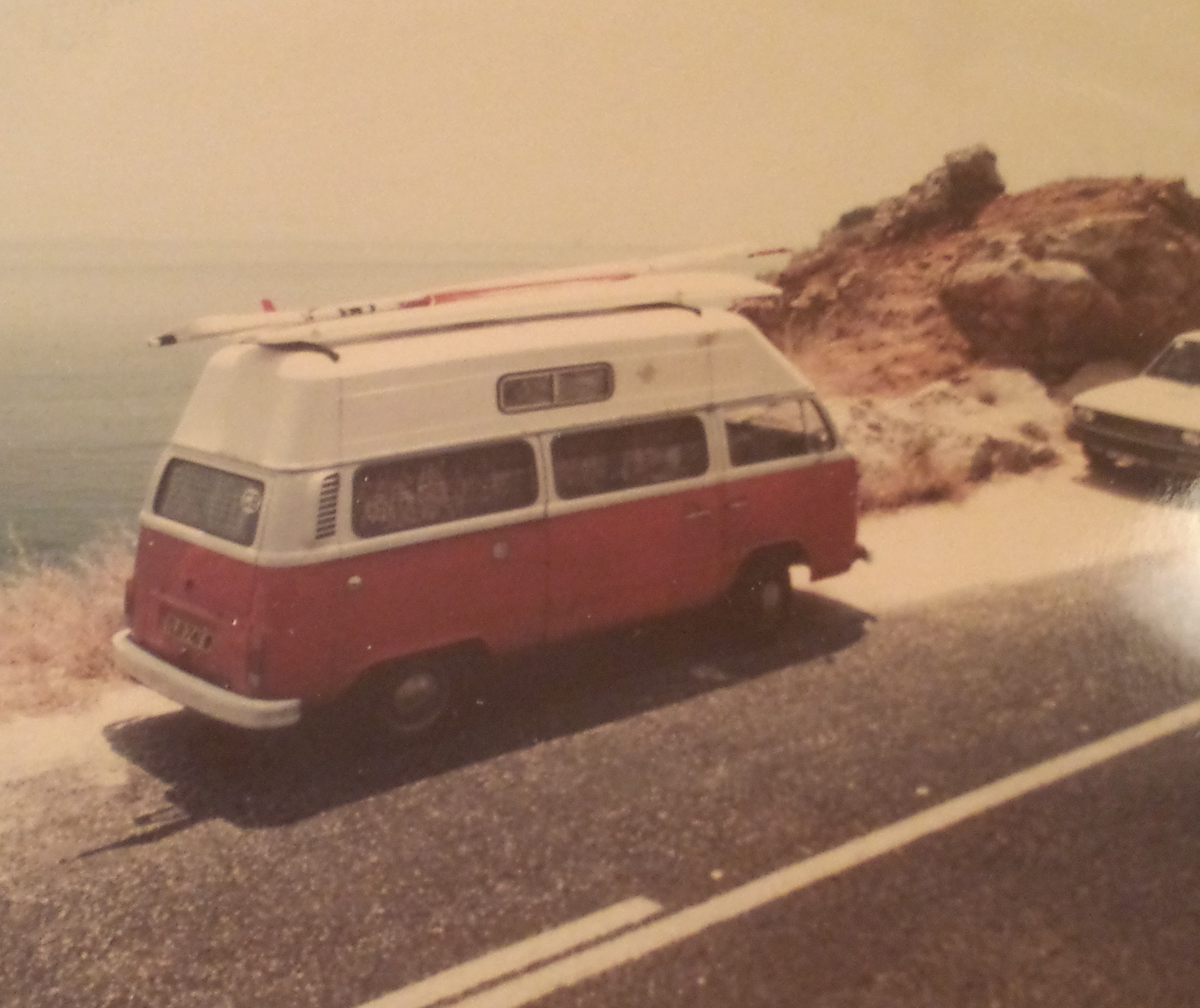
20150717_161830_Richtone(HDR)Our plan was to spend an open-ended time in Europe, partly touring in our VW camper; partly working on an Uncle’s organic farm in Portugal; partly learning French and skiing in Grenoble; partly working on an Israeli Kibbutz; and partly spending time with our Europe-based family.

For my leaning-toward-the-far-end-of-Independence-since-I-lost-my-mum-whom-I-adored-so-was-reluctant-to-entrust-my-heart-to-anyone-ever-again Self, this was a challenge.

While one happy day passed to the next, I was also increasingly aware of another voice, my “be careful, don’t get too close!” warning voice, that worried I was eroding my ability to ~

  • enjoy my own company
  • make my own decisions
  • sit in silence
  • be spontaneous
  • not care how I impacted anyone.

So, perhaps under the guise of “fun & adventure” (a clarion call for both of us) we hatched plans for a month apart. Mark took himself off to hike the high Alps in Austria. I took myself off to hike part of France’s Grande Randonee.

We took 4 weeks apart (our total Honeymoon was 18 months) and I spent every day of that month witnessing my own enormous inner battle. On the one side was my major Independent Part who dreaded the vulnerability, mourned the loss of my single freedom, worried about the future compromises and found fault with how Mark did things (in his absence of course!). On the other side was my major Dependent Part who yearned for his arms, the closeness, the delight of being seen, known and appreciated, the easy fun we had together and the future plans we were hatching.

Looking back, I think this is what we all have to do – in our own way and on our own time frame – to resolve this issue.

The art of differentiation is finding this middle place where we learn how to become fully ourselves, in the context of another.

Easier said then done – I know.

Here are my TOP FIVE TIPS for finding a happy balance point between isolation and fusion, in your relationship for you and your partner.

1. Wrap your head firmly around these concepts. If it seems like you and your partner might be struggling because you have very different needs regarding time together and time apart, or connection versus independence, check out the links in this article and continue to research the five main terms I’ve been using in this article ~

  1. Counter-dependence
  2. Independence
  3. Interdependence
  4. Dependence
  5. Co-dependence

We don’t talk about them all the time, but they are super helpful to grasp.

2. Be honest with yourself. Figure out where you are on this Autonomy to Attachment Scale.

Autonomy to Attachment Scale

If you’re on the Autonomy, or minus side, you may find yourself ~

  • with an avoidance mindset
  • distancing
  • hiding emotionally
  • withholding
  • keeping your distance

If you are on the Attachment, or plus side, you may find yourself ~

  • with an approach mindset
  • pursuing
  • demanding intimacy
  • giving
  • seeking to blend
  • closing distances

3. Talk About This With Your Partner. It helps to know if your needs for autonomy & attachment are similar, complimentary or problematic. Talk together about what that center ZERO point might look like in your relationship.

4. Do your own personal work. Just because you’ve “caught” your partner does not mean you should give up becoming a more conscious, compassionate “best version” of who you have the potential to become. In fact, you owe it to your partner to keep up the good work. Not sure where to begin? Well – one place to start is with the very first posting in this relationship series with, Part of Me Wants.

5.  Get Help If You’re Stuck.  That’s what folks like me are for. As long as you can do this on your own, that’s fantastic. But a good therapist will help you figure out what needs to happen to help move you over any relationship stumbling block you may be encountering. This is tough stuff – give yourself a break!

So how did the marriage go?

It’s been 32 years since Mark and I tested our capacities for tolerating closeness and separation on our independent honeymoons. Looking back – since I’d not known about these issues nor created the Autonomy – Attachment scale back then – we figure Mark’s a +4 and I’m a -4, so we’ve had our fair share of bumping into one another’s preferred boundaries there.

We’ve achieved a close-enough to Zero balance for interdependence that we’re ever going to attain. We’ve loved and raised 2 children; started and folded companies and earned our living a variety of ways in a variety of countries; we’ve interwoven our lives with extended family and celebrated births, weddings and funerals; we lived with a variety of exchange students, long term house guests and animals; we take vacations together and apart; have overlapping and independent interests; and we work to never be boring – to ourselves or one another. That ever present juggling to foster each of our individual paths in the context of our marriage has become less and less an “either / or” feeling and more and more a both / and.

It’s a journey well worth the taking.

PS: A dear friend (thank you Stuart) who helps edit these posts wrote this:

The journey to zero is not an easy one even when the desire for it is evident. It is a journey that requires a sense of “worthiness, authenticity and vulnerability” that can be elusive at times. It also requires intentionality –  it doesn’t just happen.”

Good point!

* * * * * * * * * * * * * * * * * * * * * * * * * * * * * * * * * * 

FIRST TIME HERE?

This is the latest article in a year-long series on the “12-most-important-relationship-skills-no-one-ever-taught-me-in-school-but-I-sure-wish-they-had.”

Click the box for the full list.  →Top 12 Relationship Skills

If you’re interested in reading this blog in sequence, below are links to the series to date, beginning with the first posting at the top.

OVERVIEW

SKILLS FOR UNDERSTANDING

SKILL ONE ~ Recognize (and get to know) the many “yous.”

SKILL TWO ~ Learn how to be pro-active: choose how y’all show up.

SKILL THREE ~ Accept (and get curious about) other peoples’ complexity

SKILLS FOR CONNECTING

SKILL FOUR ~ Master the Art of Conversation

SKILL FIVE ~ Learn How To Listen With Your Whole Self

SKILL SIX ~ Crack The Empathy Nut

SKILL SEVEN ~ Practice Kindness

Can We Ever Be Too Kind?

  • Do you ever wonder where the line is between kindness and enabling?
  • Do you ever worry you’re becoming a doormat whilst believing you’re being kind?
  • Do you ever sense that someone’s apparent “kindness” feels sticky or needy in some way?
  • Do you ever find yourself torn between being kind to yourself OR being kind to someone else?

Good!

I think there is a deeper story about kindness and it’s worth exploring. Dr. Neil Young (not the musician) taught in the psychology department at Seattle University in the late 1980’s while I was getting my masters degree. He was both well traveled and an excellent observer of human nature. He collected fascinatingly brief, succinct verbal-images of some of the more unusual people he met.

One, I’ve never forgotten. Screen shot 2015-07-14 at 7.51.37 AM

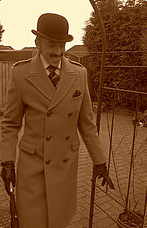
A gentleman standing outside Kings Cross station. He wore a long woolen coat, a bowler hat, and carried an umbrella. He looked comfortably off, but not wealthy. There was an overall threadbare air and the sense that things had once been better.

In my imagination he looks like this →Screen shot 2015-07-12 at 1.50.31 PM

He stood greeting people as they hurried into or out of the station. He’d tip his hat if he felt he’d caught someone’s eye and offer them something.

Neil was curious, so caught the gentleman’s eye.

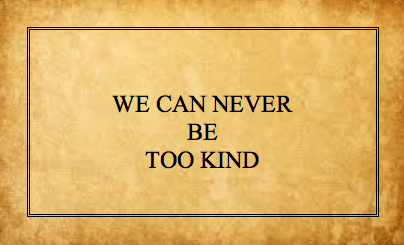
The gift was a regular sized business card on which was printed:

Screen shot 2015-07-14 at 7.38.53 AM

Neil thanked the man and asked him about the sentiment. Why did this man feel compelled to hand out cards telling us that we can never be too kind?

Apparently, the man’s eyes moistened in response and he patted Neil on the arm but said nothing. He didn’t wish to add anything to the message on the card. This was his life’s lesson. Summed up on a small card, and offered free to those who were open to receiving the message.

Neil found it very moving and brought the card back to our class so we could investigate this idea with the question:

“Can we ever be too kind?”

Without boring you with our lengthy process, what we discovered in those discussions is wonderfully relevant for exploring those muddy edges of kindness that show up as the questions I posed at the beginning. Here’s what I learned about kindness.

  • Being NICE and being KIND are two very different things.
  • Being NICE stems from fear. Being KIND stems from love.
  • One can certainly be too NICE. One can, indeed, never be too KIND.

Let’s break that down.

1.  Being NICE and being KIND are two very different things.

NICE

The origins of the word “NICE” are not nice at all. In fact, it’s a highly imprecise chameleon of a word. It’s earliest roots are Latin, and if a Roman described you as “nescius” they meant you were ignorant or incapable as in “not-knowing,” from ne- “not” + stem of scire “to know”; The term then evolved as follows:

  • 1100s – (in old French) careless, clumsy, weak, poor, needy, simple, stupid, silly, foolish
  • 1200s – foolish, stupid, senseless, and timid
  • 1300s – expanding from timid to fussy & fastidious, “nice” went on to acquire more culturally valued traits such as dainty and delicate
  • 1400s – then precise and careful
  • 1500s – and so it was cleaned up even more and preserved in such terms as a “nice distinction” and “nice and early”
  • 1769 – to agreeable and delightful
  • 1830 – all the way up to blur the lines with kind and thoughtful.

What a journey!

Today the adjective “nice” packs some combination of being pleasing, agreeable and pleasant yet there are some subtle, sticky overtones to the quality of “niceness.”
We are rarely “nice” in private. Being nice matters to the extent it is viewed. Being nice is about making a particular impression on the recipient of our niceness. It’s an externally driven behavior having to do with “perception management.” It is, in brief, “an outside job” produced within a context of judgment.

Parents plead with their kids to “be nice” when Grandma comes, and tell their little darlings that “nice people don’t do that” as toddlers do what toddlers do, but in public.

KIND

Kind has a – well – “kinder” pedigree. It first shows up in middle English having been born in the dark ages to emerge around 900 AD meaning natural, well-disposed, genial.

Kindness is presumed to arise from within and the term describes an internal state of benevolence. There is first this natural state of consideration, indulgence, geniality and helpfulness toward others from which proceeds kindness. It is, in brief, “an inside job” up-welling and not motivated by judgment.

Parents who invite their children to be “kind” are usually involved at the level of conscience, and might be gently nudging their little ones to dig deep within themselves to take an action no one will praise them for. I vividly remember my mother taking me aside after some sort of tiff with a friend and asking me, “What’s the kindest thing you could do here my darling?” And whatever it was that I chose to do was definitely not something that saw the light of anyone’s praise, or even knowledge.

2.  Being NICE stems from fear. Being KIND stems from love.

So, if being “nice” is a state where we behave in a way that is designed to have our audience think well of us, and being “kind” is a behavior that wells up from within a heart that is full of benevolence, I think it’s fair to say ~

  • NICE is motivated by fear &
  • KIND is motivated by love.

So what?

Returning to the questions I began this article with ~

  • Where’s the line is between kindness and enabling?
  • When am I being a doormat in the pursuit of “kindness”?
  • What’s up when someone’s apparent “kindness” feels sticky or needy in some way?
  • Why do I have to sacrifice kindness to myself in order to be kind to someone else?

Let’s see how this idea plays out by way of a guide in discerning the answers to these wonderings.

There are two questions worth asking right off the bat:

  1. What am I afraid of?
  2. What’s the most loving thing I can do, for all involved, in this situation?

I’ll take you through a personal journey to illustrate my point. After Mark and I had been married about 14 years we hit a pretty serious low. Mark had started a hydrogeological consulting company and commuted into Seattle from our home in Port Townsend several long days a week. I worked half time at the local Community Mental Health Center as a marriage and family therapist. By mid 1997 we had two children aged 2 and 6. We thought we’d found a good balance of personal-to-couple-to-family life by organizing each weekend so Saturday was a “day off” for one of us, and Sunday was family-day. And my part-time schedule allowed me to do the household management while Mark commuted.

But, as Mark grew increasingly stressed by long days, high-stakes projects and the inevitable dip in marital satisfaction that comes for 67% of couples with small children, I let “niceness” set in. Weekend after weekend I offered Mark “my” day off. Months went by when Mark would take one day each weekend and we’d have a family day the other, yet we both grew increasingly burned out. I thought I was being kind to Mark – surely he could see how I was “sacrificing” my weekend day for him? But, was this kindness?

  • Was I enabling an unhealthy pattern?
  • Was I being a doormat?
  • Was my “kindness” sticky with gooey unspoken resentments?
  • Why did it  feel impossible to be both kind to myself and kind to Mark?

OK, so let’s try those two questions.

1. What was I afraid of?

  • I was afraid that Mark’s stress would make him grumpier and grumpier (which was happening).
  • I was afraid we’d fight.
  • I hated the distance I felt when he was exhausted and drained.
  • I felt resentful since I worked half-time and had full time home-and-kid duty.
  • I was afraid, deep down I suppose, that he’d burn out on his job and put us in a precarious financial position.

So, the truth was, I was being “nice” to Mark because I was far more fearful for us than loving of us.

2. What was the most loving thing I could have done, for all involved, in that situation?

  • Love myself enough to listen to my resentment and doubt.
  • Share these deeper truths first with myself, and then with Mark.
  • Talk together about what was the most loving thing for all of us – the children, Mark and me.

In fact, I slowly did this. I committed to an inspiring Artists Way therapy group and admitted I was frustrated, resentful and afraid to rock the boat. And then began a journey back toward what felt most true about who I was and how I wanted to live.

Eventually I began to talk with Mark. Each one of us digging deep toward an honest self-reflection  until bit by bit we were able to release our fears and share from a place of love once more.

This resulted in a radical lifestyle change, and when our children were 5 and 10, we rented out our Port Townsend home and took a family sabbatical in a small beach-side Mexican village for a year.

Screen shot 2015-07-14 at 7.57.21 AM

But that’s another story.

3.  One can certainly be too NICE.

So yes, in light of all this, I believe there are all sorts of dangers to being too nice. If you choose to behave a certain way because you are fearful of the truth and you wish to present an acceptable “image” the odds are good you are being NICE, not KIND. And with NICENESS comes all those tough dilemmas I began with, and you run the risk of;

  • Enabling unhelpful patterns, false beliefs, and distance from someone who deserves your deepest truth;
  • Doing the martyr thing, behaving like a doormat whilst believing you’re helping;
  • Manipulating with sticky false behavior designed to be judged favorably;
  • Seeing the world as a “me” versus “them” scenario, which denies that there might be a thoughtful, genuine and honest win/win.

One can, indeed, never be too KIND.

NICE is born in fear and expressed by denying the deeper, honest truth.

KIND is born in love and expressed by engaging honesty with courage.

So yes, I agree with the Kings Cross gentleman’s business card: Screen shot 2015-07-14 at 7.38.53 AM

NEXT WEEK A reader’s question. “What’s the difference between independence, co-dependence and interdependence. How do you create a relationship where you can rely on your partner without losing yourself in them, and be sure your partner also understands and strives for the same balance?”  

FIRST TIME HERE? This is the latest article in a year-long series on the “12-most-important-relationship-skills-no-one-ever-taught-me-in-school-but-I-sure-wish-they-had.”

Click the box for the full list.  →Top 12 Relationship Skills

If you’re interested in reading this blog in sequence, below are links to the series to date, beginning with the first posting at the top.

OVERVIEW

SKILLS FOR UNDERSTANDING SKILL ONE ~ Recognize (and get to know) the many “yous.”

SKILL TWO ~ Learn how to be pro-active: choose how y’all show up.

SKILL THREE ~ Accept (and get curious about) other peoples’ complexity

SKILLS FOR CONNECTING SKILL FOUR ~ Master the Art of Conversation

SKILL FIVE ~ Learn How To Listen With Your Whole Self

SKILL SIX ~ Crack The Empathy Nut

SKILL SEVEN ~ Practice Kindness

Cultivating Kindness

It’s not hard to make the case for kindness.

People are yearning for it.

  • Personally, it’s the vital glue in my close relationships;
  • My article Kindness is Key got more “hits” than anything I’ve written for over a year;
  • Google reports that searches for “kindness quotes” and “acts of kindness” are rising rapidly.

It’s good for us.

  • The study of positive psychology has gathered persuasive hard evidence about the benefits of qualities like kindness, compassion and happiness, a small sampling of which can be enjoyed (and even studied) at The Positive Psychlopedia;
  • An Atlantic article is calling kindness and generosity the Masters of Love.

Humans are possibly hardwired for it.

Primates do it.

  • Professor Franz De Waal has been studying emotions in primates, including cooperation, altruism and fairness, for over three decades, touching off a whole field of primate cognition that continues to inspire.
  • There are fresh new studies of pro-social behavior in primates which continue to reinforce the idea that our close animal relatives instinctively exhibit “altruistic” looking helping behaviors.

So – if kindness is yearned for, good for us, innate at birth and alive and well amongst certain primates, why does it become so hard to come by between people who love one another?

One clue to answering this might lie in the research of David Rand, assistant professor of psychology, economics, and management at Yale University, and the director of Yale University’s Human Cooperation Laboratory

In his paper spontaneous giving and calculated greed Dr. Rand discusses his findings that given a brief decision-making window, people will instinctively choose the pro-social (or kinder) option. But, give them time to think it over and they’ll be more selfish.

So, let’s slow that down.

Our first, innate instincts are pro-social and kind.

But once we get to thinking, we over-ride this instinct.

And we tend to over-ride this instinct a lot with the people we love:

in our long-term relationships where familiarity can breed discontent.

Right there in that pause between stimulus and response when your partner (to continue the examples from last week) ~

  • Looses the car keys – again
  • Trumps your punch line and finishes your story – again
  • Burns the fresh wild Alaskan King Salmon fillets – again
  • Forgets your birthday – again
  • Surfs the channels until you’re dizzy – again
  • Grunts at you over morning coffee – again

and you’re frustrated and disheartened because you’ve tried a thousand different ways to communicate that this behavior drives you nuts,

and right then you quell any instinctual kind response and instead go Hamlet and ask yourself a version of “To be (kind), or not to be (kind)?”

In that moment of thought, your natural kindness instinct is gone – Pooft!

And instead you feel an upsurge of anger and think to yourself,

How the blazes do I play the kindness card when I’m frustrated and disheartened and my partner is unreasonable and forgetful?

Screen shot 2015-07-07 at 12.30.55 PM

And in that moment of thought

a huge gulf opens up within you

and your heart divides.

On one side lurks the story you tell yourself about what has happened.

On the other side lies your ability to respond kindly.

As an IFS-trained couples counselor, I think David Rand is onto something important about what happens when we replace instinct with reason.

The moment we stop to think, we open our inner Pandora’s Box. And this box is always very full of opinions and judgments, the belief in which allows us not to feel what we feel. Particularly our thinking protects us from feeling the pain of ~

  • isolation
  • vulnerability
  • unworthiness
  • unlovability
  • shame.

See if any of these feel familiar.

THE GOLDEN SCRIPT IS THE ALL TOO FAMILIAR TRIGGERING INCIDENT

  • The blue script is the thought that interrupts your instinct to be kind
  • The red script is the feeling you may be trying not to feel.

* * * * *

LOST KEYS

  • My partner’s needs and chaos are interrupting me and my life far too much.
  • I feel overwhelmed by all the demands on my time.

STOLEN PUNCH LINE

  • Why does my partner have to steal my thunder all the time?
  • We get so competitive around others. I feel like I’m not interesting enough.

BURNT FISH

  • My partner can’t even focus and accomplish one thing for “us” at home.
  • I feel so alone when we can’t pull off a simple team effort like a meal .

FORGOTTEN BIRTHDAY

  • I make a big fuss over everyone’s birthday in this family, so why can’t they do the same for me?
  • I feel invisible, unlovable & too vulnerable to remind folks when my birthday is coming.

CHANNEL SURFING

  • He’s so twitchy and uncentered. Why can’t he just settle on a program?
  • I feel ashamed that I waste time like this but can’t find anything more interesting to do for myself.

NO COMMUNICATION OVER MORNING COFFEE

  • I have to make all the decisions around here – my partner’s non-functional every morning.
  • I feel so isolated when I can’t connect with my partner before we both leave for work.

So now you’ve got ~

A behavior in your beloved that you once found endearing and met with kindnessyou used to help find the keys, and you used to find it reassuring when your beloved knew your stories so well  they could finish them

is now immune to your original kindness response  – because your story about this behavior interrupts your initial pro-social instinct

and instead your story about this incident triggers your core vulnerabilities – and the accompanying not-so-great-feelings inside of you

and you lash out, tilting at the windmills outside of you, when actually the pain is all internal.

Because your cup is empty. Because you are not happy. Because you have not been kind enough to YOU.

WHAT TO DO?

My new friend and Buddhist teacher Kathleen Rose of the Boise Institute for Buddhist Studies connected me with a wonderful teaching I’d love to share briefly here, with a link to a fuller article.

In the face of inner overwhelm when you are underwhelmed by kindness for yourself or others, remember the RAIN of Self-Compassion. I quote briefly from this article here, or click that title link for the whole piece.

The acronym RAIN, first coined about 20 years ago by Michele McDonald, is an easy-to-remember tool for practicing mindfulness. It has four steps:

Recognize what is going on;
Allow the experience to be there, just as it is;
Investigate with kindness;
Natural awareness, which comes from Not identifying
with the experience. Or, more simply Non-attachment.”

To cross that enormous gulf of pain that opens up when thinking interrupts your instinct and separates you from your original pro-social drive, you only have to eliminate the story!

You already have everything you need to be kind.

You are an innately kind person who has lost touch with your instinctual ability to be kind because you’re drained. You’ve exhausted yourself by first creating these inner protective beliefs and then by believing these tales you tell.

SO TO CULTIVATE KINDNESS

in yourself and others, the next time someone in your life does what they do that you normally find so irritating, try 3 things:

  1. Recognize anything other than a kind instinct within as a self-diagnosis of inner overwhelm. All is not well if you are separated from your naturally compassionate self.
  2. Remember RAIN of Self-Compassion.
  3. Turn toward this person with a refreshed heart and remember what you used to do that was instinctively kind. You’ll know. If not, simply say “You know, here we are again – with you doing this and me on the verge of reacting. But I’m done reacting negatively. I’m sorry I’ve been so grumpy. I’ve been running on empty but I’m taking better care of myself. What do you need right now?”

See what happens.

I’d love to hear about it!

 * * * * * * * * * * * * * * * * * * * * * * * * * * * * * * * * * * * * * * * * * * *

FIRST TIME HERE?

This is the latest article in a year-long series on the “12-most-important-relationship-skills-no-one-ever-taught-me-in-school-but-I-sure-wish-they-had.”

Click the box for the full list.  →Top 12 Relationship Skills

If you’re interested in reading this blog in sequence, below are links to the series to date, beginning with the first posting at the top.

OVERVIEW

SKILLS FOR UNDERSTANDING

SKILL ONE ~ Recognize (and get to know) the many “yous.”

SKILL TWO ~ Learn how to be pro-active: choose how y’all show up.

SKILL THREE ~ Accept (and get curious about) other peoples’ complexity

SKILLS FOR CONNECTING

SKILL FOUR ~ Master the Art of Conversation

SKILL FIVE ~ Learn How To Listen With Your Whole Self

SKILL SIX ~ Crack The Empathy Nut

SKILL SEVEN ~ Practice Kindness

Kindness Is Key

. . . to great relationships.

Triumphed again my darling!” exclaimed my uncle as my aunt produced yet another burnt offering. Cooking was not her forte but she was taking lessons and insisted on trying out new things before she was quite ready.

20150701_132257_Richtone(HDR)My uncle was a kind man. He never resorted to sarcasm. He never gave her anything other than glowing feedback. He adored her culinary triumphs and made light of her kitchen disasters. He exuded an air of “Aren’t I lucky to be sharing my life with this woman!”

I think they were the most joyful couple I’ve ever known and staying with them was deeply restorative.

Were they “perfect?”

Of course not!

They came from very different backgrounds; had different interests; enjoyed different music; had different appetites for socializing; he was a quiet private man, she was an extrovert; they could rub one another the wrong way as much as any couple.

But they were (almost) always kind to one another.

They were my first role models for the power of kindness in creating great long-term relationships.

* * * * * * * * * * * * * * * * * * * * * *

Sometimes living together gets tough. You have issues. You want to fix something. You work hard.

And yet, after all the ~

  • communicating;
  • counting to ten before you speak;
  • concentrated listening;
  • patient “So what you’re saying is . . . ” active reflecting;
  • negotiating, and giving one another space, and problem-solving;

after you’ve cycled through your arsenal of relationship skills in the effort to both understand and grow closer to the person you love (or thought you loved) ~

you may still be mystified by your partner.

You may still feel exasperated, irritated, disappointed, exhausted, frustrated, righteous.

So then what?

This person whom you’ve committed to spending the rest of your life with may still;

  • Loose their car keys every day;
  • Finish your story;
  • Overcook the fish;
  • Forget your birthday;
  • Channel surf;
  • Grunt at you over morning coffee.

Nothing you’ve said or done or negotiated has worked and there is this issue, this “pebble in your shoe” (as the Mexicans say) which threatens to undermine your whole marathon.

It’s hardly a crime against humanity. It can’t possibly be grounds for divorce:

Your Honor I’m done. He burns the fish!”

But, dammit, there’s this issue that bugs you. Whether you’re the partner who looses track of fish cooking times and hates that this matters, or you’re the partner who hates that fish gets burnt, you are aware that over the long haul this issue could get old. And potentially deadly because the truth is, it often IS the little things that make or break a marriage.

So what?

WHAT!

Try kindness.

Here’s why you might want to try kindness.

Every interaction between you and your partner does one of three things.

  1. It brings you closer.
  2. It maintains the status quo.
  3. It pushes you apart.

Happy couples enjoy a ratio of five positive interactions for every one negative one. Their arousal and fear mechanisms are not triggered. They feel safe with one another. They can relax. This feels good. It IS good. Their emotional landscape creates their biological reality. Happy couples literally live longer .

On the other hand, unhappy couples have more negative interactions than positive ones. These negative experiences trigger the body’s arousal and fear mechanisms. They feel less and less safe with one another. They can’t relax. This feels bad. It IS bad. Indeed, emotional toxicity undermines the immune system. There is growing evidence that bad relationships contribute to bad health. which is why Happy couples literally live longer .

Here’s how to try kindness. .

  • So – how to get this 5:1 ratio of good to bad interactions?
  • What does this look like in real life?
  • What’s an example of a “good” interaction versus a “bad” interaction?

It’s not what you think!

Sure the “bad” list includes what you’d expect:

  • Physical, verbal or sexual abuse
  • Abandonment
  • Criticism
  • Defensiveness
  • Contempt
  • Stonewalling

[By the way, these last 4 in italics have been identified by John Gottman as The Four Horseman of the Apocalypse because they do so much harm. If you are interested I’ve embedded a short video from Gottman’s website . These are the poster children for Not Kindness!]

But the “bad” list also includes some seemingly “normal” responses to the irritating scenarios above. In other words, you may be unwittingly triggering a negative response in your partner through these small daily interactions that add up to no good.

Here are three responses to a chronic lost-key scenario. Which would you prefer if you were the key looser?

  1. You see your partner roll their eyes, sigh, check their watch and drift off leaving you alone to find the keys.
  2. Your partner notices you are key hunting and says in a neutral tone, “Oh, you’ve lost the keys?”
  3. Your partner comes to you a few minutes before it’s time to leave and cheerily says: “So, are we on a key hunt this morning, or have you rounded up those bad boys already?

Personally I’d choose door number 3. There’s a playfulness, lightness, acceptance of the probability of a key-hunt and the use of “we” not “you.”

Option #1 is most likely to be experienced as negative. Eye rolling is a form of contempt.

Option #2 is most likely to be experienced as neutral. No one is angry or contemptuous. But there’s not a whole heap of warmth either.

Option #3 is most likely to be experienced as positive. It’s a kind response. The sort of thing good friends do for one another.

Is that so hard?

What does it take to help move a person from irritation to kind acceptance?

I’ll come back to this question over this month of July because it’s a great one, but for starters here’s how I’d answer that question.

Moving to kindness needs two things:

1. It’s a conscious decision to exercise your inner capacity to be kind.

2. Your inner capacity to be kind is like a muscle – it is weak when not used, and needs to be exercised to be effective.

So meanwhile – try it out! Catch yourself in one of your typical moments of exasperation and think through what a kind response might look like. Then try it. I’d love to know what you notice!

More next week.

FIRST TIME HERE?

This is the latest article in a year-long series on the “12-most-important-relationship-skills-no-one-ever-taught-me-in-school-but-I-sure-wish-they-had.”

Click the box for the full list.  → Top 12 Relationship Skills

If you’re interested in reading this blog in sequence, below are links to the series to date, beginning with the first posting at the top.

OVERVIEW

SKILLS FOR UNDERSTANDING

SKILL ONE ~ Recognize (and get to know) the many “yous.”

SKILL TWO ~ Learn how to be pro-active: choose how y’all show up.

 SKILL THREE ~ Accept (and get curious about) other peoples’ complexity

SKILLS FOR CONNECTING

SKILL FOUR ~ Master the Art of Conversation

SKILL FIVE ~ Learn How To Listen With Your Whole Self

SKILL SIX ~ Crack The Empathy Nut

SKILL SEVEN ~ Practice Kindness

  •  Kindness Is Key

Living Empathically

A thoughtful reader responded to my Teaching Empathy to Children post with this comment:

So often I’ve seen parents making the mistakes you list at the top of the article. It’s sad because some of the children who have grown up with my own children have indeed become emotionally stymied and unhealthy. Since it takes a village to raise emotionally healthy young people, can you suggest ways in which you can intervene diplomatically and with skill when you see a situation going bad in which parents make those mistakes and lose sight of the big picture?

It’s such a great question I wanted to use it as the focus for this final post on the subject of empathy.

I’d also love to open up a conversation – I am sure there will be readers who have ideas to add. Hit the Leave a Reply link at the beginning of this post. We’d all benefit.

As a licensed therapist I’d be remiss not to note the obvious: there’s a triage to be considered in these parenting issues.

  1. Active Abuse – get involved, because the situation is out of control and the family system needs professional attention
  2. Parent out of control – get involved, because the parent has lost it and the child needs your help
  3. Child out of control – get involved, because the child has lost it and the parent needs your help

1.  Active Abuse

Screen shot 2015-06-24 at 12.13.57 PMChild abuse is taken very seriously in most countries around the world. For US readers, here’s a Mandatory Reporters of Child Abuse guide, as a short handout from the government’s Child Welfare division. It’s worth a read if you’ve ever found yourself wondering  “is this abuse?” and “should I report this to someone?”

In brief,

The Definition of abuse ~ varies, but in most areas it’s along the lines of conditions that would reasonably result in harm to a child . However, to be sure, and to empower you in case you witness something that has you wondering, check the legal definition in your area. US readers can search their State’s definition of what constitutes abuse .

Who can report child abuse? ~ Anyone may report, and some people must report. Once again this varies by region but certain professionals are mandated to report child abuse and this is a comprehensive list. It includes at least –

  • social workers
  • teachers and school personnel
  • doctors, nurses and all health care workers
  • school counselors, therapists and mental health professionals
  • child care providers
  • medical examiners and coroners
  • law enforcement
  • and can include the directors, employees and volunteers at places which provide organized activities for children such as day camps, youth centers and recreation centers.

In no state it is wrong to report your suspicions of child abuse.

So, IF you have “knowledge of, or observe a child being subjected to, conditions that would reasonably result in harm to the child” (excerpted from the Mandatory Reporters publication linked above) you should call the police, or if in the USA, you can call your state-specific child abuse hotline,

If you have witnessed a nasty, vicious incident and can report it, you’ll at least feel you did something. But if you know nothing about the people involved, and can’t give names, addresses or even any static geographic area where the police could reasonably be expected to find these folks again (you’re at an airport, on a train or bus etc) you can at least take some comfort in knowing that if there is chronic abuse there is a good chance the child will be witnessed by one of the numerous mandated reporters.

2.  Parent out of control

Screen shot 2015-06-24 at 12.19.47 PM OK, so you’re right there when a parent looses it. They yell, handle the child roughly, use abusive language, make threats and even slap or swat the child, but awful as this is for the child (and for you to witness) it does not seem “bad-enough” to report to the authorities.

What can you do?

Apparently lots of folks have opinions about this, and a quick internet search brings up some pretty dismal ideas, mostly along the lines of shouting at, and shaming, the already beleaguered parent. I was horrified!

Think about it.

What’s happened?

The parent is out of control. They’ve [temporarily we hope] lost touch with their mature, capable, resourceful self. They are behaving childishly, in an unskilled, reactive and volatile way. They are – essentially – throwing a grown-up tantrum, except it’s not their parents they are throwing it for, it’s their child. Truth is, we’ve all been there! Maybe for us we’ve been fortunate enough not to loose it when we were out in public. The last thing we need at times like these is public shaming.

I’ve come across a wonderful resource for just these moments that I’d love to share, called OneKindWord. This is a public education program developed by Pennsylvania-based Family Resources  and Family Communications, thanks to Mr. Roger’s on-going legacy

With a mission to raise awareness about parent-child conflicts in public and empower people to step in helpfully when they see a stressed parent or a child who is unsafe, they offer three simple steps which go a long way to help us dump the judgment and connect empathically.

Screen shot 2015-06-24 at 12.26.35 PM

And you can download a One Kind Word Overview  as a PDF, and here’s a short Tip Sheet.

Screen shot 2015-06-24 at 12.43.25 PM

3.  Child out of control

Screen shot 2015-06-24 at 12.18.42 PM

If the parent is on their game and can handle it, great.

If not, making eye contact, saying something kind, and helping the parent keep the child safe can all make a huge different to the outcome.

Here’s another list from OneKindWord .

Screen shot 2015-06-24 at 12.30.44 PM

Living empathically can become a habit. Enjoy!

FIRST TIME HERE?

This is the latest article in a year-long series on the “12-most-important-relationship-skills-no-one-ever-taught-me-in-school-but-I-sure-wish-they-had.”

Click the box for the full list.  Top 12 Relationship Skills

If you’re interested in reading this blog in sequence, below are links to the series to date, beginning with the first posting at the top.

OVERVIEW

SKILLS FOR UNDERSTANDING

SKILL ONE ~ Recognize (and get to know) the many “yous.”

SKILL TWO ~ Learn how to be pro-active: choose how y’all show up.

 SKILL THREE ~ Accept (and get curious about) other peoples’ complexity

SKILLS FOR CONNECTING

SKILL FOUR ~ Master the Art of Conversation

SKILL FIVE ~ Learn How To Listen With Your Whole Self

SKILL SIX ~ Crack The Empathy Nut