Author Archives: gemmautting

Unknown's avatar

About gemmautting

A licensed Marriage and Family Therapist, I specialize in pre-marital preparation and relationship repair. A committed, long-term relationship is going to call you into places of deep personal awareness and growth like nothing else can. Learning how to allow this, how to respond without defensiveness and how to gracefully expand into the best possible version of yourself - whether before you say "I do" - is my joy and life's work.

Top 10 Emotional Needs

Why do we couple-up?

According to Dr. Harley of MarriageBuilders.com (from whom I have adapted these descriptions of needs) couples cite the 10 emotional needs listed below as most important to them. These are what they want out of their primary love relationship. For fun, rank order these with #1 (most important to you) to #10 (least important to you), and compare notes with your lover. You might each learn a thing or two.

_____ AFFECTION  (you have a consistent and willing place in your partner’s arms and heart for touch, hugs and snuggles)

_____ SEXUAL FULFILLMENT  (you enjoy making love and find your sexual relationship is allowed both full expression and evolution).

_____ RECREATIONAL COMPANIONSHIP (you enjoy spending most of your free time together and find that certain activities are enhanced by sharing them with your partner.)

_____ INTIMATE CONVERSATION (your partner is your go-to person for what is on your mind. You find it easy to open up to your partner because he or she listens and understands you in a way that feels satisfying and unique.)

_____ HONESTY AND OPENNESS (you trust one another to share what is important and not to withhold secrets that might be hurtful.)

_____ PHYSICAL ATTRACTIVENESS (you are proud to be with your partner, you like showing him or her off to your friends, you are happy to have “caught” such a person!)

_____ DOMESTIC SUPPORT (you and your partner have figured out how to run a home together. You know what your areas of strength and weakness are and you both manage to navigate these successfully so your home space meets both your needs.)

_____ FINANCIAL SUPPORT (you and your partner can discuss how the income you need is brought in. You can agree as to how each of you contributes, how much, how often and what to do when you need to renegotiate these needs.)

_____ FAMILY COMMITMENT (you and your partner have a similar appetite for sharing your lives with extended family. You can manage your in-laws with consideration and compassion and can put your marriage ahead of pressure from outside.)

_____ ADMIRATION (your partner is proud of who you are, what you accomplish, how you accomplish things and tells you this quite often).

It’s pretty common to find we try to fulfill the needs we want for our partner – assuming they want the same thing. So, if you’ve not been connecting as well with your sweetie lately – compare notes.  If your #1 is Intimate Conversation and your partner’s #1 is Recreational Companionship, it might explain why the fishing trips are so fraught. You want to use this time away for some D & M’s (deep and meaningfuls) whilst your partner just hopes you’ll both pursue fish.

Watch this space for EMOTIONS  101 – a five-part series, starting on 4 March 2013, on how to recognize, talk about, express and use your emotions effectively.
Use Feelings to Identify Needs.

If you’ve ever been curious about the connection between FEELINGS and NEEDS, try this.

QUESTION  #1

Jot down what you’re feeling this moment. Reference anything – relationships, work, fitness, future plans. Whatever is alive for you right now – take a feelings inventory.

Need some prompts?  Here are 16 common emotions, sorted as Negative and Positive.

NEGATIVE

  • Angry
  • Anxious
  • Afraid
  • Ashamed
  • Disconnected
  • Disgusted
  • Drained
  • Sad

POSITIVE

  • Confident
  • Connected
  • Engaged
  • Excited
  • Grateful
  • Peaceful
  • Happy
  • Surprized

OK – make your list.

Bet you noted more than one feeling! Here’s my list, right now:

  • Frustrated
  • Anxious
  • Jealous
  • Excited
  • Hopeful
  • Sad
  • Intrigued

“So what?”

Here’s the magic.

With Questions 2 and 3 I’ll show you how to use your feelings/emotions to help identify what you need in this moment, even though your conscious mind might be clueless.

QUESTION  #2

Of the feelings you just identified, there’ll be some you’ll want to keep feeling. For me that’s excited, hopeful, intrigued and sad. I don’t mind sad. It motivates me to keep trying to make the world a better place. It’s an old friend.

The other feelings you possibly want to transform or not feel. For me that’s frustrated, anxious & jealous.

Take any one of the feelings you want to transform and ask ~

“What feeling would I prefer to have?”

Take my feeling of “frustrated” as an example.

Q ~ In the face of feeling frustrated, what feeling(s) would I prefer to have?

A ~ Flow, inspiration, audacity, faith, confidence

Nearly done – stay with me here. Soon you’ll be able to connect your feelings and needs in a flash, but I want to slow it down to show you how.

Now we’re ready for ~
QUESTION #3

Ask ~

“Now that I know I’m feeling ____________, and I’ve identified I’d rather be feeling ______________ , what do I need to get me there?”

For me this looks like ~

Now that I know I’m feeling frustrated, and I’ve identified I’d rather be feeling flow, inspiration, audacity, faith & confidence, what do I need to get me there?

Here’s my free-association response ~

I need to live audaciously. I need to do one thing out of my comfort zone each day. I need to take big, fat risks and stop hiding behind needing things to be perfect. I need to be OK with failure. I need to leave frustration because it is keeping me safely stuck!

Huh! My conscious mind did not know this. I was thinking caution, more research, more time, less risk. But apparently my emotional body has a whole other plan!  I’ve moved from feeling vaguely upset and stuck in a project, to a forward momentum action plan. My feelings pointed me toward what I need. OK – now I’m intrigued to see what happens when I work with anxiety and jealousy!

Might this work for you?

Help Your Kid Show Anger

Part 2 of 2 ~ Letter to a client about what to do when her child shouts “I hate you!”

from my A Client Writes* series

(Continued from Part 1 of 2, posted on 25 February, 2013)

Let’s continue the math teacher example to start with.
A thoughtful teacher would stay focused on helping Suzy learn something. She’d also not tell herself unhelpful stories about Suzy being too stubborn, stupid, or lazy to learn.  She might have noticed that Suzy had the numbers right, but backwards, and say:

“Suzy, you think the answer is eighty-four. Can you come put those numbers up on the board for us?”
Suzy goes to the board and writes (correctly) 48, whilst saying “eighty-four”.
“Ah! You’ve got the maths right yes, the answer is forty-eight, but in your mind you see the eight coming before the four don’t you? So you shouted out eighty-four! Let’s you and me chat later about how to get the numbers in the right order in your head – that can be tough!”

Whole different ball game, right?

No self-defending, shaming, giving up on, or belittling her. Suzy is probably excited to know she has the basic maths right, even though she sees she has some work to do in not muddling the numbers up.

To the extent we parents can come at these issues calmly, like a good teacher, we can help our children become excited about, and competent in, their emotional intelligence.

Meanwhile, back at home, if you can see Alice’s “mistakes” as attempts to tell you about her emotions, you can respond like the thoughtful teacher. Here’s how this might look.
“Oh Alice, you have strong feelings about this! Do you feel ~ [guess what she might be feeling here]

  • irritated that I’m asking you to clear up now?
  • maybe frustrated, since you’re nearly done?
  • even resentful that grown-ups can stay up as long as they like on their projects?
  • and maybe a bit sad, because it’s not going quite the way you’d hoped and you’re not sure how you’ll fix it tomorrow?”

If you’ve got the feelings wrong she will correct you, or you can ask her ~ “Where am I right and where am I wrong? Help me understand what you are feeling.”

Let her know that when she says something like “I hate you!” she may well be mad at you, but you wonder if there is more. And because you care, you want to help her figure this out. Let her know most people don’t like to be told someone hates them but there is a way she can talk about her feelings that will help her gets her needs met in a way that makes friends, rather than in a way that makes enemies.

Maybe what Alice needs now, as she stops her project prematurely, is to make sure she sets aside some more time tomorrow to finish it up and maybe she needs better glue since things keep falling off (or whatever – you get the idea, right!).

Let me know how this goes and what you notice.

Warmly,

Gemma

Tomorrow: How to use Feelings to point toward Needs.

* My clients get much more than the typical “50 minute hour.” I’m on their team. I often write between sessions, and encourage regular texts and emails. In these intermittent “A Client Writes” postings, I share some tools and tips I’ve been asked about (after removing any identifying details of course). If you want some of this – let’s chat!

Why Your Kid Says “I hate you!”

Part 1 of 2 ~ What To Do When Your Child Shouts “I hate you!”

A Client Writes* . . .

Dear Gemma,

Can I get some advice? Just recently Alice (age 7) has been shouting “I hate you!” She says this right after I have to tell her to do one thing, or stop another. I’ve been saying “I love you!” back. But yesterday I lost my cool and yelled “It’s so easy for you to hate! You can’t mean it – you’re just mad that I’m telling you what to do!”

Later she told me I hated her – where did that come from?  Am I just giving her negative attention?  Should I just say nothing next time?  Help!”

Dear Alice’s Mum,

Great question!

When we take what an emotional child says at face-value, as an accurate self-assessment, it’s very tempting to respond with ~

  • “Alice! I never want to hear you say that to me or anyone ever again!” (which puts your embarrassment and hurt ahead of helping Alice through her emotional confusion)
  • “Well, I love you.” (hoping to role model, or shame her into, what she should say)
  • “No you don’t, you love me!” (which denies her inner turmoil)
  • “No need to get all upset over this!” (which belittles her feelings).

However, when we take what an emotional child says as an inaccurate “first draft”  (because learning how to recognize and name emotions is tough, like learning maths only harder) we can stop taking what they say at face value and recognize a learning opportunity.

Let’s imagine a child blurting out an inaccurate response in maths class.

Maybe Suzy shouts out “six times eight is eighty-four!”
An unhelpful, “face-value” teacher might say:

  • “Suzy, how can you possibly get this wrong! What will your parents think?” (takes a child’s mistake as a personal attack on her competence)
  • “Well, Jimmy, can you help Suzy? (hoping for reassurance as a teacher, but this comes at the cost of shaming Suzy)
  • “No, wrong. Look it up!” (Which doesn’t help Suzy figure out where she went wrong in this problem)
  • “Now Suzy, maybe this is too hard for you. Why don’t you go back and review the four times tables? You got those right I think?” (Which belittles Suzy’s very real ability to master her eight times tables).

Similar ideas, right?

Tomorrow I’ll share how to use these opportunities as golden moments for understanding our child’s attempts more fully (both in maths and emotions). I’ll show how to help this elementary-school-aged child learn how to recognize, name and use her emotions to not only get her needs met more effectively, but also (added win-win) to connect her with her mum, instead of pushing her away.

Warmly,

Gemma

* My clients get much more than the typical “50 minute hour.” I’m on their team 24/7. I often write between sessions, and encourage regular texts and emails. In these intermittent “A Client Writes” postings, I share some tools and tips I’ve been asked about (after removing any identifying details of course). If you want some of this – let’s chat!

Dating Again, Post Divorce

OK friends, last in a 5 part series on how to be a friend when your friends have affairs, separate and divorce.  This one’s about what to do when they are ready to get back on the dating scene.

Part 5 of 5  HOW TO HELP WHEN ~ They Are Dating Again

1. Invite your single friends over. Yes, you miss the good old times when you and your sweetie hung out with your friend and his or her “ex.” However, this can be a refreshing shift for your friendship. After divorce, most people shake loose some old behaviours and beliefs: Who is this person now? Invite your newly single friends over with other couples. It’s good for them to cross that hurdle of “odd one out amongst couples ” with someone they know and trust.  When possible, try to connect with both sides more or less evenly. Maybe play sports with one, but have dinners with the other. It’s all good.

2. Be careful with the matchmaking already. Sure it’s tempting! Especially if you’ve watched the death of your friends’ love over the past years and have longed for their happiness. 2 good reasons to slow this down:

  1. If your friends are to avoid a rebound disaster, they’ll need time to figure out who they are now, post divorce. Rather than urging more coupling, try championing some single time. Some “getting to love and enjoy my own company” time. This might be a long overdue developmental stage for your friend – support it!
  2. If you are friends to both, think how it will seem to the friend whom you do not “fix up” with a match? What’s she then – chopped liver?

3. Ask if and how your friends want your “feedback.” Talk to your friend about what they want next. Some self-discovery single time? Great – support that. Some dating-as-self-discovery? Great – support that too. But, have a conversation with your friend about what to do if you see warning signs. What if you don’t like the new friend, after genuinely trying? What if you see behaviors that look dangerous to you? Maybe your friend’s new partner strikes you as controlling, vindictive, or insincere? If your friend asks for your honest opinion, clarify some ground rules. Having an upfront conversation increases the odds these tough chats later will be possible and useful.

4. Watch and Learn – my friend. You may be surprised at your feelings when your divorced friend finally falls in love again with someone wonderful, and their romance, wedding, new home and fresh start make your 15+ year relationship seem dowdy and stale. Even the horror off sharing kids with the “ex” now has a bright side; alternating kid-free weekends! If you feel more jealousy than relief at all this newness, it’s time to clean up your own house.  What do you and your partner need to stay new, alive and in love?

Helping Kids through Divorce

How friends and relations react in the face of a couple’s troubles can make a huge difference, often for the worse.  I am dedicating this week’s blog space to addressing the five types of couple distress I see most regularly, with tips for how family and friends can help, not harm, the hurting couple.

Part 4 of 5  HOW TO HELP WHEN ~ The Divorced Couple has Kids

1. Never badmouth either parent in front of the children. Children know (even if adopted) they’re a combination of both parents. It’s never OK to say anything negative about either parent. If a child tells you they are “mad at dad” by all means acknowledge “Boy, right now you’re so mad at dad you could scream!”  But avoid character assignation. If you hear “mum’s a looser – if she’d just stop drinking dad wouldn’t have left,”  challenge this gently. “Your mum’s behaved badly, but she’s not a bad person.” Good people can make bad choices. This is key or the child might grow up thinking they too have some ingrained character flaw “just like mum or dad.”

2. Cut the kids some slack.  When your parents split, your home’s sold, you divide your time and stuff between mum’s house & dad’s house, your friends are gossiping, family finances suffer, you have to meet a parent’s new partner, and-life-as-you-once-knew-it is forever changed, it can be hard to find comfort. Counselling might be good. But anyone can help by taking the child out, listening, empathizing and offering simple kindness. A regular zoo date; movie night and sleep over at your house; an introduction to something new – a sport or art or book – shows you care.

3. Include them in your family traditions. “It takes a village” yea, yea, but it really helps! If your divorced friends are not up for the Easter egg hunt, pumpkin carving, tree cutting, carol singing, Thanksgiving feast, bake sale, Waitangi Day races, cabin-on-the-lake trip for a while, include your friends’ kids with your own. As the child of an unhappy marriage, I longed for these immersions into happy family gatherings and model my own parenting on the many aunts and friends who included me along the way.

4. Be an advocate for the children.  In a recent study of young adults from divorced families, many of those surveyed identified loss of control over their lives as very upsetting. Few kids said their parents had talked with them about the divorce and only 5% had the chance to ask questions. Help your friends put their love of the children ahead of their hate for the “ex”.  Just because the parenting plan says Mum’s house on Thursdays, but there’s a Father’s Day tea – what does the child need and want today? Might it be OK to listen more to the children?

Your Friend’s Divorce

How friends and relations react in the face of a couple’s troubles can make a huge difference, often for the worse.  I am dedicating this week’s blog space to addressing the five types of couple distress I see most regularly, with tips for how family and friends can help, not harm, the hurting couple

Part 3 of 5 HOW TO HELP WHEN ~ They Divorce

1. Don’t be afraid to mess up. There are no rules for how to divorce with élan. No common divorce rituals, rites of passage, no playbook for those of us left with loyalty issues and sore hearts for our friends’ broken love.  It’s understandable to be a bit nervous around divorce – it’s a death and there’ll be grief and loss. Do your best to keep the lines of communication open with your friends. This is particularly important if there are children (see Post 4).  But in any case stay connected, however imperfectly, so your friends know they are not alone.

2. Don’t rush back to “normal.” Just because the death of a marriage doesn’t end with a funeral doesn’t mean your divorcing friends are not in a state of grief and loss.  Most likely the divorced couple will have lost their home, savings, shared past, future hopes, family unit, in-laws, photo albums, lifestyle, trust in the permanency of love, and often a huge helping of self-respect. It takes time to come back from all this. The divorced partners are now off on separate journeys of recovery and it won’t help to rush them. It may take years before your friend becomes the old familiar playful, funny, unselfish character you once knew. Allow your friendship to evolve – as it will.

3. Do remind them of “normal.” Sometimes the last thing your friend wants is to discuss the divorce. Great – provide them with the distractions they seek. This is a good time for you to complain, seek their advice, ask for their help, take up Hot Yoga, start a diet, and generally show them that life is big and wide and has a place for them even when they’re not quite ready to engage 100%.

4. Sort out your own feelings. Remember, this is not your divorce. While it might seem as though your friend/relative wants you to dislike (hate?) their ex as much as he or she does, you may not.  It might be this “ex” is the mother or father of your grandchildren; how can you hate them? It might be you have loved this person and are sad to be losing them from the family or friendship circle. How you negotiate your relationship with someone who is divorcing out of your community is up to you.  You can stay in touch and love them as before. You may just have to do this separately for a while.

Your Friend’s Separation

How friends and relations react in the face of a couple’s troubles makes a huge difference, often for the worse.  I am dedicating this week’s blog space to addressing the five types of couple distress I see most regularly, with tips for how family and friends can help, not harm, the hurting couple

Part 2 of 5  HOW TO HELP WHEN ~ They Separate

1. Be a neutral-zone. Even if you feel strongly in favour of one partner over the other it’s not helpful to act this out as prosecutor or defense. Just listen and try to be supportive by telling your friend how sorry you are that he or she is having this experience.  Don’t badmouth one person to the other – not only is it unhelpful, but there’s always the chance they might get back together again. Don’t ever volunteer to be the “go-between.”  While it might seem neutral, this perpetuates dreadful behaviour and fosters jealousy.  If the separated partners want to talk, they can do so directly, or in therapy.

2. Offer tangible, practical help. If your friends are separating, one, other or both of them will be living with less stuff. Does someone need bedding, kitchen ware, extension cords or a lamp?  If your friend used to rely on his or her spouse to help with dry cleaning, car troubles, elderly parents or the pets, can you step in instead?  Sleuth out which day or night is toughest on your friend and show up with dinner. Be willing to talk about anything, e.g,(“Can I survive on this budget?” or “Shall I shave my head, drop 10 kg, and  re-do my wardrobe?” Listen. Ask questions. See if you can get them laughing at their predicament – occasionally.

3. Stay alert for severe reactions. Whatever the cause of a separation, this is a massively unstable time. Feelings and behaviour will be all over the map and you may be frightened by your friends’ oscillating mood swings. Just show up. Love your friend unconditionally even if they are making poor choices. If you suspect your friend is severely depressed be willing to discuss suicidal thoughts. If she / he has a concrete plan (I’ll take an overdose) and has the means for completing this plan (I’ve been hoarding my pills for two years and have more than enough) ask  “On a scale of 1 – 10 with 10 being you don’t want to make it through the night, where are you?” If your friend has the means to carry out a suicide and is over a 3 or 4, get professional help.

4. Get your friend helping others. A pity-party is a lonely affair. If your friend is wallowing, get them thinking of someone else. You need them to walk your dog; the neighbour needs house-plants watered; animal rescue needs someone to love the kittens. Obviously, if there are children involved, this will look very different.  See Part 4.

Your Friend’s Affair

While the number of couples getting divorced (or ending their civil or de facto unions) is down a bit in New Zealand from over 12 per 1000 married couples in the late 1990s to below 9.8 per 1000 married couples in 2011,  most of us are touched at some point by the divorce, separation or infidelity of a friend or relative.

How friends and relations react when a couple is in crisis makes a huge difference, often for the worse.  I am dedicating this week’s blog space to addressing the five types of couple distress I see most regularly, with tips for how family and friends can help, not harm, the hurting couple

Part 1 of 5 HOW TO HELP WHEN ~ An Affair Strikes

While it can make a difference to how you feel about your friend if you know whether they are the unfaithful or the hurt partner in an affair, the following tips apply to both scenarios.

  1. Resist the urge to judge. Not all affairs are all bad. As I tell couples who come to me, affairs can be the death knell of a relationship, or the wake up call. When affairs are first discovered it is hard to know which way things will go and certainly there are two sides to every story. If you, as a dear friend or relative, sit in vocal judgment you may well interfere with the genuine insight, growth and healing that can come out of an affair.
  2. Be their friend, not their shrink . By all means be a good friend and listen, empathise, ask clarifying questions and be non-judgmentally supportive, but seeing your friend through the aftermath of an affair – no matter what role your friend played – goes over and above the bounds of friendship.  Hug them, cry with them, then help them find a good professional – you’ll both be glad of it in the end.
  3. Don’t succumb to gossip.  Betraying trust and trafficking in endless opinions about what’s happening, who’s right, who’s wrong and what “should” be done, does not help anyone.  Let your friends know you trust the couple is getting help and change the conversation by discussing ways to support both of them.
  4. Extend invitations to your friend… repeatedly. Often a therapist will suggest the couple touched by an affair take some time apart. This does not indicate divorce any more than going to bed with the flu indicates death, so don’t treat your friends as though they were highly contagious.  It can be a lifeline to know that friends are still reaching out, still care, and are willing to choose human decency over judgmental ostracism. Even if your friend turns you down repeatedly, keep asking. Whether you invite him or her for dinner next week or a cup of tea right now, even if the answer is “No thanks!”  they will see you care.

Love as Acceptance

Part 5 of 5 How to Win At Love – in Five Easy Stages

STAGE  #5 ACCEPTANCE~ your partner is perfectly imperfect.

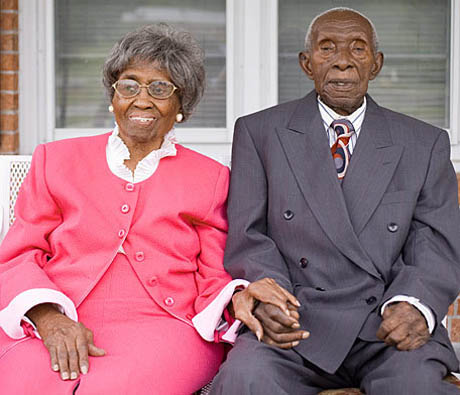
What is this stage like?  Figured I’d show ya rather than tell ya. Gratefully re-posting this lovely interview with the worlds oldest couple. See original here:

“Meet Herbert and Zelmyra Fisher of North Carolina. They have been married 85 years (86 in May) and hold the Guinness World Record for the longest marriage of a living couple and get this…. Zelmyra is 101 years old and Herbert is 104.

The happily married couple teamed up with twitter this Valentine’s Day to answer some relationship questions. Check out their take on finding love, getting through hard times and more. Good read.

1. What made you realize that you could spend the rest of your lives together? Were you scared at all?

H & Z: With each day that passed, our relationship was more solid and secure. Divorce was NEVER an option – or even a thought.

2. How did you know your spouse was the right one for you?

We grew up together & were best friends before we married. A friend is for life – our marriage has lasted a lifetime.

3. Is there anything you would do differently after more than 80 years of marriage?

We wouldn’t change a thing. There’s no secret to our marriage, we just did what was needed for each other & our family.

4. What is your advice to someone who is trying to keep the faith that Mr. Right is really out there?

Zelmyra: Mine was just around the corner! He is never too far away, so keep the faith – when you meet him, you’ll know.

5. What was the best piece of marriage advice you ever received?

Respect, support & communicate with each other. Be faithful, honest & true. Love each other with ALL of your heart.

6. What are the most important attributes of a good spouse?

Zelmyra: A hard worker & good provider. The 1920s were hard, but Herbert wanted & provided the best for us. I married a good man!

7. What is your best Valentine’s Day memory?

Zelmyra: I cook dinner EVERY day. Herbert left work early & surprised me – he cooked dinner for me! He is a VERY good cook!

Herbert: I said that I was going to cook dinner for her & she could relax – the look on her face & clean plate made my day!

8. You got married very young – how did you both manage to grow as individuals yet not grow apart as a couple?

“Everyone who plants a seed & harvests the crop celebrates together” We are individuals, but accomplish more together.

9. What is your fondest memory of your 85-year marriage?

Our legacy: 5 children, 10 grandchildren, 9 great-grandchildren, and 1 great-great grandchild.

10. Does communicating get easier with time? How do you keep your patience?

The children are grown, so we talk more now. We can enjoy our time on the porch or our rocking chairs – together.

11. How did you cope when you had to be physically separated for long periods of time?

Herbert: We were apart for 2 months when Z was hospitalized with our 5th child. It was the most difficult time of my life. Zelmyra’s mother helped me with the house and the other children, otherwise I would have lost my mind.

12. At the end of bad relationship day, what is the most important thing to remind yourselves?

Remember marriage is not a contest – never keep a score. God has put the two of you together on the same team to win

13. Is fighting important?

NEVER physically! Agree that it’s okay to disagree, & fight for what really matters. Learn to bend – not break!

14. What’s the one thing you have in common that transcends everything else?

We are both Christians & believe in God.Marriage is a commitment to the Lord.

We pray with & for each other every day.Image