The Purpose-Driven Life . . .

. . . OF OUR PARTS.

Welcome!

This is the fourth article in a year-long series about the “12-most-important-relationship-skills-no-one-ever-taught-me-in-school-but-I-sure-wish-they-did.”

Click the box for the full list →    →    →Top 12 Relationship Skills
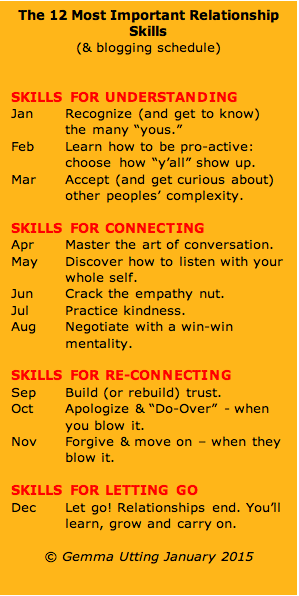
January’s tip I’m guessing no one taught you in school is the idea that there’s not just one you. And in fact it really helps to recognize (and get to know) the many “yous.”

So far I’ve presented 2 of the 3 main ideas ~

  1. Each of us has a variety of ways of showing up. We have distinct inner Parts. See this post;
  2. Parts exist in relationship to one another. Tune into your inner chatter and you’ll hear one Part persuading or critiquing or judging or dismissing or ignoring or protecting another Part. See here:

This week? 

3. How and Why do our Parts relate?

Plus ~

  • How on earth does any of this help my relationships?
  • And, who’s really in charge of all these Parts?

************

HOW AND WHY DO OUR PARTS RELATE?

It can feel random when we first tune into our inner chatter and hear loads of contradictory messages, but each Part is absolutely acting purposefully, and when we come to see what their purpose is, everything shifts.

In any given moment our Parts are relating to one another, brokering how we show up. When things are going along reasonably well and there’s not too much external stress we can show up with access to our good feelings and (we hope) with the lid tightly shut on our bad feelings. Most of us walk a fine line between happiness and despair, or between confidence and embarrassment. We never know if something will trigger all those nasty feelings we’ve shoved away deep within, under the carpet of our inner basements.

Indeed, the purpose of our Parts has as much to do with managing our pain & shame as it does with the pursuit of happiness.

I’m going to paraphrase a bit here from Richard Schwartz (the founder IFS), and you’ll find much more about this in his book Internal Family Systems. We manage or inner system by organizing our Parts into three groups.
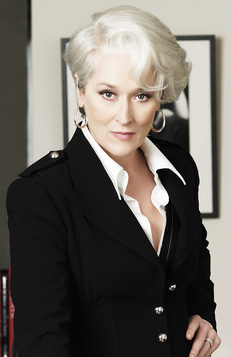
Screen shot 2015-01-28 at 9.18.52 AMMANAGERS – This group’s purpose is to be highly protective, strategic, and interested in controlling the environment to keep things safe. When things go well, these are the Parts we become most familiar with as important aspects of our personality. These are the “front men & women” who manage how we go through our days –  learning, growing, adapting, relating and scanning for danger. Freud would call these parts our Ego. Our managers can be balanced and kind, or forced by context and circumstances to be strict bullies within us.

Screen shot 2015-01-28 at 9.26.12 AM

EXILES – These are our shadow sides, exiled out of consciousness and out of the public eye because they’ve been tasked with holding onto (and burying deeply away) our pain, trauma, ugly beliefs, shame, unlovability, unworthiness, and not-good-enough-ness. Their purpose is to protect us from experiencing the emotional pain that has been inflicted upon us. When perfect little babies are born into an imperfect world, Exiles exist. Some of us have so much pain and suffering these highly vulnerable Parts can’t stay locked away and the person finds they have to relate to the world from a place of shame – which, paradoxically can be liberating and freeing (think AA meetings which begin with acknowledging something which, when hidden, we are ashamed of, but when shared, can be healed: “Hello, my name is X and I’m’ an alcoholic.”

Screen shot 2015-01-28 at 9.23.42 AMFIREFIGHTERS – This third group behaves like, well, firefighters! They are our first responders when there’s danger that an exile’s pain might be coming up. Their job is to react powerfully and automatically to stifle or sooth our shadow feelings. So – if we’re jilted by a lover and it triggers our deeply exiled sense of “not good-enough-ness” that we took on from critical or abusive parents, our firefighters step in and douse the feeling with highly distracting and often very damaging and extreme alternative behaviors – like over drinking, over eating, obliterating the conscious mind with drugs, accessing blind rage, disassociating and more.

OK – you’ve got the 3 main ideas for January and the first of ~

My Top 12 Relationship Skills

#1  Recognize (and get to know) the many “yous.”

  1. Each of us has a variety of ways of showing up. We have distinct inner Parts. See this post;
  2. Parts exist in relationship to one another. Tune into your inner chatter and you’ll hear one Part persuading or critiquing or judging or dismissing or ignoring or protecting another Part. See here:
  3. This is not random. Our Parts each behave purposefully in one of three ways: to proactively manage our day to day, to exile our deepest vulnerabilities or to dowse our inner pain when it is triggered.

Want to play with this?

Watch movies and see if you can distinguish what parts are coming up for the characters. Here’s a fun one for you to get started. Below is a scene from Woody Allen’s movie Blue Jasmine.  It’s the story of a wealthy financier’s wife who tumbles down through the social strata as she looses touch with reality (inner and outer) as her anger, shame and drinking increasingly unhinge her.

In this scene, you may be able to detect her ~

  • MANAGERS – struggling to proactively maintain appearances with dignified work and options;
  • EXILES – the bursts of shame and unworthiness that pop out
  • FIREFIGHTERS – look for the background drinking and struggle to manage the shame

HOW DOES KNOWING THIS HELP MY RELATIONSHIPS?

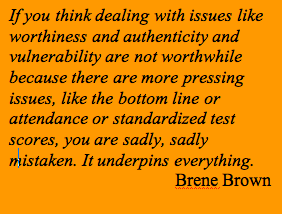
I’m answering this first of all with the wonderful Brene Brown quote at the top of this article:

If you think dealing with issues like worthiness and authenticity and vulnerability are not worthwhile because there are more pressing issues, like the bottom line or attendance or standardized test scores, you are sadly, sadly mistaken. It underpins everything.

Until you become aware of the rich complexity of your own inner system it’s as if you’re flying blind in the dark, with no instruments.

As long as you are not hitting another plane and you’re not being buffeted too violently, you can get away with blind flight. But as soon as you hit turbulence and your wings tip, or you go into a spin, or you want to avoid what might be an obstacle ahead and you start randomly punching at buttons on your instrument panel, your progress, your impact, your position and your recovery are totally random!

If you want to be a competent pilot in all weather conditions, you need to learn everything you can about your airplane. What are all the moving parts of your airplane, how do they interact and which instruments communicate with them and how. What are the emergency safety features and do any parts need to be repaired or updated?

If you want to be competent in relationships through good times and bad, you need to learn everything you can about your self. What are all your moving Parts? How do they interact and how do you impact their behavior? What are the emergency safety features and do any parts need to be repaired or updated?

Hope that metaphor works for you. We’ll keep exploring and deepening this answer .

WHO IS REALLY IN CHARGE OF ALL THESE PARTS, WHERE’S THE LEADERSHIP?

Great question. Come back in February when I’ll be exploring this issue each Wednesday.

WANT TO TRY SOMETHING?

If you’ve not encountered Brene Brown and her work on Shame, you might enjoy either of these two TED talks she gave:

1. The Power of Vulnerability

2.  Listening To Shame

PHOTO CREDITS

Little Miss Sunshine & Family

Welcome!

This is the third article in a year-long series about the “12-most-important-relationship-skills-no-one-ever-taught-me-in-school-but-I-sure-wish-they-did.”

Click the box for the full list    →    →    →Top 12 Relationship Skills

January’s tip I’m guessing no one taught you in school is the idea that there’s not just one you. And in fact it really helps to recognize (and get to know) the many “yous.”

Last week we talked about learning to recognize this phenomenon by noticing how we are constantly buffeted by mixed emotions. And since we can all relate to having mixed emotions, it’s perhaps not such a leap to think of these differing perspectives as representing important-but-separate aspects of ourselves. As different Parts of ourselves:

  1. We are all made up of different “parts” that together form our basic nature and personality.
  2. What we call “thinking” is often conversations among these different parts, each with its own point of view. Many of the emotions we feel come from these parts of ourselves.
  3. All parts of us want what is best for us, and all of them contain valuable qualities and resources. But even though they want what’s best for us, sometimes our parts have bad ideas about how to achieve this.

From “There’s A Part of Me” by Jon Schwartz and Bill Brennan.

Taking it one step further, it can help to think of these Parts as being in relationship to one another. Like family. Some families work to balance the needs of individual members with the needs of the group. Some not so much. Some family members speak up loudly and often, some are silent. And all have their outliers and eccentrics like . . .  Olive Hoover’s family from the movie Little Miss Sunshine.

Let’s play with this for a moment. So the idea here is to imagine those conversations you hear in your head are taking place between distinct inner characters, or Parts-of-you, each with his or her own narrow view of what’s needed to keep you functioning and safe. Olive has a loud-mouthed self-medicating grandpa intent on his next “fix”; a brilliant but tortured uncle processing multiple losses; a teenage brother focused on getting into the air force academy and who refuses to talk until he does; an exhausted over-working mother desperate to keep the family eating, sleeping and safe; a self-obsessed father focused on his career as a motivational speaker, and, of course, Olive who is close to her grandpa and who wants the chance to participate in the Little Miss Sunshine Beauty Pageant. Yet, as you’ll see below,  “no one gets left behind.”

If you’ve never seen the film, do treat yourself. Meanwhile, whether you’ve seen it or not, take a peep at the official trailer. Even this 2.5 minute clip makes the point: we’re a mess of well-meaning contradictions striving to get along, both inside and outside the family.

* * * * * * * * * * * *

This week?  Where do these “Parts-of-me” come from, and what do they do?

In brief, your Parts (which contribute to your overall personality) are a mash-up of your biology and your environment. You were born with the predisposition to thrive in two realms;

  • Your outer system, by figuring out how to get along with (and even love) other people;
  • Your inner system, by figuring out how to get along with (and even love) yourself.

Predisposed to get along?” I hear a Part of you sneer! What about Olive’s grandpa screaming about the chicken dinner? He seems to hate everybody. Or brother Frank wanting to kill himself. He seems to hate himself.

Those are fair observations but my guess is, both Grandpa and Frank weren’t born with these extreme perspectives. At birth they, and all of us, were perfect little babies born with everything they needed to contribute their unique way of being to the world.

Problem is, they (and all of us) were born into an imperfect world. They (and all of us) were born with unique abilities to feel and think and express  but, because they (and all of us) exist only in relationship to others (other people with feelings, needs and agendas in your outer realm and other Parts of you with feelings, needs and agendas in your inner realm) things don’t always go smoothly.

Parts are forced out of their valuable roles [ . . . ] by life experiences that can reorganize the system in unhealthy ways. A good analogy is an alcoholic family in which the children are forced into protective and stereotypic roles by the extreme dynamics of their family. While one finds similar sibling roles across alcoholic families (e.g., the scapegoat, mascot, lost child), one does not conclude that those roles represent the essence of those children. Instead, each child is unique and, once released from his or her role by intervention, can find interests and talents separate from the demands of the chaotic family.

While some people get understandably pushed into destructive roles because of trauma and abuse,

more often, it is a person’s family of origin values and interaction patterns that create internal polarizations which escalate over time and are played out in other relationships.

from Richard Schwartz’s overview of IFS.

Which leads me to talk about what Parts do?

Going back to the idea that we are intended to thrive or at least, to take it down a notch, to-get-along-well-enough-with-our own self and our family or chosen community, then each of these inner personalities has a role to play to help us thrive.

According to Richard Schwartz (in his book Internal Family Systems, page 19) human systems (both our inner system of Parts and our outer system of relationships) thrive to the extent they enjoy ~

1)  BALANCE It’s a fairness thing. Parts and families need their fair share of ~

  • influence on decision-making – they need to know their ideas count
  • access to the groups resources – they need “enough”
  • responsibility – they need to contribute
  • safety – they need boundaries that are neither too rigid nor too loose.

2)  HARMONY It’s a cooperative thing. Parts and families thrive when an effort is made to work cooperatively toward a common vision whilst recognizing each person has specific styles, gifts, ideas and abilities. Our Parts are tasked with helping create and maintain this harmony.

3)  LEADERSHIP It’s a “Who’s in charge?” thing. Parts and families need help to ~

  • Mediate disagreements and polarizations and manage the feedback they give one another;
  • Ensure all members are protected and cared for;
  • Allocate resources, responsibilities and influence fairly;
  • Provide the broad vision and perspective for the whole system;
  • Represent the system to other systems;
  • Honestly interpret feedback from other systems;

4)  DEVELOPMENT It’s a learning thing. We may be born with all these wonderfully sensitive Parts designed to help us thrive with balance, harmony and leadership but, as I noted up top, perfect babies are born into an imperfect world. Our Parts have to grow and mature yet all of us to some extent, have parts who get stuck. They hold on to old beliefs and fears or, through trauma, freeze in place.

This is a lot for one week. But bottom line, you’ll be ahead of the game in your relationships if you can recognize that in any given moment ~

  1. You’ve got mixed emotions – you’re a mash-up of your biology and environment
  2. Your mixed emotions are expressed through your own inner family of Parts – and each Part is trying to keep your inner and outer worlds more or less balanced, harmonious, well-led and adaptable.

WANT TO KNOW MORE?

  • Click here for an overview of IFS.
  • Click here for articles, books and other media about IFS.
  •  * Jon and Bill’s book excerpted above comes as a downloadable eBook for $10, or a paper bound book for $15. Both can be found at the IFS store.

WANT TO TRY SOMETHING?

Bring to mind a dilemma you are having. A “should I do this or that” sort of dilemma. This is a terrific way to see your inner family at work. You are having a dilemma because two Parts of you are polarized. It’s like watching an inner ping-pong match – right?

  • Your I want to be happy Part says “Quit your job – you’re miserable!” and
  • Your I want to be secure Part says “You’ll never find another job. You’ll be destitute in two months. What are you even thinking!”

And some other Part is striving to find the wisdom of Solomon and be The Decider.

Now what you do about all of this is another article. But if you can at least find these Parts, you’ll be several important steps along the way to resolving the impasse.
NEXT?

  • How do these Parts relate to one another?
  • Who’s really in charge of all these Parts?
  • And how on earth does any of this help my relationships?

Part of me wants . .

. . . to finish writing this article, while another part of me really wants to go skiing.

Welcome to a conversation about mixed emotions. This is the second in a year-long series about the “12-most-important-relationship-skills-no-one-ever-taught-me-in-school-but-I-sure-wish-they-did.”

#1 ~ Recognize (and get to know) the many “yous.”

* * * * * * * * * * * *

Whether or not you’ve ever met Mork from Mork and Mindy (an American sit-com which ran from 1978-1982 about a space alien, played by Robin Williams, who’d been dispatched from his planet Ork to observe human behavior) you might appreciate what a great job Mork does of observing his own inner chaos. See if you can relate ~

Mork’s a mess and we love him for it. No matter what organized, calm, more-Mindy-like demeanor we might present on the outside, our insides can be quite different. In there, we’re a slowly simmering soup of sentiment – and that’s on good days. On bad days when we blow it, or someone blows it with us, that low simmer steams into a rolling boil and the inner chaos spills out all over.

You’ve seen it, right?

  • You’ve done what you consider to be good work and then someone gives you “feedback.” Suddenly your confidence vaporizes and you feel as capable as a mole on a unicycle.
  • Your teenager is late home. Your catastrophizing worrywart is about to call the hospital when you hear the car pull into the garage. In an instant your worry is engulfed by a volcano of rage and despite that slight whisper you hear back-stage to “Listen first!” you explode through the door like a banshee.
  • Your heart is full of love and ready to share. Candles. Mood music. Surprise dinner-for-two in the oven. Your phone bleeps for an incoming text: “Running late. Don’t wait up.” Poof! Your secure lover is sucker-punched and replaced by a green-eyed jealous, suspicious gut-chewing-monster.
  • And how about those inner tug-o-wars between the Part of you who craves cake after dinner and that Part who champions height-weight proportionality? Or between your straight-laced Banker who advises putting 10% of your income away each month and your Zesty “Carpe Diem” who’s just put a deposit down on that Hot Air balloon ride?
  • Or, much harder, the Part who wants to leave the marriage and never come back and that other Part, who is afraid of being alone and worries there’s no one better out there?

~ There’s not just one YOU ~

Have you noticed that your personality is more multicolored than monochrome?

That nothing is as simple as it seems?

Even when, to expand upon an example from the above list, you may feel confident about a piece of work, that confidence was probably a negotiated alliance between your ~

  • WORDY PART who wrote and wrote and over wrote
  • EDITOR who sliced through the word count
  • RESEARCHER who can’t stand unsubstantiated claims
  • POET who delivered gorgeous prose
  • TEAM PLAYER who sought buy-in from all the necessary stake-holders

and that sense of incapacity following the “feedback” was probably not just one flavor but a blend of your inner ~

  • CRITIC who warned you all along this was rubbish
  • PERFECTIONIST who actually agreed with the feedback you received
  • INSECURE teen who craves the positive attention of others
  • NAY SAYER who always warns you against risk-taking.

As I said, we’re often a mess on the inside. But the truth is, this is actually very good news! This is news-we-can-use, if we’d only learn how.

I’ve come to understand myself more clearly than ever before thanks to the work of Dr. Richard Schwartz and the model he developed called Internal Family Systems (IFS). As a brief intro I’m quoting from a short, accessible book* called There’s A Part of Me by Jon Schwartz (the founder’s brother) and Bill Brennen.

Normally, our parts work extremely well together. They coordinate, calculate, weigh in, and contribute to every decision we make, and they help us navigate a complex and sophisticated world. When they don’t work together, we experience conflict. As we will examine in this book, ironically it is mainly the parts of ourselves that want to protect us from potential harm that tend to cause emotional upset in our lives. We will look at situations in which our parts are in conflict, learn how we can recognize when this happens, and understand what we can do about it. (page 8)

Now this is useful stuff. Here’s a model which normalizes the chaos and offers a way into it, and then through it, that makes sense to me.

They go on to share their 3 main ideas about Parts:

  1. We are all made up of different “parts” that together form our basic nature and personality.
  2. What we call “thinking” is often conversations among these different parts, each with its own point of view. Many of the emotions we feel come from these parts of ourselves.
  3. All parts of us want what is best for us, and all of them contain valuable qualities and resources. But even though they want what’s best for us, sometimes our parts have bad ideas about how to achieve this.

WANT TO KNOW MORE?

  • Click here for an overview of IFS.
  • Click here for articles, books and other media about IFS.
  •  * Jon and Bill’s book excerpted above comes as a downloadable eBook for $10, or a paper bound book for $15. Both can be found at the IFS store..

WANT TO TRY SOMETHING?

Tune in to yourself. Can you identify a conversation you’re having in your head and notice the different perspectives? Or, have you noticed that you show up one way with this person, and another way with that? What Parts are those? Is there already a familiar set of thoughts and beliefs that tend to pop up, unbidden? A critical voice, a fearful gut, a vulnerable heart, or a Part who whisks you into some nice numbing behaviors like mindless eating, smoking, drinking, spending? Just be present with awareness, rather than judgment.

Next?

January 21st  – building upon a great question from a reader’s comment to me in an email about the idea of Parts. Thanks SS.

The “angry you,” the “mean you,” the “gentle, loving you.”  Where do they come from?  From experiences we have had, from people and situations we’ve been in – to an unholy degree, from our parents and the “attachment” experience of our early years: What?

Featured Image (above)

Robin Williams as Mork. Still missing his fire on the planet.

My Top 12 Relationship Skills

Last week I set a challenge, for both of us.

My part?

I’m challenging myself to identify and share the “12-most-important-relationship-skills-no-one-ever-taught-me-in-school-but-I-sure-wish-they-did.”

Those key things I’ve had to figure out over the decades in order to be happier in my own skin and behind my own eyes; those things that I’ve needed to grasp in order to understand other people; those things I’ve learned the hard way by all the failed connections, anger, sadness, loss, discomfort and unmet needs. These 12 skills are (so far) my answer to those unspoken “What if I’d known this?”” questions I’ve asked myself as I’ve bumped along on my own. To refer back to my math analogy of last week – what if I’d learned more than basic arithmetic at school before being asked to move into a world filled with calculus problems?

Your part?

Participate! Co-create this list. Here’s how. I’m exploring one skill per month, in one post per week – usually on Wednesdays. Check-in with me each week to see what you think of the ideas. I’m going to tell stories, post video clips, explore my reasons, & maybe share my own goof-ups. I’d love your feedback. Try these ideas on. Take them for a spin. Watch what happens. And remember – these are not exclusively “couples” skills. These are the building blocks for all loving relationships – loving ourselves, our parents, children, friends and yes, of course partners.

My hope?

That you’ll become more aware of what you do that works – what brings you closer to people. And that you’ll become more hopeful and empowered as you consider those relationships that are fragile or cracked. Are there ideas here that will help you build a firmer footing?

* * * * * * * * * * * *

After three decades of paying attention to how we connect with one another, I’ve come to believe that the essence of our human interactions can be pretty simply stated: We’re each trying to manage our feelings and meet our needs in the context of one another. And that’s why it gets so interesting.

At one extreme, to paraphrase Albert Camus, is the victim (someone who, for many reasons, is unable to advocate for him or her self) and at the other, the executioner (someone who ignores or crushes the feelings and needs of others). Neither path is satisfactory because the fact is, we need one another.

We need one another to show up with our true agenda more than we need either a resentful capitulation or a one-sided victory. Both these positions are destabilizing. There’s a score to settle. Pay-back and revenge are in the air. Someone has won or lost a battle but Peace has not broken out.

We need to be able to resolve issues with difficult neighbors; judgmental in-laws; stressed partners; angry children; our community – however we define this for ourselves. And, we need to be able to connect with happiness, celebrating the special moments, appreciating the day-to-day.

In brief there’s a whole lot of complexity to nurturing quality relationships and not a whole lot of teaching or guidance along the way.

So, about those skills.

I’ve gathered this list together from a variety of sources. Principally I want to acknowledge ~

My Top Twelve

It might not make total sense to you at first but I hope you’ll hang in here with me. And, because life is a work-in-progress, I may edit this list as the year progresses.

SKILLS FOR UNDERSTANDING

  • Recognize (and get to know) the many “yous.”
  • Learn how to be pro-active: choose how “y’all” show up.
  • Accept (and get curious about) other peoples’ complexity.

SKILLS FOR CONNECTING

  • Master the art of conversation.
  • Discover how to listen with your whole self.
  • Crack the empathy nut.
  • Practice kindness.
  • Negotiate with a win-win mentality.

SKILLS FOR RE-CONNECTING

  • Build (or rebuild) trust.
  • Apologize & “Do-Over” – when you blow it.
  • Forgive and move on – when they blow it.

SKILLS LETTING GO

  • Let go! Relationships end. You’ll learn, grow & carry on.

* * * * * * * * * * * *

Next?

The 3 next January posts will be exploring the many facets of ourselves. How come we can be assertive, brave and magnificent with these folks, and yet feel like a blithering idiot with those? What is this constant inner chatter?  Why do we get caught in dilemmas with totally competing arguments racing back and forth in our heads? What’s going on “inside” ?

Featured Image

Did you guess why I chose today’s featured image? This is a community of Bonobos. Considered amongst the most peaceful and egalitarian of apes I figured we’ve got something to learn from them.  Thanks to World Animal Protection for this image.

© Gemma Utting , January 2015

“Wise up!” Don’t “Give up.”

What if, rather than giving up on (or “settling for” or tolerating-the- distance-between-you &) that “difficult” someone in your life, you wise-up? What if your relationship with this one person could be better. Much better?

  • Maybe you feel trapped in marriage “for the kids” and have given up;
  • Maybe you’re stumped by your angry toddler;
  • Maybe your teenager is going through a tough time;
  • Maybe your in-laws are getting to you;
  • Or your co-worker or boss;
  • Or a friend has drifted away and you miss them.

I wonder if, like me, you’ve ever felt confounded, mystified and downright defeated in your efforts to connect with another human being?

Most people I’ve asked can think of several examples of when they’ve given up on a relationship. They know people whom they conclude are too — angry, difficult, selfish, dumb, aloof, uncaring, disinterested (you get the idea). So they stop trying.

But might that be a bit like feeling confounded, mystified and downright defeated by a complex math problem that no-one ever taught you how to solve?

Schools invest years in teaching us how to understand numbers: How relationships between and among numbers work; how to handle positive and negative numbers; why numbers behave a certain way in certain situations; how to handle abstraction; how to resolve math problems.

No one expects you to go from simple arithmetic to calculus without a careful sequencing of new skills over time with a teacher, textbook and lots of practice.

We do however, expect kids to emerge from their teens into an adult world in which they need to identify and meet an astounding variety of tangible, financial, educational, and emotional needs from a dizzying variety of people whose motives, behaviors, feelings and needs are vastly different, mysterious and confounding with no teacher, no book and very little practice. We can all feel like giving up on challenges like this, right?

But what if we’d had years of schooling to help us understand people? How relationships between and among people work; how to handle positive and negative emotions; why people behave a certain way in certain situations; how to handle abstraction; how to resolve people problems?

In brief, our relationships are like calculus: Confounding and mystifying when we’ve not learned much beyond addition and subtraction, but beautiful and elegantly simple when we know what we are doing.

My invitation to you this year is to come back to school, with me.

Let’s have some fun in the relationship remediation room and finally figure out how to feel empowered in our interactions with people.

I’ll be your coach, this blog, the textbook. And you’ll be invited to get all the practice you need as we go along.

 Over the next 12 months I’m going to share the “12-most-important-relationship-skills-no-one-ever-taught-me-in-school-but-I-sure-wish-they did.”


ACTION STEP

Think about that one person you’d like to improve your relationship with.*

I’ll be back in a week with my Top 12 list.

Warmly,

Gemma

PS: Happy 2015 ~ sending love across the world as the new year dawns in all the time zones.


  • For the purposes of this challenge, so you might have better odds at success, please do not choose a person with an untreated mental health diagnosis such as narcissism, deep depression, borderline personality disorder, dementia or bi-polar disorder. Nurturing your relationship with such a person is absolutely possible, but may take some higher-level skills and patience. Be kind to yourself to start with.

Coming Soon . . .

Greetings,
It’s been over a year since I last wrote.

Indeed,  a year ago almost to the day, Mark and I arrived back into the USA after 2+ years living and working in New Zealand.

We had a fabulous adventure there and are still processing all we learned, undertook and became thanks to that opportunity.

I stopped blogging for this past year because processing all of this precipitated a near-vertical learning curve. I could not keep up with myself. I’d write something and the next day – literally – I’d find myself thinking about the issue in a whole new light.

So, I’ve been allowing the new ideas to take root, put up shoots and flourish just enough to feel I can share them with you again.

Anyway, to let you know I’m alive, climbing back into the saddle and preparing to blog regularly in 2015, I’m sending you a fun little teaser.  Check out the trailer below for a new Pixar motion picture (or emotion picture as they say!)  coming in 2015.  It’s a clue as to how I look at the world, and how I work to (as my updated tag line states) ~

  “Nurture your ability to master the art and science of great relationships”.

If you find yourself a little intrigued, please stay tuned!  If you stay with me (and feel free to invite others to join us) you can be part of this community dedicated to improving the way we relate to ourselves and to one another.  I promise you the conversation will be upbeat, fun, provocative and hopefully that “just right” mix of inspiring and supportive that we need in the face of becoming our best selves.

With gratitude for you all.

Gemma


Worse Than Infideilty…

A re-post today. From The Huffington Post

Thought this was interesting, and I quote:

“Infidelity is to blame for fewer divorces today than it was in the past, according to new research.”

To connect to this whole article, click here.

Astonishing People

Life throws Sh*t sometimes – right?

Maybe our marriage ends, or we find out our child has some disabilities, or we loose lots of money, or depression rolls back in, or we get sick, or our neighbor sues us over something petty, or we loose a job or can’t find one.

As my wonderful friend Julia Kittross says, “Everybody’s got something” to deal with.

Mostly, if we’re honest, I think we’d admit to going about life trying to prevent  bad stuff from happening. Sometimes that works and, like the child with his thumb in the dyke, help arrives,  the hole is repaired and the flood waters are contained.  Sometimes, no matter how much we work at our marriage, get the best medical attention, research investments, say our affirmations and focus on the positive, work to be a good neighbor, and brush up our job skills – bad stuff still goes down.

How many times does this have to happen before we get the point?  The point being, life’s not about preventing the bad stuff. It’s about growing into and through the bad stuff. Those challenges, large and small, that tumble us through our days and nights and months and years of this astounding human experience.

I heard a story today that will forever change me – just as the story I heard on the BBC more than 30 years ago led to me become a mental health counselor, this story will change me. I am not sure how.  I sit in awe of this woman. This story. The simple, human kindness offered in the face of near certain death.

If you have yet to hear the story of Antoinette Tuff, it is my privilege to introduce you to her now.

Screen shot 2013-08-23 at 3.26.20 PM

Click on the image to connect to a video of Antoinette being interviewed about how just yesterday, she stopped a gunman who entered the elementary school where she works. And how did she stop him? Not with another gun, that’s for sure!  Just by talking to him. By caring. By discovering her empathy for him; empathy wrought not because Antoinette has managed to dodge life’s tough stuff. Quite the opposite.

Gives me the excuse to quote from another hero of mine – Winston Churchill:

“If you’re going through hell, keep going!”


Identity Lies

For about five years, in our late 40s, Mark and I tried ‘Pretirement.”Mark on Grand Ronde

Never heard of it?

It’s where you live as if you’d retired, even though it’s not sustainable.

This meant that Mark stopped wearing casual-but-smart slacks and shirts while working as a reasonably well paid hydrogeological consultant with Pacific Groundwater Group, (which he co-founded with 2 friends in our living room in 1987) , and instead  wore whatever he wanted while rafting, playing, hiking, biking and working part-time taking care of a few rental homes we’d managed to buy in Boise, Idaho. 

I stopped working in the trenches at a community mental health center, re-trained as a Life Coach, and took on  painting and gardening at the rentals.

So, we didn’t really put our feet up so much as become totally flexible. Most days we could work to a human rhythm. Breakfast and walks to school with the kids; tea and toast after school for our two, plus any friends of theirs who needed a second home. We could play in the big back-yard wilderness of southern Idaho according to the season’s dictates – biking, rafting, hiking, and skiing. All close by and affordable*.

So – why in the midst of living the “good life” did we lie?

Remember – we were new to Boise, Idaho and had left family, community and professions in the Pacific Northwest. So, here’s how it looked to start with:

  • New friend #1          Hey Mark, so what do you do?
  • Mark Utting               I’m, er, a Hydrogeologist.
  • New friend #1           Oh, with which firm?
  • Mark Utting               I had my own company up in Washington State.
  • New friend #1           So, you’re commuting, or starting Boise branch?
  • Mark Utting               No, right now I’m, well . . . managing some rental  property.

Note – the initial need to identify himself as ~

  1. his profession (Hydrogeologist)
  2. his most recent success (company owner)
  3. the most acceptable form of work he could muster (managing rentals)

We began to notice ourselves not speaking the truth of our new lives in all sorts of ways. 

We were shocked to realize how much we had bought into the status anxiety of our times. We apparently still believed it was somehow preferable to identify ourselves by our professional titles and past successes. We were embarrassed to tell the truth – that we’d had enough of the fast track and had chosen to dramatically simplify, foster our creative sides, work on some rentals, re-tool, downsize – call it what you will. But we were massively guilty of lying-by-omission.

So we took a long hard look at our choices and ourselves and decided to embrace our new life by telling the truth.

  • New friend #2           Hey Mark, so what do you do?
  • Mark Utting                Have fun!
  • New friend #2            Yea, but where do you work?
  • Mark Utting                You know, I don’t identify myself by my work right now. I’m committed to following my own path to see where it leads. I play music in a group, I write songs, I ride my bike, raft and hike in summer, and ski in winter. We swapped out our nice single-family home in Port Townsend for a tiny one and some rentals, which we’re fixing up. We’re long on time and short on cash – but I’m having more fun now than I ever have!
  • New friend #2             [Responses ran the gamut! From pity to envy and lots in between]
  • Mark Utting                And you, what makes you happy?

So – my questions to you today are these:

How do you identify yourself?

  • married
  • doctor
  • divorced
  • sister
  • therapist
  • engineer
  • cancer survivor
  • college graduate
  • high school senior

Are these enough? Is it enough to be defined by what you’ve done (high school or college) or what you do (doctor or therapist) or what you’ve survived (cancer, divorce)?

And is this identity big enough to hold the all of you?  Not just the you who goes to work, but the you who loves, cares, creates, raises kids, walks dogs, grows petunias, feeds wild birds, dreams, grows?

If not – what else might you call yourself?

And, can you tell this truth to anyone, or is this still your closet self?

Rocky Canyon* “Affordable” skiing? Yes, if you back country ski you drive to snow, stick skins on your skis and hike up what you plan to ski down. Mark shot this photo of me about 5 miles from our home in Boise. When you wake up to this it’s wonderful to have a flexible schedule!   Also, if you live in Boise it costs all of $228 USD for an early purchase discount pass to Bogus Basin .

Imagine

Screen shot 2013-06-28 at 2.56.51 PM

IMAGINE you have a core, abiding Self;

a Self beyond the hubbub of the inner voices and distracting monkey-mind chitchat.

Screen shot 2013-06-28 at 3.00.20 PM

IMAGINE this core Self is as pure, unblemished and perfect as it was at the hour of your birth;

before you wrapped it all around with layers of protection and ways of coping.

Screen shot 2013-06-28 at 3.06.08 PMIMAGINE this core Self is what you meet through ~

  • meditation
  • Yoga
  • absorbing pursuits
  • prayer
  • deep presence

and remember you have felt it before ~ as a pang of beauty, a quiet bliss, a deep connection, a pure joy.

  • Imagine this core Self is accessible to you at any moment.
  • This moment.
  • Imagine relating to yourself, and your loved ones, from this place.
  • Not all the time maybe, but more than you do now,
  • even without the Yoga or meditation ~ just by shifting your attention.

Slowly slowly, always coming (as my Yoga teacher says) I work to help clients reconnect to this place within themselves, so they might be happier in their relationships with themselves, and those around them, little by little, day by day.

If you’ve stumbled upon this post, please feel free to enjoy the others in this series ~

1. “I lived with Mother Theresa and Simon Cowell” about acknowledging all the inner characters who used to drown out my abiding core Self.

2. Meet Colin, the first person I met who lived connected to his core Self much of the time.

3. Hear how Colin achieved his form of inner peace and happy living.

And still coming ~ more about Internal Family Systems and how we can help ourselves, and one another, connect to our abiding core Self more often.