Category Archives: Relationship Skills

One Small Step Toward Self Compassion

This one small step

when undertaken consciously

can transform your inner landscape from

 the dark and narrow back-streets of anger, criticism, fear and judgment

Screen shot 2015-07-28 at 8.10.34 AM

into a bright and spacious landscape of compassionate curiosity.

Screen shot 2015-07-28 at 8.13.58 AM

What’s to loose, right?

So, please hear me through and give it a go before you decide either that ~

  • I’m a fruit loop (which just may be true!) or
  • That this is not for you (which I hope is not true).

Here’s the idea.

Every time you hear your own inner voice of anger, criticism, fear and judgment go off on you with variations of you’re ~

  • no good
  • stupid
  • a failure
  • cowardly
  • wrong
  • lazy
  • forever doomed to be alone
  • unlovable
  • unworthy
  • fundamentally a looser

Do this ~

Visualize the voice as coming from a small, frightened Part of you cowering in that dark alley. Turn toward this cowering Part, thank it, and let it know you’d like to understand it more fully.

Honestly!

Say, “Well hello!  I hear that you’re angry, or worried that I’m no good or stupid or a failure.  I know you are telling me this for a reason and I’d like to hear what you have to tell me.”

Even if this Part says this to you often, my guess is you usually do not give it the time of day.

My guess is you turn away from it.

My guess is that you meet your ~

  • angry Parts with anger
  • critical Parts with criticism
  • judgmental Parts with judgment
  • fearful Parts with fear.

Whatever the initial feeling your Part expresses, instead of listening to it, my guess is you compound it with more of the same.

As Thich Nhat Hanh said:

If we become angry at our anger, we will have two angers at the same time.

So, what to do?

Turn toward this frightened young Part, take it by the hand and lead it out of that narrow, confining, oppressive alley and into a sun-lit meadow. Sit down next to it and invite it to tell you what it needs you to hear. You are there to listen. You are there to listen to understand the concerns, not listen to agree.

The magic?

Once you turn toward your anger, criticism, judgment or fear and invite it to tell you more, you are no longer that Part. You are your Self listening to that Part. YOU have separated from IT.

You have opened up some space between YOU and this PART. Which invites “YOU” into the picture. The “YOU” who is way more than just a small young frightened Part .

This “YOU”, with the spaciousness of the bright meadow, sees so much more of who you are and how you might be actually dealing with whatever the issue was that triggered this young frightened outburst.

Maybe you also see Parts of you are are:

  • kind
  • bright
  • successful
  • brave
  • often right
  • hardworking
  • a good friend
  • lovable
  • worthy
  • fundamentally OK

These Parts are also YOU.

Here is Thich Nhat Hanh again:

We only have to observe it with love and attention. If we take care
of our anger this way, without trying to run away from it, it will transform itself.

OK that’s it!

Is there more one can do to cultivate Self-Compassion?

Yes – and if you’re interested, I highly recommend you allow  Dr. Kristin Neff  to be your guide.

But this one small step is key.

This one small step allows you to see the limits of the dark alley-way script which – when confined to the alley – felt like it was the only narrative. This one small step allows you to access so much more of who you are. This one small step allows you to bring compassion, gratitude and perspective to this Part.

And, if you’re interested in hearing more about working with these Parts of you – one place to begin is an earlier blog post, Part of Me Wants

NEXT MONTH?

I’m exploring what it looks like to get your needs met in healthy ways.

FIRST TIME HERE?

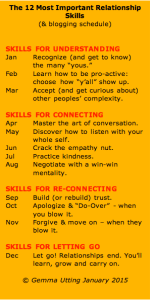
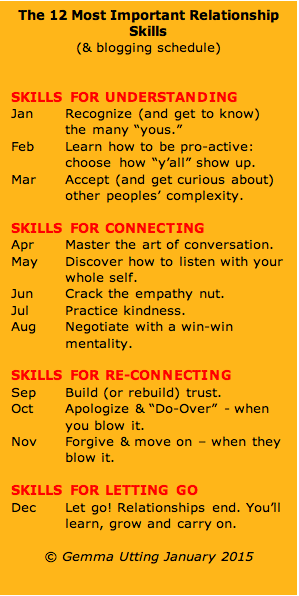
This is the latest article in a year-long series on the “12-most-important-relationship-skills-no-one-ever-taught-me-in-school-but-I-sure-wish-they-had.”

Click the box for the full list.  Top 12 Relationship Skills

If you’re interested in reading this blog in sequence, below are links to the series to date, beginning with the first posting at the top.

OVERVIEW

SKILLS FOR UNDERSTANDING

SKILL ONE ~ Recognize (and get to know) the many “yous.”

SKILL TWO ~ Learn how to be pro-active: choose how y’all show up.

SKILL THREE ~ Accept (and get curious about) other peoples’ complexity

SKILLS FOR CONNECTING

SKILL FOUR ~ Master the Art of Conversation

SKILL FIVE ~ Learn How To Listen With Your Whole Self

SKILL SIX ~ Crack The Empathy Nut

SKILL SEVEN ~ Practice Kindness


Independence, Co-dependence and Interdependence

So – I got this great question from a reader:

Whats the difference between independence, co-dependence and interdependence. How do you create a relationship where you can rely on your partner without losing yourself in them, or keeping too much distance? And how do you get your partner on the same page?

Let me start by admitting that – because I have long been haunted by this question – my husband Mark and I actually took separate honeymoons.

Figuring out how to be “me” in the thick of falling in love with “him” was mind-bogglingly hard for me.

We decided to marry after a relatively tumultuous 2-year courtship which I jeopardized spectacularly by testing out a different suitor. This chap (let’s call him Bill) had invited me to help him bring a small gill netter down Alaska’s Inside Passage.

Screen shot 2015-07-16 at 11.00.31 AM

Oh, it’ll be fun. Should take about a week,”

he reassured me and I tried to reassure Mark.

I flew up to Ketchikan against my better judgment and dire warnings from friends. Ten days later I left Bill on a dock in Nanaimo on Vancouver Island.

The boat (and my relationship with Bill) had sprung a leak way beyond the reach of our resources to repair. The boat was dangerously low in the water. I had no money. I was very hungry and I was stranded in Canada without a passport. Not a good idea for a Brit on a work visa.

So when I made a collect call to Mark in Seattle (a 5 hour drive away across an international border) explaining my sorry state he simply responded:

I’ll be right there.”

Clearly I chose the right guy!

So sure, I’d chosen a fabulous man to marry but that was just the first step. Now we had to navigate that tightrope between two of the most powerful human drives – AUTONOMY vs ATTACHMENT – which, when taken to their extremes, cause a whole heap of problems for couples trying to come together.

Essentially there is a continuum that looks more or less like this ~

Screen shot 2015-07-22 at 11.54.59 PM

with folks who choose total isolation on the left and folks who want to be fused with others on the right. If you are in a relationship and noticing issues, it’s unlikely you’re at the extremes. More likely you’ll find yourself somewhere between counter-dependence (where a person strives not to be dependent on anyone for anything, thus avoiding attaching to anyone else) and co-dependence (where a person strives not to depend upon themselves for anything, thus avoiding their own ability to be an autonomous human being).

So, let’s meet those troublemakers

On the extreme end of AUTONOMY and the “I’m all alone in the world and that’s how I like it” team we have, Ladies and Gentleman, the mighty stand-alone COUNTERDEPENDNECE

20150118_211709

Think independent cat, totally disdainful of neediness.

This is our family cat “Mo”. The cat can sit wherever she chooses – including taking the prime spot right in front of the fire.

Counter-dependence occurs in dysfunctional families when a child experiences insufficient bonding and attachment, loss, abuse or the pain of betrayal. (To have loved and lost).

For these folks their  ~

  • Trust issues are “It’s simple. I don’t trust. Anyone.”
  • Core belief is “If I trust, I will be betrayed so I keep my distance.”
  • Favorite anything is “None of your business
  • Their favorite song is “Ill do it my way
  • Communication style is “Ill tell you how I want it
  • Daydreams “Include me, myself and I
  • Senses “What senses? I am disinterested in feedback
  • Control “Is focused on keeping me aloof and separate.” 
  • Assessment of problems “What problems? You lookin at me?
  • Ambition is “To succeed on my own
  • Worst fear is “Being controlled, manipulated, impacted by or vulnerable to anyone
  • Main move is “Whatever it takes to keep my distance”.

And on the extreme end of ATTACHMENT and the “I’m nothing without you and what do you want me to do now?” team we have, Ladies and Gentleman, CO-DEPENDENCE (and support team)

20141215_140925_LLSThink small designer pup who will do anything to please you, especially if treats are involved.

This is our family dog “Bailey”. Here she suffers yet another indignity, persuaded by her need for our love, and her fondness for treats. This is the annual compulsory enjoyment photo-op with The Christmas Antlers.

Co-dependence occurs in dysfunctional families where addiction, abuse, or chronic mental or physical illnesses are present but not addressed. The child in such a home learns to repress their feelings and needs.They don’t trust, don’t talk and don’t rock the boat.

For these folks their  ~

  • Trust issues are “I don’t trust myself to manage life separately from other people.”
  • Core belief is “I manage pain by merging myself with someone else in whose love I am whole, and by controlling the environment to keep everything OK
  • Favorite anything is “The same as my beloveds
  • Favorite song is “Love, Love Me, do
  • Communication style is “If I want my opinion Dear Ill ask you for it
  • Daydreams “Involve lots of obsessing over my mistakes and what others think of me
  • Senses “Are tuned to how everyone around me is feeling
  • Control “Is focused on getting others to think, speak and act a certain way
  • Assessment of problems “Goodness, everyone around me is in trouble.
  • Ambition is “Complete mind-meld with my Beloved
  • Worst fear is “Being pushed away, ignored or abandoned
  • Main move is “Whatever it takes to keep my beloved with me.

These are the extreme ends of the “super drives” that impact a person’s capacity for closeness, intimacy and connection. If you want to dive more deeply into these ideas you might enjoy Dr. David Schnarch – here’s a helpful intro:

One of the most important things in life is becoming a solid individual. And another important thing is to have meaningful relationships. Two of the most powerful human drives are our urge to control our own lives (autonomy), and our urge for relationship with others (attachment). One of the biggest tasks of adulthood is being able to balance these two urges, and one of the most common problems is having too much of one, and not enough of the other. People often feel claustrophobic or controlled in committed relationships, or feel like they can’t be their true self in their relationships, or feel like their sense of self is starting to disappear and they don’t know who they are any more. Others are constantly worried about “abandonment,” or “safety and security,” and constantly press their partner for “commitment,” and “unconditional love.”

Long term relationships are the perfect school-of-life for this journey. Dr. Schnarch refers to marriage as a “crucible” – you know, that feeling of being held “in a container in which two metals melt and undergo a severe trial”. Ouch!

So what new state are we hoping to emerge into after the high heat of relationship?

No matter how we’ve emerged from our childhood experiences – whether they were traumatic enough to plunge us to the far reaches of these positions of counter or co-dependency –  it seems a not unreasonable goal (or at least desire) to find some middle ground, where we can be both ~

  • the best version of our unique Self, &
  • mutually interdependent with the person we love.

Dr. Schnarch again:

The ability to balance our needs for autonomy and attachment is called differentiation. Differentiation is a scientific process that occurs in all species. For humans, it is about becoming more of a unique individual and a solid person through relationships with others.

So, back to that honeymoon.

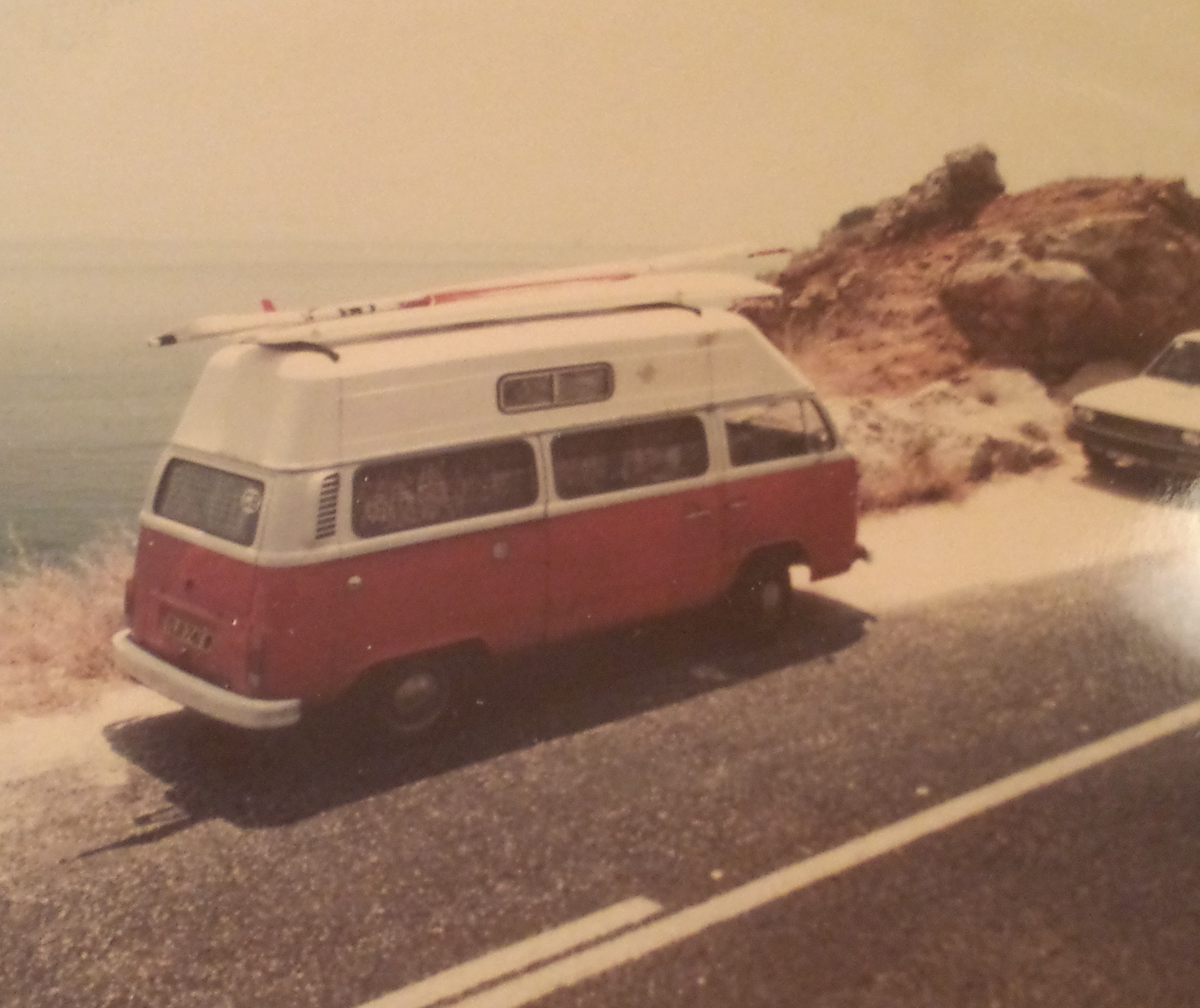
20150717_161830_Richtone(HDR)Our plan was to spend an open-ended time in Europe, partly touring in our VW camper; partly working on an Uncle’s organic farm in Portugal; partly learning French and skiing in Grenoble; partly working on an Israeli Kibbutz; and partly spending time with our Europe-based family.

For my leaning-toward-the-far-end-of-Independence-since-I-lost-my-mum-whom-I-adored-so-was-reluctant-to-entrust-my-heart-to-anyone-ever-again Self, this was a challenge.

While one happy day passed to the next, I was also increasingly aware of another voice, my “be careful, don’t get too close!” warning voice, that worried I was eroding my ability to ~

  • enjoy my own company
  • make my own decisions
  • sit in silence
  • be spontaneous
  • not care how I impacted anyone.

So, perhaps under the guise of “fun & adventure” (a clarion call for both of us) we hatched plans for a month apart. Mark took himself off to hike the high Alps in Austria. I took myself off to hike part of France’s Grande Randonee.

We took 4 weeks apart (our total Honeymoon was 18 months) and I spent every day of that month witnessing my own enormous inner battle. On the one side was my major Independent Part who dreaded the vulnerability, mourned the loss of my single freedom, worried about the future compromises and found fault with how Mark did things (in his absence of course!). On the other side was my major Dependent Part who yearned for his arms, the closeness, the delight of being seen, known and appreciated, the easy fun we had together and the future plans we were hatching.

Looking back, I think this is what we all have to do – in our own way and on our own time frame – to resolve this issue.

The art of differentiation is finding this middle place where we learn how to become fully ourselves, in the context of another.

Easier said then done – I know.

Here are my TOP FIVE TIPS for finding a happy balance point between isolation and fusion, in your relationship for you and your partner.

1. Wrap your head firmly around these concepts. If it seems like you and your partner might be struggling because you have very different needs regarding time together and time apart, or connection versus independence, check out the links in this article and continue to research the five main terms I’ve been using in this article ~

  1. Counter-dependence
  2. Independence
  3. Interdependence
  4. Dependence
  5. Co-dependence

We don’t talk about them all the time, but they are super helpful to grasp.

2. Be honest with yourself. Figure out where you are on this Autonomy to Attachment Scale.

Autonomy to Attachment Scale

If you’re on the Autonomy, or minus side, you may find yourself ~

  • with an avoidance mindset
  • distancing
  • hiding emotionally
  • withholding
  • keeping your distance

If you are on the Attachment, or plus side, you may find yourself ~

  • with an approach mindset
  • pursuing
  • demanding intimacy
  • giving
  • seeking to blend
  • closing distances

3. Talk About This With Your Partner. It helps to know if your needs for autonomy & attachment are similar, complimentary or problematic. Talk together about what that center ZERO point might look like in your relationship.

4. Do your own personal work. Just because you’ve “caught” your partner does not mean you should give up becoming a more conscious, compassionate “best version” of who you have the potential to become. In fact, you owe it to your partner to keep up the good work. Not sure where to begin? Well – one place to start is with the very first posting in this relationship series with, Part of Me Wants.

5.  Get Help If You’re Stuck.  That’s what folks like me are for. As long as you can do this on your own, that’s fantastic. But a good therapist will help you figure out what needs to happen to help move you over any relationship stumbling block you may be encountering. This is tough stuff – give yourself a break!

So how did the marriage go?

It’s been 32 years since Mark and I tested our capacities for tolerating closeness and separation on our independent honeymoons. Looking back – since I’d not known about these issues nor created the Autonomy – Attachment scale back then – we figure Mark’s a +4 and I’m a -4, so we’ve had our fair share of bumping into one another’s preferred boundaries there.

We’ve achieved a close-enough to Zero balance for interdependence that we’re ever going to attain. We’ve loved and raised 2 children; started and folded companies and earned our living a variety of ways in a variety of countries; we’ve interwoven our lives with extended family and celebrated births, weddings and funerals; we lived with a variety of exchange students, long term house guests and animals; we take vacations together and apart; have overlapping and independent interests; and we work to never be boring – to ourselves or one another. That ever present juggling to foster each of our individual paths in the context of our marriage has become less and less an “either / or” feeling and more and more a both / and.

It’s a journey well worth the taking.

PS: A dear friend (thank you Stuart) who helps edit these posts wrote this:

The journey to zero is not an easy one even when the desire for it is evident. It is a journey that requires a sense of “worthiness, authenticity and vulnerability” that can be elusive at times. It also requires intentionality –  it doesn’t just happen.”

Good point!

* * * * * * * * * * * * * * * * * * * * * * * * * * * * * * * * * * 

FIRST TIME HERE?

This is the latest article in a year-long series on the “12-most-important-relationship-skills-no-one-ever-taught-me-in-school-but-I-sure-wish-they-had.”

Click the box for the full list.  →Top 12 Relationship Skills

If you’re interested in reading this blog in sequence, below are links to the series to date, beginning with the first posting at the top.

OVERVIEW

SKILLS FOR UNDERSTANDING

SKILL ONE ~ Recognize (and get to know) the many “yous.”

SKILL TWO ~ Learn how to be pro-active: choose how y’all show up.

SKILL THREE ~ Accept (and get curious about) other peoples’ complexity

SKILLS FOR CONNECTING

SKILL FOUR ~ Master the Art of Conversation

SKILL FIVE ~ Learn How To Listen With Your Whole Self

SKILL SIX ~ Crack The Empathy Nut

SKILL SEVEN ~ Practice Kindness

Can We Ever Be Too Kind?

  • Do you ever wonder where the line is between kindness and enabling?
  • Do you ever worry you’re becoming a doormat whilst believing you’re being kind?
  • Do you ever sense that someone’s apparent “kindness” feels sticky or needy in some way?
  • Do you ever find yourself torn between being kind to yourself OR being kind to someone else?

Good!

I think there is a deeper story about kindness and it’s worth exploring. Dr. Neil Young (not the musician) taught in the psychology department at Seattle University in the late 1980’s while I was getting my masters degree. He was both well traveled and an excellent observer of human nature. He collected fascinatingly brief, succinct verbal-images of some of the more unusual people he met.

One, I’ve never forgotten. Screen shot 2015-07-14 at 7.51.37 AM

A gentleman standing outside Kings Cross station. He wore a long woolen coat, a bowler hat, and carried an umbrella. He looked comfortably off, but not wealthy. There was an overall threadbare air and the sense that things had once been better.

In my imagination he looks like this →Screen shot 2015-07-12 at 1.50.31 PM

He stood greeting people as they hurried into or out of the station. He’d tip his hat if he felt he’d caught someone’s eye and offer them something.

Neil was curious, so caught the gentleman’s eye.

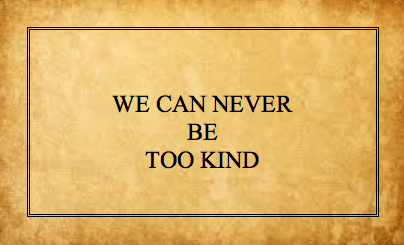
The gift was a regular sized business card on which was printed:

Screen shot 2015-07-14 at 7.38.53 AM

Neil thanked the man and asked him about the sentiment. Why did this man feel compelled to hand out cards telling us that we can never be too kind?

Apparently, the man’s eyes moistened in response and he patted Neil on the arm but said nothing. He didn’t wish to add anything to the message on the card. This was his life’s lesson. Summed up on a small card, and offered free to those who were open to receiving the message.

Neil found it very moving and brought the card back to our class so we could investigate this idea with the question:

“Can we ever be too kind?”

Without boring you with our lengthy process, what we discovered in those discussions is wonderfully relevant for exploring those muddy edges of kindness that show up as the questions I posed at the beginning. Here’s what I learned about kindness.

  • Being NICE and being KIND are two very different things.
  • Being NICE stems from fear. Being KIND stems from love.
  • One can certainly be too NICE. One can, indeed, never be too KIND.

Let’s break that down.

1.  Being NICE and being KIND are two very different things.

NICE

The origins of the word “NICE” are not nice at all. In fact, it’s a highly imprecise chameleon of a word. It’s earliest roots are Latin, and if a Roman described you as “nescius” they meant you were ignorant or incapable as in “not-knowing,” from ne- “not” + stem of scire “to know”; The term then evolved as follows:

  • 1100s – (in old French) careless, clumsy, weak, poor, needy, simple, stupid, silly, foolish
  • 1200s – foolish, stupid, senseless, and timid
  • 1300s – expanding from timid to fussy & fastidious, “nice” went on to acquire more culturally valued traits such as dainty and delicate
  • 1400s – then precise and careful
  • 1500s – and so it was cleaned up even more and preserved in such terms as a “nice distinction” and “nice and early”
  • 1769 – to agreeable and delightful
  • 1830 – all the way up to blur the lines with kind and thoughtful.

What a journey!

Today the adjective “nice” packs some combination of being pleasing, agreeable and pleasant yet there are some subtle, sticky overtones to the quality of “niceness.”

We are rarely “nice” in private. Being nice matters to the extent it is viewed. Being nice is about making a particular impression on the recipient of our niceness. It’s an externally driven behavior having to do with “perception management.” It is, in brief, “an outside job” produced within a context of judgment.

Parents plead with their kids to “be nice” when Grandma comes, and tell their little darlings that “nice people don’t do that” as toddlers do what toddlers do, but in public.

KIND

Kind has a – well – “kinder” pedigree. It first shows up in middle English having been born in the dark ages to emerge around 900 AD meaning natural, well-disposed, genial.

Kindness is presumed to arise from within and the term describes an internal state of benevolence. There is first this natural state of consideration, indulgence, geniality and helpfulness toward others from which proceeds kindness. It is, in brief, “an inside job” up-welling and not motivated by judgment.

Parents who invite their children to be “kind” are usually involved at the level of conscience, and might be gently nudging their little ones to dig deep within themselves to take an action no one will praise them for. I vividly remember my mother taking me aside after some sort of tiff with a friend and asking me, “What’s the kindest thing you could do here my darling?” And whatever it was that I chose to do was definitely not something that saw the light of anyone’s praise, or even knowledge.

2.  Being NICE stems from fear. Being KIND stems from love.

So, if being “nice” is a state where we behave in a way that is designed to have our audience think well of us, and being “kind” is a behavior that wells up from within a heart that is full of benevolence, I think it’s fair to say ~

  • NICE is motivated by fear &
  • KIND is motivated by love.

So what?

Returning to the questions I began this article with ~

  • Where’s the line is between kindness and enabling?
  • When am I being a doormat in the pursuit of “kindness”?
  • What’s up when someone’s apparent “kindness” feels sticky or needy in some way?
  • Why do I have to sacrifice kindness to myself in order to be kind to someone else?

Let’s see how this idea plays out by way of a guide in discerning the answers to these wonderings.

There are two questions worth asking right off the bat:

  1. What am I afraid of?
  2. What’s the most loving thing I can do, for all involved, in this situation?

I’ll take you through a personal journey to illustrate my point. After Mark and I had been married about 14 years we hit a pretty serious low. Mark had started a hydrogeological consulting company and commuted into Seattle from our home in Port Townsend several long days a week. I worked half time at the local Community Mental Health Center as a marriage and family therapist. By mid 1997 we had two children aged 2 and 6. We thought we’d found a good balance of personal-to-couple-to-family life by organizing each weekend so Saturday was a “day off” for one of us, and Sunday was family-day. And my part-time schedule allowed me to do the household management while Mark commuted.

But, as Mark grew increasingly stressed by long days, high-stakes projects and the inevitable dip in marital satisfaction that comes for 67% of couples with small children, I let “niceness” set in. Weekend after weekend I offered Mark “my” day off. Months went by when Mark would take one day each weekend and we’d have a family day the other, yet we both grew increasingly burned out. I thought I was being kind to Mark – surely he could see how I was “sacrificing” my weekend day for him? But, was this kindness?

  • Was I enabling an unhealthy pattern?
  • Was I being a doormat?
  • Was my “kindness” sticky with gooey unspoken resentments?
  • Why did it  feel impossible to be both kind to myself and kind to Mark?

OK, so let’s try those two questions.

1. What was I afraid of?

  • I was afraid that Mark’s stress would make him grumpier and grumpier (which was happening).
  • I was afraid we’d fight.
  • I hated the distance I felt when he was exhausted and drained.
  • I felt resentful since I worked half-time and had full time home-and-kid duty.
  • I was afraid, deep down I suppose, that he’d burn out on his job and put us in a precarious financial position.

So, the truth was, I was being “nice” to Mark because I was far more fearful for us than loving of us.

2. What was the most loving thing I could have done, for all involved, in that situation?

  • Love myself enough to listen to my resentment and doubt.
  • Share these deeper truths first with myself, and then with Mark.
  • Talk together about what was the most loving thing for all of us – the children, Mark and me.

In fact, I slowly did this. I committed to an inspiring Artists Way therapy group and admitted I was frustrated, resentful and afraid to rock the boat. And then began a journey back toward what felt most true about who I was and how I wanted to live.

Eventually I began to talk with Mark. Each one of us digging deep toward an honest self-reflection  until bit by bit we were able to release our fears and share from a place of love once more.

This resulted in a radical lifestyle change, and when our children were 5 and 10, we rented out our Port Townsend home and took a family sabbatical in a small beach-side Mexican village for a year.

Screen shot 2015-07-14 at 7.57.21 AM

But that’s another story.

3.  One can certainly be too NICE.

So yes, in light of all this, I believe there are all sorts of dangers to being too nice. If you choose to behave a certain way because you are fearful of the truth and you wish to present an acceptable “image” the odds are good you are being NICE, not KIND. And with NICENESS comes all those tough dilemmas I began with, and you run the risk of;

  • Enabling unhelpful patterns, false beliefs, and distance from someone who deserves your deepest truth;
  • Doing the martyr thing, behaving like a doormat whilst believing you’re helping;
  • Manipulating with sticky false behavior designed to be judged favorably;
  • Seeing the world as a “me” versus “them” scenario, which denies that there might be a thoughtful, genuine and honest win/win.

One can, indeed, never be too KIND.

NICE is born in fear and expressed by denying the deeper, honest truth.

KIND is born in love and expressed by engaging honesty with courage.

So yes, I agree with the Kings Cross gentleman’s business card: Screen shot 2015-07-14 at 7.38.53 AM

NEXT WEEK A reader’s question. “What’s the difference between independence, co-dependence and interdependence. How do you create a relationship where you can rely on your partner without losing yourself in them, and be sure your partner also understands and strives for the same balance?”  

FIRST TIME HERE? This is the latest article in a year-long series on the “12-most-important-relationship-skills-no-one-ever-taught-me-in-school-but-I-sure-wish-they-had.”

Click the box for the full list.  →Top 12 Relationship Skills

If you’re interested in reading this blog in sequence, below are links to the series to date, beginning with the first posting at the top.

OVERVIEW

SKILLS FOR UNDERSTANDING SKILL ONE ~ Recognize (and get to know) the many “yous.”

SKILL TWO ~ Learn how to be pro-active: choose how y’all show up.

SKILL THREE ~ Accept (and get curious about) other peoples’ complexity

SKILLS FOR CONNECTING SKILL FOUR ~ Master the Art of Conversation

SKILL FIVE ~ Learn How To Listen With Your Whole Self

SKILL SIX ~ Crack The Empathy Nut

SKILL SEVEN ~ Practice Kindness

Cultivating Kindness

It’s not hard to make the case for kindness.

People are yearning for it.

  • Personally, it’s the vital glue in my close relationships;
  • My article Kindness is Key got more “hits” than anything I’ve written for over a year;
  • Google reports that searches for “kindness quotes” and “acts of kindness” are rising rapidly.

It’s good for us.

  • The study of positive psychology has gathered persuasive hard evidence about the benefits of qualities like kindness, compassion and happiness, a small sampling of which can be enjoyed (and even studied) at The Positive Psychlopedia;
  • An Atlantic article is calling kindness and generosity the Masters of Love.

Humans are possibly hardwired for it.

Primates do it.

  • Professor Franz De Waal has been studying emotions in primates, including cooperation, altruism and fairness, for over three decades, touching off a whole field of primate cognition that continues to inspire.
  • There are fresh new studies of pro-social behavior in primates which continue to reinforce the idea that our close animal relatives instinctively exhibit “altruistic” looking helping behaviors.

So – if kindness is yearned for, good for us, innate at birth and alive and well amongst certain primates, why does it become so hard to come by between people who love one another?

One clue to answering this might lie in the research of David Rand, assistant professor of psychology, economics, and management at Yale University, and the director of Yale University’s Human Cooperation Laboratory

In his paper spontaneous giving and calculated greed Dr. Rand discusses his findings that given a brief decision-making window, people will instinctively choose the pro-social (or kinder) option. But, give them time to think it over and they’ll be more selfish.

So, let’s slow that down.

Our first, innate instincts are pro-social and kind.

But once we get to thinking, we over-ride this instinct.

And we tend to over-ride this instinct a lot with the people we love:

in our long-term relationships where familiarity can breed discontent.

Right there in that pause between stimulus and response when your partner (to continue the examples from last week) ~

  • Looses the car keys – again
  • Trumps your punch line and finishes your story – again
  • Burns the fresh wild Alaskan King Salmon fillets – again
  • Forgets your birthday – again
  • Surfs the channels until you’re dizzy – again
  • Grunts at you over morning coffee – again

and you’re frustrated and disheartened because you’ve tried a thousand different ways to communicate that this behavior drives you nuts,

and right then you quell any instinctual kind response and instead go Hamlet and ask yourself a version of “To be (kind), or not to be (kind)?”

In that moment of thought, your natural kindness instinct is gone – Pooft!

And instead you feel an upsurge of anger and think to yourself,

How the blazes do I play the kindness card when I’m frustrated and disheartened and my partner is unreasonable and forgetful?

Screen shot 2015-07-07 at 12.30.55 PM

And in that moment of thought

a huge gulf opens up within you

and your heart divides.

On one side lurks the story you tell yourself about what has happened.

On the other side lies your ability to respond kindly.

As an IFS-trained couples counselor, I think David Rand is onto something important about what happens when we replace instinct with reason.

The moment we stop to think, we open our inner Pandora’s Box. And this box is always very full of opinions and judgments, the belief in which allows us not to feel what we feel. Particularly our thinking protects us from feeling the pain of ~

  • isolation
  • vulnerability
  • unworthiness
  • unlovability
  • shame.

See if any of these feel familiar.

THE GOLDEN SCRIPT IS THE ALL TOO FAMILIAR TRIGGERING INCIDENT

  • The blue script is the thought that interrupts your instinct to be kind
  • The red script is the feeling you may be trying not to feel.

* * * * *

LOST KEYS

  • My partner’s needs and chaos are interrupting me and my life far too much.
  • I feel overwhelmed by all the demands on my time.

STOLEN PUNCH LINE

  • Why does my partner have to steal my thunder all the time?
  • We get so competitive around others. I feel like I’m not interesting enough.

BURNT FISH

  • My partner can’t even focus and accomplish one thing for “us” at home.
  • I feel so alone when we can’t pull off a simple team effort like a meal .

FORGOTTEN BIRTHDAY

  • I make a big fuss over everyone’s birthday in this family, so why can’t they do the same for me?
  • I feel invisible, unlovable & too vulnerable to remind folks when my birthday is coming.

CHANNEL SURFING

  • He’s so twitchy and uncentered. Why can’t he just settle on a program?
  • I feel ashamed that I waste time like this but can’t find anything more interesting to do for myself.

NO COMMUNICATION OVER MORNING COFFEE

  • I have to make all the decisions around here – my partner’s non-functional every morning.
  • I feel so isolated when I can’t connect with my partner before we both leave for work.

So now you’ve got ~

A behavior in your beloved that you once found endearing and met with kindnessyou used to help find the keys, and you used to find it reassuring when your beloved knew your stories so well  they could finish them

is now immune to your original kindness response  – because your story about this behavior interrupts your initial pro-social instinct

and instead your story about this incident triggers your core vulnerabilities – and the accompanying not-so-great-feelings inside of you

and you lash out, tilting at the windmills outside of you, when actually the pain is all internal.

Because your cup is empty. Because you are not happy. Because you have not been kind enough to YOU.

WHAT TO DO?

My new friend and Buddhist teacher Kathleen Rose of the Boise Institute for Buddhist Studies connected me with a wonderful teaching I’d love to share briefly here, with a link to a fuller article.

In the face of inner overwhelm when you are underwhelmed by kindness for yourself or others, remember the RAIN of Self-Compassion. I quote briefly from this article here, or click that title link for the whole piece.

The acronym RAIN, first coined about 20 years ago by Michele McDonald, is an easy-to-remember tool for practicing mindfulness. It has four steps:

Recognize what is going on;
Allow the experience to be there, just as it is;
Investigate with kindness;
Natural awareness, which comes from Not identifying
with the experience. Or, more simply Non-attachment.”

To cross that enormous gulf of pain that opens up when thinking interrupts your instinct and separates you from your original pro-social drive, you only have to eliminate the story!

You already have everything you need to be kind.

You are an innately kind person who has lost touch with your instinctual ability to be kind because you’re drained. You’ve exhausted yourself by first creating these inner protective beliefs and then by believing these tales you tell.

SO TO CULTIVATE KINDNESS

in yourself and others, the next time someone in your life does what they do that you normally find so irritating, try 3 things:

  1. Recognize anything other than a kind instinct within as a self-diagnosis of inner overwhelm. All is not well if you are separated from your naturally compassionate self.
  2. Remember RAIN of Self-Compassion.
  3. Turn toward this person with a refreshed heart and remember what you used to do that was instinctively kind. You’ll know. If not, simply say “You know, here we are again – with you doing this and me on the verge of reacting. But I’m done reacting negatively. I’m sorry I’ve been so grumpy. I’ve been running on empty but I’m taking better care of myself. What do you need right now?”

See what happens.

I’d love to hear about it!

 * * * * * * * * * * * * * * * * * * * * * * * * * * * * * * * * * * * * * * * * * * *

FIRST TIME HERE?

This is the latest article in a year-long series on the “12-most-important-relationship-skills-no-one-ever-taught-me-in-school-but-I-sure-wish-they-had.”

Click the box for the full list.  →Top 12 Relationship Skills

If you’re interested in reading this blog in sequence, below are links to the series to date, beginning with the first posting at the top.

OVERVIEW

SKILLS FOR UNDERSTANDING

SKILL ONE ~ Recognize (and get to know) the many “yous.”

SKILL TWO ~ Learn how to be pro-active: choose how y’all show up.

SKILL THREE ~ Accept (and get curious about) other peoples’ complexity

SKILLS FOR CONNECTING

SKILL FOUR ~ Master the Art of Conversation

SKILL FIVE ~ Learn How To Listen With Your Whole Self

SKILL SIX ~ Crack The Empathy Nut

SKILL SEVEN ~ Practice Kindness

Kindness Is Key

. . . to great relationships.

Triumphed again my darling!” exclaimed my uncle as my aunt produced yet another burnt offering. Cooking was not her forte but she was taking lessons and insisted on trying out new things before she was quite ready.

20150701_132257_Richtone(HDR)My uncle was a kind man. He never resorted to sarcasm. He never gave her anything other than glowing feedback. He adored her culinary triumphs and made light of her kitchen disasters. He exuded an air of “Aren’t I lucky to be sharing my life with this woman!”

I think they were the most joyful couple I’ve ever known and staying with them was deeply restorative.

Were they “perfect?”

Of course not!

They came from very different backgrounds; had different interests; enjoyed different music; had different appetites for socializing; he was a quiet private man, she was an extrovert; they could rub one another the wrong way as much as any couple.

But they were (almost) always kind to one another.

They were my first role models for the power of kindness in creating great long-term relationships.

* * * * * * * * * * * * * * * * * * * * * *

Sometimes living together gets tough. You have issues. You want to fix something. You work hard.

And yet, after all the ~

  • communicating;
  • counting to ten before you speak;
  • concentrated listening;
  • patient “So what you’re saying is . . . ” active reflecting;
  • negotiating, and giving one another space, and problem-solving;

after you’ve cycled through your arsenal of relationship skills in the effort to both understand and grow closer to the person you love (or thought you loved) ~

you may still be mystified by your partner.

You may still feel exasperated, irritated, disappointed, exhausted, frustrated, righteous.

So then what?

This person whom you’ve committed to spending the rest of your life with may still;

  • Loose their car keys every day;
  • Finish your story;
  • Overcook the fish;
  • Forget your birthday;
  • Channel surf;
  • Grunt at you over morning coffee.

Nothing you’ve said or done or negotiated has worked and there is this issue, this “pebble in your shoe” (as the Mexicans say) which threatens to undermine your whole marathon.

It’s hardly a crime against humanity. It can’t possibly be grounds for divorce:

Your Honor I’m done. He burns the fish!”

But, dammit, there’s this issue that bugs you. Whether you’re the partner who looses track of fish cooking times and hates that this matters, or you’re the partner who hates that fish gets burnt, you are aware that over the long haul this issue could get old. And potentially deadly because the truth is, it often IS the little things that make or break a marriage.

So what?

WHAT!

Try kindness.

Here’s why you might want to try kindness.

Every interaction between you and your partner does one of three things.

  1. It brings you closer.
  2. It maintains the status quo.
  3. It pushes you apart.

Happy couples enjoy a ratio of five positive interactions for every one negative one. Their arousal and fear mechanisms are not triggered. They feel safe with one another. They can relax. This feels good. It IS good. Their emotional landscape creates their biological reality. Happy couples literally live longer .

On the other hand, unhappy couples have more negative interactions than positive ones. These negative experiences trigger the body’s arousal and fear mechanisms. They feel less and less safe with one another. They can’t relax. This feels bad. It IS bad. Indeed, emotional toxicity undermines the immune system. There is growing evidence that bad relationships contribute to bad health. which is why Happy couples literally live longer .

Here’s how to try kindness. .

  • So – how to get this 5:1 ratio of good to bad interactions?
  • What does this look like in real life?
  • What’s an example of a “good” interaction versus a “bad” interaction?

It’s not what you think!

Sure the “bad” list includes what you’d expect:

  • Physical, verbal or sexual abuse
  • Abandonment
  • Criticism
  • Defensiveness
  • Contempt
  • Stonewalling

[By the way, these last 4 in italics have been identified by John Gottman as The Four Horseman of the Apocalypse because they do so much harm. If you are interested I’ve embedded a short video from Gottman’s website . These are the poster children for Not Kindness!]

But the “bad” list also includes some seemingly “normal” responses to the irritating scenarios above. In other words, you may be unwittingly triggering a negative response in your partner through these small daily interactions that add up to no good.

Here are three responses to a chronic lost-key scenario. Which would you prefer if you were the key looser?

  1. You see your partner roll their eyes, sigh, check their watch and drift off leaving you alone to find the keys.
  2. Your partner notices you are key hunting and says in a neutral tone, “Oh, you’ve lost the keys?”
  3. Your partner comes to you a few minutes before it’s time to leave and cheerily says: “So, are we on a key hunt this morning, or have you rounded up those bad boys already?

Personally I’d choose door number 3. There’s a playfulness, lightness, acceptance of the probability of a key-hunt and the use of “we” not “you.”

Option #1 is most likely to be experienced as negative. Eye rolling is a form of contempt.

Option #2 is most likely to be experienced as neutral. No one is angry or contemptuous. But there’s not a whole heap of warmth either.

Option #3 is most likely to be experienced as positive. It’s a kind response. The sort of thing good friends do for one another.

Is that so hard?

What does it take to help move a person from irritation to kind acceptance?

I’ll come back to this question over this month of July because it’s a great one, but for starters here’s how I’d answer that question.

Moving to kindness needs two things:

1. It’s a conscious decision to exercise your inner capacity to be kind.

2. Your inner capacity to be kind is like a muscle – it is weak when not used, and needs to be exercised to be effective.

So meanwhile – try it out! Catch yourself in one of your typical moments of exasperation and think through what a kind response might look like. Then try it. I’d love to know what you notice!

More next week.

FIRST TIME HERE?

This is the latest article in a year-long series on the “12-most-important-relationship-skills-no-one-ever-taught-me-in-school-but-I-sure-wish-they-had.”

Click the box for the full list.  → Top 12 Relationship Skills

If you’re interested in reading this blog in sequence, below are links to the series to date, beginning with the first posting at the top.

OVERVIEW

SKILLS FOR UNDERSTANDING

SKILL ONE ~ Recognize (and get to know) the many “yous.”

SKILL TWO ~ Learn how to be pro-active: choose how y’all show up.

 SKILL THREE ~ Accept (and get curious about) other peoples’ complexity

SKILLS FOR CONNECTING

SKILL FOUR ~ Master the Art of Conversation

SKILL FIVE ~ Learn How To Listen With Your Whole Self

SKILL SIX ~ Crack The Empathy Nut

SKILL SEVEN ~ Practice Kindness

  •  Kindness Is Key

Living Empathically

A thoughtful reader responded to my Teaching Empathy to Children post with this comment:

So often I’ve seen parents making the mistakes you list at the top of the article. It’s sad because some of the children who have grown up with my own children have indeed become emotionally stymied and unhealthy. Since it takes a village to raise emotionally healthy young people, can you suggest ways in which you can intervene diplomatically and with skill when you see a situation going bad in which parents make those mistakes and lose sight of the big picture?

It’s such a great question I wanted to use it as the focus for this final post on the subject of empathy.

I’d also love to open up a conversation – I am sure there will be readers who have ideas to add. Hit the Leave a Reply link at the beginning of this post. We’d all benefit.

As a licensed therapist I’d be remiss not to note the obvious: there’s a triage to be considered in these parenting issues.

  1. Active Abuse – get involved, because the situation is out of control and the family system needs professional attention
  2. Parent out of control – get involved, because the parent has lost it and the child needs your help
  3. Child out of control – get involved, because the child has lost it and the parent needs your help

1.  Active Abuse

Screen shot 2015-06-24 at 12.13.57 PMChild abuse is taken very seriously in most countries around the world. For US readers, here’s a Mandatory Reporters of Child Abuse guide, as a short handout from the government’s Child Welfare division. It’s worth a read if you’ve ever found yourself wondering  “is this abuse?” and “should I report this to someone?”

In brief,

The Definition of abuse ~ varies, but in most areas it’s along the lines of conditions that would reasonably result in harm to a child . However, to be sure, and to empower you in case you witness something that has you wondering, check the legal definition in your area. US readers can search their State’s definition of what constitutes abuse .

Who can report child abuse? ~ Anyone may report, and some people must report. Once again this varies by region but certain professionals are mandated to report child abuse and this is a comprehensive list. It includes at least –

  • social workers
  • teachers and school personnel
  • doctors, nurses and all health care workers
  • school counselors, therapists and mental health professionals
  • child care providers
  • medical examiners and coroners
  • law enforcement
  • and can include the directors, employees and volunteers at places which provide organized activities for children such as day camps, youth centers and recreation centers.

In no state it is wrong to report your suspicions of child abuse.

So, IF you have “knowledge of, or observe a child being subjected to, conditions that would reasonably result in harm to the child” (excerpted from the Mandatory Reporters publication linked above) you should call the police, or if in the USA, you can call your state-specific child abuse hotline,

If you have witnessed a nasty, vicious incident and can report it, you’ll at least feel you did something. But if you know nothing about the people involved, and can’t give names, addresses or even any static geographic area where the police could reasonably be expected to find these folks again (you’re at an airport, on a train or bus etc) you can at least take some comfort in knowing that if there is chronic abuse there is a good chance the child will be witnessed by one of the numerous mandated reporters.

2.  Parent out of control

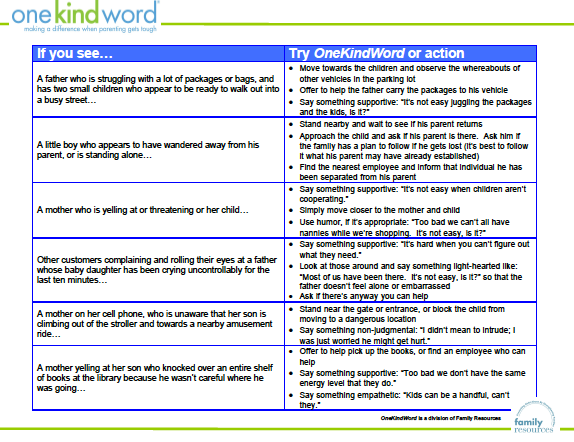
Screen shot 2015-06-24 at 12.19.47 PM OK, so you’re right there when a parent looses it. They yell, handle the child roughly, use abusive language, make threats and even slap or swat the child, but awful as this is for the child (and for you to witness) it does not seem “bad-enough” to report to the authorities.

What can you do?

Apparently lots of folks have opinions about this, and a quick internet search brings up some pretty dismal ideas, mostly along the lines of shouting at, and shaming, the already beleaguered parent. I was horrified!

Think about it.

What’s happened?

The parent is out of control. They’ve [temporarily we hope] lost touch with their mature, capable, resourceful self. They are behaving childishly, in an unskilled, reactive and volatile way. They are – essentially – throwing a grown-up tantrum, except it’s not their parents they are throwing it for, it’s their child. Truth is, we’ve all been there! Maybe for us we’ve been fortunate enough not to loose it when we were out in public. The last thing we need at times like these is public shaming.

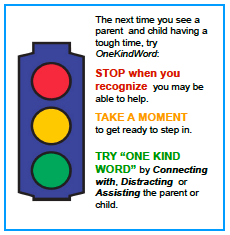
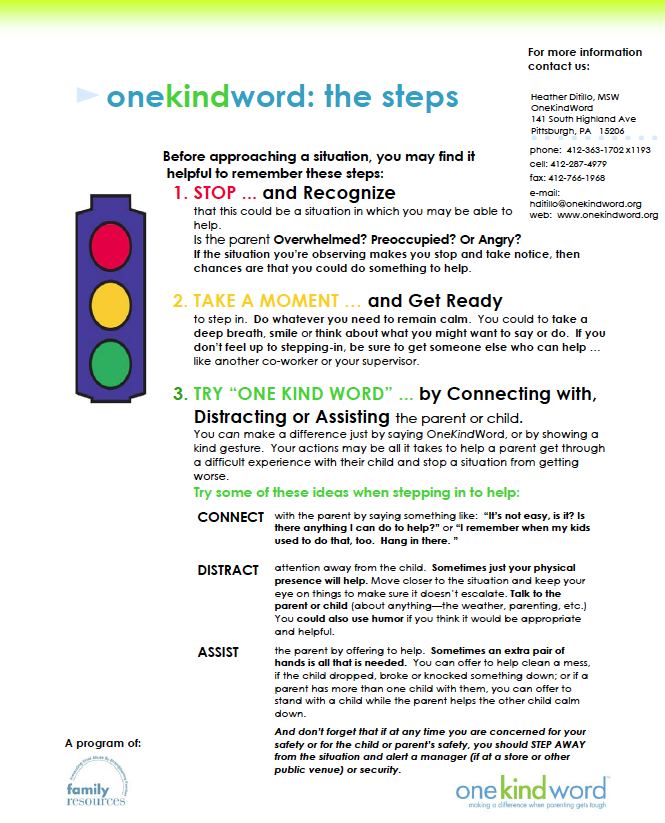
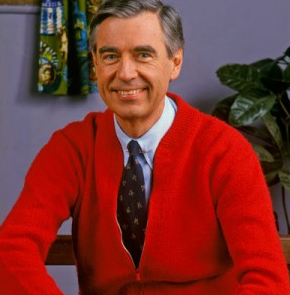
I’ve come across a wonderful resource for just these moments that I’d love to share, called OneKindWord. This is a public education program developed by Pennsylvania-based Family Resources  and Family Communications, thanks to Mr. Roger’s on-going legacy

With a mission to raise awareness about parent-child conflicts in public and empower people to step in helpfully when they see a stressed parent or a child who is unsafe, they offer three simple steps which go a long way to help us dump the judgment and connect empathically.

Screen shot 2015-06-24 at 12.26.35 PM

And you can download a One Kind Word Overview  as a PDF, and here’s a short Tip Sheet.

Screen shot 2015-06-24 at 12.43.25 PM

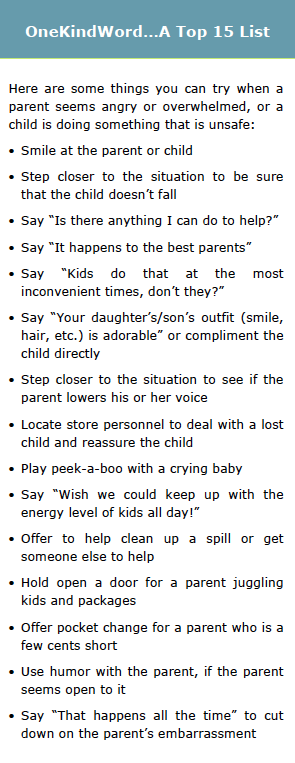
3.  Child out of control

Screen shot 2015-06-24 at 12.18.42 PM

If the parent is on their game and can handle it, great.

If not, making eye contact, saying something kind, and helping the parent keep the child safe can all make a huge different to the outcome.

Here’s another list from OneKindWord .

Screen shot 2015-06-24 at 12.30.44 PM

Living empathically can become a habit. Enjoy!

FIRST TIME HERE?

This is the latest article in a year-long series on the “12-most-important-relationship-skills-no-one-ever-taught-me-in-school-but-I-sure-wish-they-had.”

Click the box for the full list.  Top 12 Relationship Skills

If you’re interested in reading this blog in sequence, below are links to the series to date, beginning with the first posting at the top.

OVERVIEW

SKILLS FOR UNDERSTANDING

SKILL ONE ~ Recognize (and get to know) the many “yous.”

SKILL TWO ~ Learn how to be pro-active: choose how y’all show up.

 SKILL THREE ~ Accept (and get curious about) other peoples’ complexity

SKILLS FOR CONNECTING

SKILL FOUR ~ Master the Art of Conversation

SKILL FIVE ~ Learn How To Listen With Your Whole Self

SKILL SIX ~ Crack The Empathy Nut

Teaching Empathy to Children

Screen shot 2015-06-17 at 6.01.41 PMFour year olds Zoe and Ben are playing in the wading pool at the park.

Zoe has a bucket and some colorful cups, which she’s engrossed in filling and pouring. Now and again she looks up to show her mum what fun it is to fill the big pail and then pour the water into the smaller cups so it all spills out. Ben has no toys so he’s making splashes with his hands and feet and full body slams into the water. The mums are chatting.

All is peaceful. Well, as peaceful as a pond full of preschoolers can be.

Suddenly there’s a wail of indignation and the mums look up.

Ben has collected a few of the colorful cups Zoe had floating around her. Zoe goes to grab them from him. As she holds onto one Ben pulls back which unsteadies Zoe and she falls chest-first into the shallow water. She gets up, unhurt but indignant, and goes to reach again for the cup. At this point Ben raises it above his head hoping she can’t reach. Assessing the situation pretty quickly Zoe goes to Plan B, and uses her bucket to bop Ben sharply on the nose. Yup – that works! Ben drops the cup, puts both hands on his face and bursts out crying.

Now the mums are up.

  • What would you do if Ben was your child?
  • What would you do if Zoe was your child?
  • Is there a “right” way of intervening, and if there is, what philosophy of “rightness” is being enforced?

Before I weigh in, here are ways some parents respond:

  • Remove Ben from the pool with harsh words on the “you’re a bad boy” theme, and put him in time out for taking something which is not his;

[What might Ben tell himself when the adults around him only see things from the other kid’s point of view?]

  • Remove Zoe from the pool, maybe with a smack (because she hit someone else and that’s not a nice thing to do) and put her in time out;

[What might Zoe tell herself when the adults around her only see things from the other kid’s point of view?]

  • Smother Ben with hugs and kisses and “oh-diddums-are-you-alright-let-me-see-your-poor-sore- nose-whiles-Mummy-kisses-it”

[What might Ben tell himself when the adults around him only see things from his point of view?]

  • Smother Zoe with righteousness and console her because “that nasty boy had no right to take your stuff and he pushed you first so he had it coming to him anyway…”

[What might Zoe tell herself when the adults around her only see things from her point of view?]

OK – so an empathic teaching moment?

Each adult would go to their child and lead him or her gently out of the water, wrap them in a towel and sit them on their lap. Then (if they’d read this blog first, of course!!) they could work their way through these five steps:

1. Adopt a “Teachable moment” Attitude

Screen shot 2015-06-17 at 6.09.14 PMYou need the “Oh good – a teachable moment” attitude. Not the “I can’t believe these kids are so dreadful” attitude. You need the “Messy moments are behavioral rough drafts” attitude. Not the “Bad behavior is caused by bad kids” attitude.

Ben and Zoe have no idea how to navigate the two-kids-wanting-the-same-toy dilemma. Learning how to share stuff is tough and right now you have a chance to be part of this “teachable moment.” So, right then as you intervene, right as you take in that deep breath, invite your inner Mr. Rogers and bring with you compassion, curiosity, a light touch and some creativity.

2. Broaden The Context

Screen shot 2015-06-17 at 6.11.57 PMWhether we’re tiny or all-grown-up, it’s tempting to see the world-according-to-me. The first step in helping your child get a bigger picture is to broaden the context. Offer an establishing shot. Pull the focus way back and describe what went down in a non-judging way.

As in, “Boy, I just saw two kids having a tough time. A little girl brought some toys to the pool and the little boy wanted to play with those toys and wasn’t sure how to do that. And both kids got a bit hurt – one falling in the water and one because he got his nose hit. That must have been a tough few minutes for both of them.”

See what this does? Now your child hears a non-blaming description that captures the action of the two protagonists. Already the experience is now in some space beyond the initial small “It’s all about me” frame of reference.

In this case it’s not so hard to present a neutral narrative, and it’s important to not use any negative descriptions like “The bratty girl wouldn’t share!” or “The pushy boy took what he wanted.” Most helpful is to stick with the facts and dump the adjectives.

3 Label Feelings

Screen shot 2015-06-17 at 6.17.02 PMIf we want our children to understand how someone else might feel, we have to help them learn how they feel. In fact, studies show that children who are highly empathic are more likely to have been well empathized-with. (Barnett MA. 1987. Empathy and related responses in children. In N Eisenberg and J Strayer (eds): Empathy and its development. New York: Cambridge University Press.)

I’ve written a lot about emotions in this blog.

Type  “Emotions” into the search box, or click parrott-emotions-tree-2001(3) for some Emotions Vocabulary. But in brief, labeling feelings is just that – it’s you giving a vocabulary word to the child’s emotion, again with a non-judgmental or non-directive attitude.

If you’re Ben’s mum you might say “I bet you felt a bit sad that we forgot our toys today Ben. And it looked like you felt frustrated when the little girl wouldn’t let you use one of hers. And then, when she used her bucket to hit your nose I’m guessing you felt shocked and hurt and then a bit mad at her too, eh?”

Same idea for Zoe’s mum – to acknowledge her combination of anger that the boy took her cup; embarrassed when she fell over; frustrated she couldn’t reach the cup; a bit triumphant when she thought of hitting him, and then surprised and upset when the cup hurt him.

Emotions are like the weather: they are best noticed and reported upon without judgment. If it’s cloudy with a chance of meatballs, your grumpiness won’t lessen the meatball mess. If your kid is angry with a hint of jealousy – same difference. Naming these feelings won’t doom your kid to their permanent influence. In fact the opposite is true. Naming them helps your child move through them.

4. Swap Perspectives

Screen shot 2015-06-17 at 6.38.04 PMRight here – Step 4 – is the heart of teaching empathy. It’s the big juicy opportunity that the more typical parenting responses miss (like the ones above in red and blue).

The parents who use punishment miss the chance to empathize with their own child. The parents who are overly solicitous miss the chance to empathize with the other child.

So right after you’ve spent time with your own child understanding and labeling what they felt, it’s time to invite them to try out a different perspective. In this case, to see things from the other child’s point of view.

As in, “Ben, I wonder how the little girl felt when she saw you playing with her cup. Maybe she felt worried you might keep it. Or maybe she felt mad because she was about to use it.

You can use the child’s immediate parallel experience too;

As in “You know how hurt and shocked you were when the girl hit your nose? I wonder if she felt a bit like that when she fell in the water as you both pulled on that cup?”

Building empathy is all about perspective-taking.

If it feels a bit raw to use the immediate examples your child has just been through, you can reference a book or movie where a character might have felt hurt and shocked. Or look about you at the pool – are there other dramas unfolding that your child might now understand a bit more fully?

5. Leverage the Moment

Once your child has experienced being empathized with (you listened and accepted his or her feelings); and once your child has taken a stab at empathizing with the person they just had a fight with (you helped your child imagine how this other kid might be feeling), it’s time to tie a bow around the whole thing with the great “teachable moment question” “How could this have been better?”

Depending upon the ages of the children, you will totally guide these conversations (ages zero to 6 or so); brainstorm together (ages 6 – 11 or so); or allow the young person to come up with his or her own age-appropriate solutions. But for our two four year olds Zoe and Ben, you might say something like:

Zoe, now that we’ve seen how much Ben wanted to play with some toys, and how sad he was that he didn’t bring any to the pool do you think it might work to see if he’d like to borrow a couple cups if you knew you’d get them back. Shall I help you ask?”

Or

Ben, now that we’ve seen how worried Zoe was that you might take and keep her cup and how mad she was about how you held it over your heard, do you think it might be good to try asking first – to see if you could just borrow it? Shall I help you give that a try?”

 ***********************************

I know this is super specific – but the five principles for teaching empathy remain, no matter what the age of your child. Your way of dealing with this will grow with your child. And – as I think you’ll discover – these simple teachable steps lead beautifully into the wonderfully deep work showcased last week in Roman Kruznaric‘s work.

FIRST TIME HERE?

This is the latest article in a year-long series on the “12-most-important-relationship-skills-no-one-ever-taught-me-in-school-but-I-sure-wish-they-had.”

Click the box for the full list.  Top 12 Relationship Skills

If you are interested in reading this blog in sequence, below are links to the series to date, beginning with the first posting at the top.

OVERVIEW

SKILLS FOR UNDERSTANDING

SKILL ONE ~ Recognize (and get to know) the many “yous.”

SKILL TWO ~ Learn how to be pro-active: choose how y’all show up.

 SKILL THREE ~ Accept (and get curious about) other peoples’ complexity

SKILLS FOR CONNECTING

SKILL FOUR ~ Master the Art of Conversation

SKILL FIVE ~ Learn How To Listen With Your Whole Self

SKILL SIX ~ Crack The Empathy Nut

Teaching Empathy to Adults

Maybe you’ve already heard of him?

Dubbed “One of Britain’s leading lifestyle philosophers” by The Observer this chap has 436 links to his name in the newspaper’s search function (as of June 10th, 2015 anyway). They LOVE this guy. He’s the author of ~

And now, having reviewed some of his impressive body of work on empathy and more, I’m a wholehearted fan as well.

  • Q:   So, who IS this guy?
  • A:   Roman Krznaric
  • Q:   Why the fuss?
  • A:   Well, with regard to the subject of empathy – understanding it, seeing the relevance of it, noticing the historical sweep of it, fostering it, and teaching it – Mr. Roman Krznaric (pronounced Kruz-Na-Ric) rules the turf. It makes no sense for me to reinvent this wheel. Instead I’m going to do two simple things here today.
  1. Summarize Krznaric’s six habits of highly empathic people and link it to the original article published in The Daily Good.
  2. Embed a 20 minute You Tube video of Roman giving this talk for those who prefer visuals.

1. Six Habits of Highly Empathic People – abbreviated.

Habit 1: Cultivate curiosity about strangers “Cultivating curiosity requires more than having a brief chat about the weather. Crucially, it tries to understand the world inside the head of the other person. We are confronted by strangers every day, like the heavily tattooed woman who delivers your mail or the new employee who always eats his lunch alone. Set yourself the challenge of having a conversation with one stranger every week. All it requires is courage.”

Habit 2: Challenge prejudices and discover commonalities “We all have assumptions about others and use collective labels—e.g., “Muslim fundamentalist,” “welfare mom”—that prevent us from appreciating their individuality. HEPs challenge their own preconceptions and prejudices by searching for what they share with people rather than what divides them.”

Habit 3: Try another person’s life “So you think ice climbing and hang-gliding are extreme sports? Then you need to try experiential empathy, the most challenging—and potentially rewarding—of them all. HEPs expand their empathy by gaining direct experience of other people’s lives, putting into practice the Native American proverb, Walk a mile in another man’s moccasins before you criticize him.”

Habit 4: Listen hard—and open up “There are two traits required for being an empathic conversationalist. One is to master the art of radical listening. “What is essential,” says Marshall Rosenberg, psychologist and founder of Non-Violent Communication (NVC), “is our ability to be present to what’s really going on within—to the unique feelings and needs a person is experiencing in that very moment.” HEPs listen hard to others and do all they can to grasp their emotional state and needs, whether it is a friend who has just been diagnosed with cancer or a spouse who is upset at them for working late yet again. But listening is never enough. The second trait is to make ourselves vulnerable. Removing our masks and revealing our feelings to someone is vital for creating a strong empathic bond. Empathy is a two-way street that, at its best, is built upon mutual understanding—an exchange of our most important beliefs and experiences.”

Habit 5: Inspire mass action and social change “We typically assume empathy happens at the level of individuals, but HEPs understand that empathy can also be a mass phenomenon that brings about fundamental social change. Just think of the movements against slavery in the 18th and 19th centuries on both sides of the Atlantic. As journalist Adam Hochschild reminds us, “The abolitionists placed their hope not in sacred texts but human empathy,” doing all they could to get people to understand the very real suffering on the plantations and slave ships. Equally, the international trade union movement grew out of empathy between industrial workers united by their shared exploitation. The overwhelming public response to the Asian tsunami of 2004 emerged from a sense of empathic concern for the victims, whose plight was dramatically beamed into our homes on shaky video footage.”

Habit 6: Develop an ambitious imagination “A final trait of HEPs is that they do far more than empathize with the usual suspects. We tend to believe empathy should be reserved for those living on the social margins or who are suffering. This is necessary, but it is hardly enough. We also need to empathize with people whose beliefs we don’t share or who may be “enemies” in some way. If you are a campaigner on global warming, for instance, it may be worth trying to step into the shoes of oil company executives—understanding their thinking and motivations—if you want to devise effective strategies to shift them towards developing renewable energy. A little of this “instrumental empathy” (sometimes known as “impact anthropology”) can go a long way.”

If this whet your appetite for the full article, click → The Six Habits of Highly Empathic People.

2. Six Habits of Highly Empathic People – the movie.

FIRST TIME HERE?

This is the latest article in a year-long series on the “12-most-important-relationship-skills-no-one-ever-taught-me-in-school-but-I-sure-wish-they-had.”

Click the box for the full list.  Top 12 Relationship Skills

If you are interested in reading this blog in sequence, below are links to the series to date, beginning with the first posting at the top.

OVERVIEW

SKILLS FOR UNDERSTANDING

SKILL ONE ~ Recognize (and get to know) the many “yous.”

SKILL TWO ~ Learn how to be pro-active: choose how y’all show up.

 SKILL THREE ~ Accept (and get curious about) other peoples’ complexity

SKILLS FOR CONNECTING

SKILL FOUR ~ Master the Art of Conversation

SKILL FIVE ~ Learn How To Listen With Your Whole Self

SKILL SIX ~ Crack The Empathy Nut

Thriving Through Tough Times

Screen shot 2015-06-03 at 12.08.47 PMYour partner is going through a rough patch. You suspect they may be slipping into a bit of a depression. Maybe a chronic injury is preventing much-needed regular exercise. Maybe they’ve been skipped over for a promotion again and now feel both undervalued and trapped.

You love this person – in theory. But you don’t feel those loving feelings right now, and its been a while. You’ve checked your relationship tool kit and tried a bunch of stuff.

You’ve met with those Parts of you who feel triggered by depression and/or work-place inertia so you could listen to your partner non-reactively. You recognize your partner might be stuck in a Part of him or herself which is young and vulnerable and right now this is just how your partner is facing the world.

But none of this is helping your background ticker-tape-script of frustration, resentment, and exhaustion. There’s this nagging “I could do better! I deserve more! Is this it?”

What happens now in a relationship is often what sets a mediocre or doomed relationship apart from a great and robust relationship.

  • How do we thrive through tough times?
  • What allows a relationship to survive after those fuzzy “in love” feelings fade?
  • What’s the antidote when resentment and disappointment creep in?
  • How can we dwell in the presence of another human being for years and manage to not allow familiarity to breed contempt?

Two things.

  • Empathy – for your partner
  • Compassion – for yourself.

What do I mean by empathy for the other?

Screen shot 2015-06-03 at 10.08.29 AMIt’s the social and emotional glue that connects us to one another. It allows us to see things from the other chap’s point of view by going within ourselves to cross-reference our own experiences and feelings.

We can imagine the joy of another by remembering our own joy. We can imagine the sadness of another by remembering our own sadness. We feel into ourselves in order to extend outward.

The limit to empathy might be, of course, our inability to cross-reference every human condition.

If your partner is injured, or flat-lined at work, it’s very possible you can dig into your own life-story and remember how you felt when you were prevented from exercising or overlooked at work. You can allow an upwelling of understanding through shared experience. Thus reminded, thus equipped with a memory for who you were under these same burdens, you can also remember what helped you.

Probably you responded well to patience, understanding, kindness. And, if you came through those tough times, you have a sense that ‘this too shall pass.”

Screen shot 2015-06-03 at 12.20.11 PMSo, the extent to which you can dig back into your own experience and resonate with your partner allows you to stay the course. You’d hate to have been ridiculed, chivvied, belittled or worse – abandoned – at a time such as this.

It’s the good old Golden Rule ~ “Do unto others as you would be done by.”

What do I mean by compassion for oneself?

Screen shot 2015-06-03 at 10.10.23 AMThis is the astonishingly transcendent ability we humans have to stand beside, to be with, in the face of the unknown.

You may not be able to tap into your own experience of someone else’s difficult situation, but you are willing to stand beside them: with feeling; with caring; with an outpouring of human-to-human connection.

And (or, but) the magic of compassion is that “It has to begin with me”: With compassion for Self.

Right there inside your wonderful complex inner world of opinion and judgment, right there where your background ticker-tape-script of frustration, resentment, and exhaustion deliver the nagging sense of “I could do better! I deserve more! Is this it?” you get to STOP . . .

and stand beside your Self with love. With a hug. With a sort of “welcome to the deliciously imperfect human condition – isn’t it amazing! Aren’t I amazing, to be standing here right now noticing my judgments. Noticing my partner’s frailty. Maybe there never was a memo that life should be easy. Maybe simply being present to this particular version of imperfection is perfect.”

Screen shot 2015-06-03 at 12.26.50 PMFrom this place of deep compassion for yourself, you can respond using the lesser known Platinum rule ~

Do unto others as they would be done by

Untethered from your experiences of what might be their pain, you are free to simply BE. It’s a form of radical acceptance.

Here are 2 quotes from one of my favorite mentors ~ and John Gottmans’ pick for the best living couples therapist ~ Dan Wile.

  • Despite what you might have been told, you can expect your relationship to solve your problems, fill gaps in your personality, and help you love yourself.
  • When choosing a long-term partner, you will inevitably be choosing a particular set of unsolvable problems that you’ll be grappling with for the next ten, twenty or fifty years.

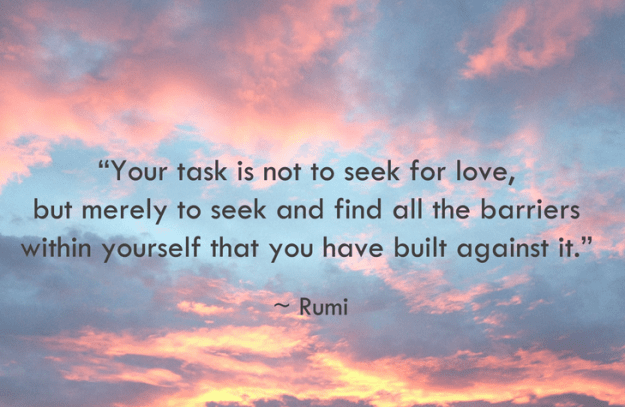
So, before we dive more deeply over the next 3 weeks into whether and how empathy and compassion can be taught, I’m inviting you to simply experience your response to this Rumi meditation.

Screen shot 2015-06-02 at 3.51.43 PM

FIRST TIME HERE?

This is the latest article in a year-long series on the “12-most-important-relationship-skills-no-one-ever-taught-me-in-school-but-I-sure-wish-they-had.”

Click the box for the full list.  Top 12 Relationship Skills

If you are interested in reading this blog in sequence, below are links to the series to date, beginning with the first posting at the top.

OVERVIEW

SKILLS FOR UNDERSTANDING

SKILL ONE ~ Recognize (and get to know) the many “yous.”

SKILL TWO ~ Learn how to be pro-active: choose how y’all show up.

 SKILL THREE ~ Accept (and get curious about) other peoples’ complexity

SKILLS FOR CONNECTING

SKILL FOUR ~ Master the Art of Conversation

SKILL FIVE ~ Learn How To Listen With Your Whole Self

SKILL SIX ~ Crack The Empathy Nut

  • Thriving Through Tough Times

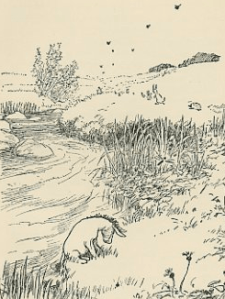
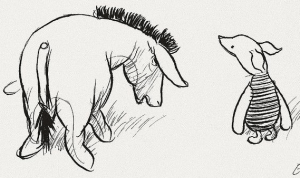
Thanks to Ernest Howard Shepard for the wonderful Winnie The Pooh illustrations. 

Beyond Emotion Coaching-Listening For Your Child’s Needs

Because children aren’t just small adults, listening to a child is a unique skill. Not knowing this can get parents and kids off to a rocky start.

In fact, very often when adults wonder why their child doesn’t listen to them, one explanation might be that the child is simply modeling the listening they’ve received. Oops!
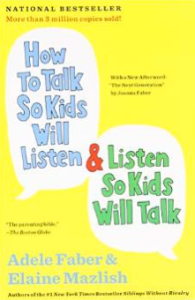
Screen shot 2015-04-01 at 2.01.31 PM← This is a terrifically helpful book on the subject of listening to your child, and it’s based on (to my mind) an even more wonderful book, Between Parent and Child, by Haim Ginott.

Both books speak to the importance of ~

  • listening for the emotions behind a child’s words or behaviors;
  • naming the emotions as your child experiences them;
  • listening empathically – which means avoiding the denying, minimizing, interrogating, pitying, defending the other person, advising, teaching, philosophizing and all the other things we do to manage our own discomfort when we are asked to simply be present to someone else.

Reading these books will help you become an emotion coach to your child, and studies show how emotion coaching helps cultivate emotionally intelligent kids. And, for success in life these days, EQ counts.

Here’s my favorite contemporary researcher talking about EQ.  John Gottman writes:

Emotional intelligence means being able to read your own and other’s emotions, and being able to respond to the emotions of others in a cooperative, functional, and empathetic manner. Emotional intelligence is a kind of social “moxie” or “savvy” about even very complex social situations. It requires knowing who you are, knowing your own feelings, knowing your own needs, and being able to handle yourself and compromise these needs with the needs of sometimes very complex social situations. EQ (Emotional intelligence) is a much better predictor of how children will turn out than IQ or achievement test scores.

(For the whole article, click → EMOTIONALLY_INTELLIGENT_CHILDREN_Updated2 )

So its good stuff, right!

However, since great resources for emotion coaching already exist, and since I have experienced an even deeper level of listening – both as a child and a parent – I’m here with two questions to push a little deeper:

  • What is it that sets good-enough listening apart from great listening?
  • What does it take to go further than emotion-coaching your child?

Remember yourself as a kid?

Screen shot 2015-05-27 at 2.48.04 PM

Were there some adults with whom you could share your thoughts, feelings, hopes, fears, stories, and even your slip ups?

And others who could hardly drag a civil response from you?

What was it about the adults you talked to?

My guess is they checked some of these boxes for you.

When you were with them, you felt ~

  • safe but not smothered
  • exhilarated but not frightened
  • loved but not controlled
  • significant but not in a way that gave you false airs
  • capable but not burdened by expectations
  • inspired but not pressured

Sure these qualities speak to an emotional sensitivity on the part of the adult listener. But there’s more there, and cracking that nut will help you become not just a good enough listener, but a great listener. The sort of listener a child (whether a just-verbal toddler or an articulate teen) will joyfully and consistently turn to because~

  • not only do you listen
  • not only do you help the youngster understand him or herself more fully,
  • but your listening actually helps the child meet one or more of their deepest human needs.

I’m drawing upon Tony Robbin’s work on core human needs. Here are the six as he identifies them:
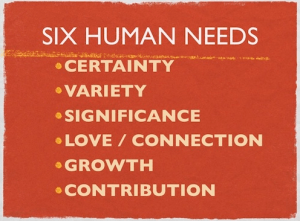
Screen shot 2015-05-27 at 1.02.13 PM

So – what does “beyond emotion-coaching” look like in the midst of real life?

Four-year old Ian comes running up to you from the sand box at the park where he’s been playing with some other kids using his shovel and pail. He is now empty-handed and screaming.

First – be his emotion coach. There are 3 steps.

1)  Listen for the emotions behind a child’s words or behaviors;

Quietly assess what you see – a kid formerly engaged in sand play now running to you empty-handed and screaming … you can begin to guess what might haven gone down.

2)  Name the emotion;

“Ian, looks to me like you’re super angry and maybe sad too?

3)  Offer empathic listening.

Tell me, what happened?

Now you just listen. Pop him on your knee if you want, or crouch down and hold his hands. Look him in the eye and let him unburden all the yukky stuff he’s feeling. Probably some other kid took his things and he feels helpless, angry, frustrated, alone. Listen until you can see he feels fully heard. Keep helping him find names for his emotions, guiding as you go.

If, for example, Ian says “I hate that kid – he took my shovel” show him it’s OK for him to express his emotions to you, but notice the difference between parroting “You hate that kid

and

Right now you’re so mad at the kid who took your shovel you feel you hate him.”

See how the first example seems to set in stone that Ian hates the kid, whilst the second example places the emotion in the specific context of the situation so the person with the emotion can be seen to own the emotion – not the other way around!

The two books I recommend above have so much great information on how to listen in such a way that your child feels heard. This IS subtle work, but you can master this.

But now here comes the “beyond emotion-coaching” part.

Second, help him meet his deepest needs.

Knowing Ian as you do, what does Ian NEED right now?

And can you use your understanding of Ian’s needs  – not just his developmental needs although those of course are in the mix, but his needs as a unique, particular human being – to help guide the next step?

Here’s the list of our core 6 human needs once more:

  • Certainty
  • Variety
  • Connection & Love
  • Significance
  • Contribution
  • Growth

So, back to little Ian who’s been able to share all his yukky feelings about the shovel and pail incident. Now what?

Does Ian need a bit more certainty, predictability and security?

Has Ian experienced a lot of change lately? Maybe a trip? New sibling? A move? A divorce?

Maybe what Ian needs now is for a solution that creates a bit more stability in his life? In the midst of uncertainty, a child needs certainty. This would not be the day to push him to share, or use his words to negotiate turn taking.

It might be a good day to find a place where Ian could count on having his shovel and pail to himself, with some calm and predictability.

Or, does Ian need a bit more variety, surprise and novelty?

Have things been in a bit of a rut for Ian? Does he play here a lot and often come to blows?

Maybe what Ian needs now is for a solution that opens up some exhilarating new ways for him to relate with this other kid, or with this predicament of his toys being taken without his permission? Or even with his response to the fact his toys get used by other kids?

It might be a good day to brainstorm with Ian to find all sorts of ways to respond to the situation. It might be great to get playful and fun and resourceful.

Or, does Ian need to feel more love and connection with you, or someone else in his life?

Have things been a bit rocky for Ian and his relationships? Has he been running to you screaming a lot and maybe you’re getting irritated and he feels this? Is grandma playing with his new baby sister and he’s feeling left-out and second best?

Maybe what Ian needs now is for a solution that builds connection and love.

It might be a good day to see if Ian would like to play with you a bit? Or it might be a good time for a huge hug and snuggle before he goes back to the sand box.

Or, does Ian need to experience himself as significant in your eyes? In his own eyes?
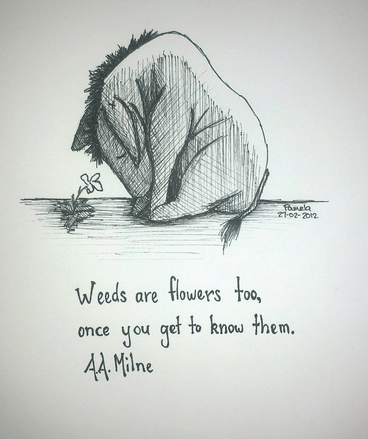
Has Ian been going through a bit of a regression developmentally so adults have been doing more for him and you sense he needs to reclaim his power a bit?
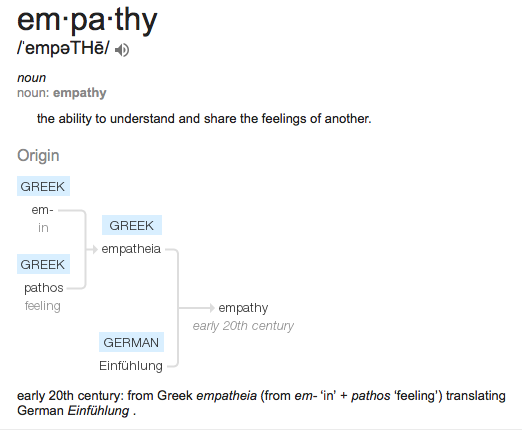
Maybe what Ian needs now is for a solution that offers him a chance to be brave and creative.

It might be a good day to remind Ian of some prior brave creative thing he did (or of a character in a story he admires) and see if he’d like to find a way to be that boy again in the sand box?

Or, does Ian need to contribute a bit today?

Have you noticed Ian trying to be helpful but not quite getting the thanks and recognition he might be craving? His attempts often fall short (since he’s only four!) but he’s often saying “I’m a big boy now!”

Maybe what Ian needs now is for a solution that offers him a chance to contribute? Maybe the solution involves thinking about how “big boys” might figure out what to do about two boys who want the same shovel and pail?

Or, is it time for Ian to be inspired to grow a little?

Does Ian have a pretty good life? Do things usually go well? Is he emotionally stable and loved? Could he handle a bit of a push?

Maybe what Ian needs now is for a solution that inspires in him an opportunity to grow into a bigger, kinder Ian. What might that look like? Could he lend his toys? Could he give them away?

 * * * * * *

No matter the age of your child, this pattern of emotion coaching – followed by a deeply wise recognition of where the child’s needing-edge might be – will deliver to the two of you a connection built upon so much mutual trust, respect and delight that you will be, to your child,  a uniquely satisfying resource.  One he or she will turn to again, and again.

When s/he grows up, and someone asks , “Who could you turn to when you were young? Was there someone special whom you felt really heard you, really understood you?”

Your child will not hesitate, but will be able to turn with confidence and say

“Yes, absolutely. It was X. And do you know  why? Well, when I was with them, I felt ~

  • safe but not smothered
  • exhilarated but not frightened
  • loved but not controlled
  • significant but not in a way that gave me false airs
  • capable but not burdened by expectations
  • inspired but not pressured

WOW ~ What a legacy!

FIRST TIME HERE?

This is the latest article in a year-long series on the “12-most-important-relationship-skills-no-one-ever-taught-me-in-school-but-I-sure-wish-they-had.”

Click the box for the full list.  Top 12 Relationship Skills

If you are interested in reading this blog in sequence, below are links to the series to date, beginning with the first posting at the top.

OVERVIEW

SKILLS FOR UNDERSTANDING

SKILL ONE ~ Recognize (and get to know) the many “yous.”

SKILL TWO ~ Learn how to be pro-active: choose how y’all show up.

 SKILL THREE ~ Accept (and get curious about) other peoples’ complexity

SKILLS FOR CONNECTING

SKILL FOUR ~ Master the Art of Conversation

SKILL FIVE ~ Learn How To Listen With Your Whole Self