How To Never Be Boring

Or ~ The Five Levels of Conversation

 You’ve been bored before, right?

(Yeah, yeah – maybe even here!)

See if these are the sorts of conversation agonies that bore you:

  • The Prima Donna talks only about herself;
  • The Pulpit-Hog launches into lengthy “sermons;”
  • The Unobservant has no idea your eyes have long glazed over;
  • The Prude avoids the pith and zest of life;
  • The Afraid-to-Offend sticks to topics so fluffy they are content-free;
  • The Conflict-Averse never utters anything worth arguing about;
  • The Disinterested-in-Life can find nothing of interest to share;
  • The Puritan won’t tell or “get” a joke;
  • The Cliché-Hound offers up nothing but (you got it) “Clichés”

So – in the face of these onslaughts to our time and intelligence, we have options.

If we’re at one of those compulsory-enjoyment parties, encountering one of the above one could ~

  • Urgently fain illness or incontinence and speed to the nearest facilities;
  • Politely swoon from hunger or thirst and make for the food and beverage trays;
  • Become exasperated with your (where-have-I-put-the rascal?) missing hearing aid and head to your car;
  • Seek revenge by introducing your companion to someone else;
  • Or – one can jump ahead to HELP – WHAT TO DO? below for a kinder approach.

And if we find we are growing bored by our own beloved over the morning coffee, we most definitely will want to invest in a kinder approach.

HELP – WHAT TO DO?

We get bored when people hide.

When they don’t show up with honesty, courage, authenticity and some excitement for who they are so we can pick up on that.

And, when they are oblivious to us as their companion on this journey of conversation. So, for a person not to be boring, they need to come out from behind their hiding place.

Check out these five levels of conversation which explain this idea.

The Five Levels of Conversation

Level 5: Small Talk. Verbal ping-pong designed to keep the ball in the air. Fluff for avoiding silences. We tend to be neither invested nor particularly attentive. E.g.,

“S’up?”

“Going well?”

“How are things?”

It’s the filling of silence. We don’t really care what we hear back. At a party it’s tolerable. In a long-term relationship it’s death. If we are stuck with someone caught up in fluff, invite them to drop down a level. Can they share some interesting facts? What have they done lately? What are they hoping to do? It’s OK to stay with the facts m’am.

Level 4: Factual Conversation. He-said / she-said.

My Dad (bless him!) dwelt here. He loved the “Name that fact” game. This first is one of his.

  • “How many gallons of fuel do you think it takes to run the Victoria Clipper from Seattle to Victoria?”

But all of these fit this category.

  • “What was the score?”
  • “Did I tell you about that time when I drove cross country and…..”
  • “Hey I put my four point seven on my eight three cos it was blowing twenty plus but it really must have been closer to thirty so I switched to my four point two and put it on my seven eleven.” (Yes – this is how my husband Mark would talk to his wind-surf buddies at the Columbia George back in the 1980s)

Functional, maybe. Factual, probably. But not sustainable over the long haul! If we are stuck with someone fixated on facts, invite them to drop down a level. Might they have an opinion about a particular fact? Is something too long, too much, too loud? What might they dare risk thinking about something?

Level 3: Ideas and Opinions.

Getting better here. For those bores at a party who are loath to show up with a genuine thought or opinion, encouraging them with questions about their ideas and opinions can invite them to come out from behind themselves. If they are hogging the floor with their ideas and opinions, obviously the challenge is for you to insert yours somewhere.

I remember a great opening gambit I found quite shocking at a party in Auckland when we lived there:

You know (said a guest at a party) I think we ought to ban all cats from the country. All house cats, all pets.”

As a dog and cat lover I was shocked. “Whatever for?” I asked.

Cats are eating our endangered song birds and ground nesting birds. They are a total menace!” was the response. OK – fair enough. There’s grist for the conversation mill for sure.

So, while you are stepping toward intimacy there is a danger you may stay in the head-trippy place of ideas and opinions. If we are stuck with someone caught up in opinions, invite them to drop down a level. Opinions are a terrific step – and can they risk telling us how they feel about an issue? Sure, in their opinion cats ought to be slaughtered, but how do they feel about the song birds? What sparked this love and loyalty? Do they have a song-bird tale to tell?

Level 2: Feelings and Emotions.

Now we’re getting somewhere. How you feel about what is going on in your life is gritty, real, and intimate. The stuff of true relating.

So are you angry, frustrated, excited, overwhelmed, resentful, excited?

Going back and forth with someone you want to get to know more fully, or someone you know and care about – this is real communication now.

A wonderful combo is to alternate ideas and opinions with how you feel about it.

You know – I hear you about that cat-ban. I love the songbirds too. And, I love my cats! They are part of my family. And it seems to me to be morally offensive to have a government, or special-interest, dictate to me the nature of my household – which species I may or may not live with. I think we need to find another way through this difficulty.”

It is hard to feel “stuck” here. This is a terrific level of communication and many of us are happy to bob and weave through the first four levels. If we are truly in synch with a beloved however, we might find ourselves so moved, so connected that a sharing of feelings and emotions between people. becomes transformative.

Level 1: Deep Insight.

We are up in rarefied air here. This is that place where the connection between two people is transformative. From time to time you may find yourself perfectly in tune with someone else. There is an understanding, closeness, and deep emotional connection. Ideally this happens between people who love and are committed to one another. Not every day for sure – but enough. What might that look like? This is not necessarily a true tale, but imagine if the cat lover and song bird rescuer had been able to have a deeply respectful conversation – might they have come up with this idea… of finding ways for cats and song birds to co-habit? This deep soul connection conversation is not always about finding win-win solutions to shared issues. It happens in my office a lot when two people are willing to show vulnerability; to express pain, to listen to the other person’s vulnerability. And this is a sweet story about a woman who resolved the song bird and cat issue!

WANT MORE?

Here is a fun article about how feeling bored (not just bored by conversation – but that deeper boredom) can be a great catalyst for social engagement. See what you think!

http://www.theguardian.com/science/2011/may/06/boredom-good-for-you-claims-study

FIRST TIME HERE?

This is the latest article in a year-long series on the “12-most-important-relationship-skills-no-one-ever-taught-me-in-school-but-I-sure-wish-they-had.

Click the box for the full list →    → Top 12 Relationship Skills
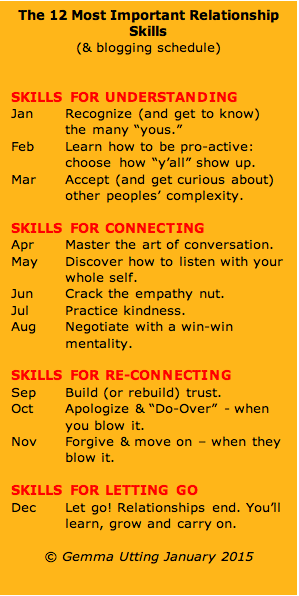
If you are interested in reading this blog in sequence, below are links to the series to date, beginning with the first posting at the top.

OVERVIEW

SKILLS FOR UNDERSTANDING

SKILL ONE ~ Recognize (and get to know) the many “yous.”

SKILL TWO ~ Learn how to be pro-active: choose how y’all show up.

 SKILL THREE ~ Accept (and get curious about) other peoples’ complexity

SKILLS FOR CONNECTING

SKILL FOUR ~ Master the Art of Conversation
Five Conversations

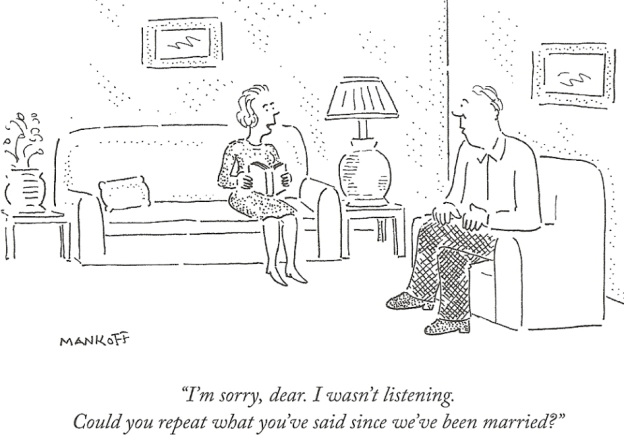
When I was twenty-something my boss, who was thirty-something, told me “When you’ve been married a while, you begin to have the same conversation over and over again.”

I was newly in love and this seemed like an impossible nightmare. We – Mark and I – would never run out of things to learn, to say, to inspire, to challenge, to encourage, to deepen our love.

Now we’ve been married for thirty-something years and we’re working to keep things fresh: Mostly. It’s a journey. It’s a conscious effort. When you say “’Til death do us part” these days – man – that can be a L O N G time. How do folks keep conversations fresh, connective, helpful, real?

And, that’s only one challenge for “The Conversation” – that relationship heavy lifter; that bridge over troubled waters; that small brave rocket launched from one soul to another across unfathomable distances of culture, meaning and interpretation to land into what – hostile waters? Toxic air? Fertile ground? We often don’t know, when we launch that first “Hello!”

But, if we are to be in relationship to someone else we must keep launching our words as emissaries of hope and tentative connection else – what? Radio static? Terrifyingly unfathomable silence?

OK – enough of the hyperbole. I had fun there.

But I have – through years of conversations as a professional therapist, wife, mother, sister, friend – discovered The Rule of Five when it comes to learning about and engaging in great, powerful, connective conversations.

I figure there are ~

  1. Five Assumptions I’m Making
  2. Five Conversations
  3. Five Principles of Great Conversations
  4. Five Levels of Intimacy
  5. Five Conversation Killers

And, as luck would have it, there are five Wednesdays in April for me to share each of these!

Today I’m going with 1 and 2 since you’ll need to know my assumptions. And besides, I need week five for that little something special I have up my sleeve!

 Five Assumptions I’m Making

  1. You want great relationships – not mediocre ones. This teaching goes beyond Conversation 101.

  2. You are self-aware and learning all the time. These ideas are not for the denizens of denial.
  3. You are willing to take responsibility for quality conversations. This is not for the whiners and complainers.
  4. While you can use this information at a one-off work social, these tips are intended for those wanting, or in, longer-term relationships.
  5. “Conversation” is not just about the words. It includes the silences and non-verbal overlays.

The Five [Types of] Conversations

When you’re in a relationship for the long haul (think partner, parents, in-laws, kids) your conversations have to be versatile. Marriages don’t survive on the “What’s your favorite movie?” or “How was lunch?” level.

You need to navigate the ~

  1. Connecting – the frequent comings and goings and ins and outs of relating;
  2. Deepening – the processing of life’s ups and downs;
  3. Transacting – the tasks of living and giving and taking that demand some finesse;
  4. Transforming – that invitation to grow oneself-up that relating precipitates;
  5. Healing – the willingness to apologize and forgive when we hurt one another.

These are different skills.

1.  Connectingthe frequent comings and goings and ins and outs of relating

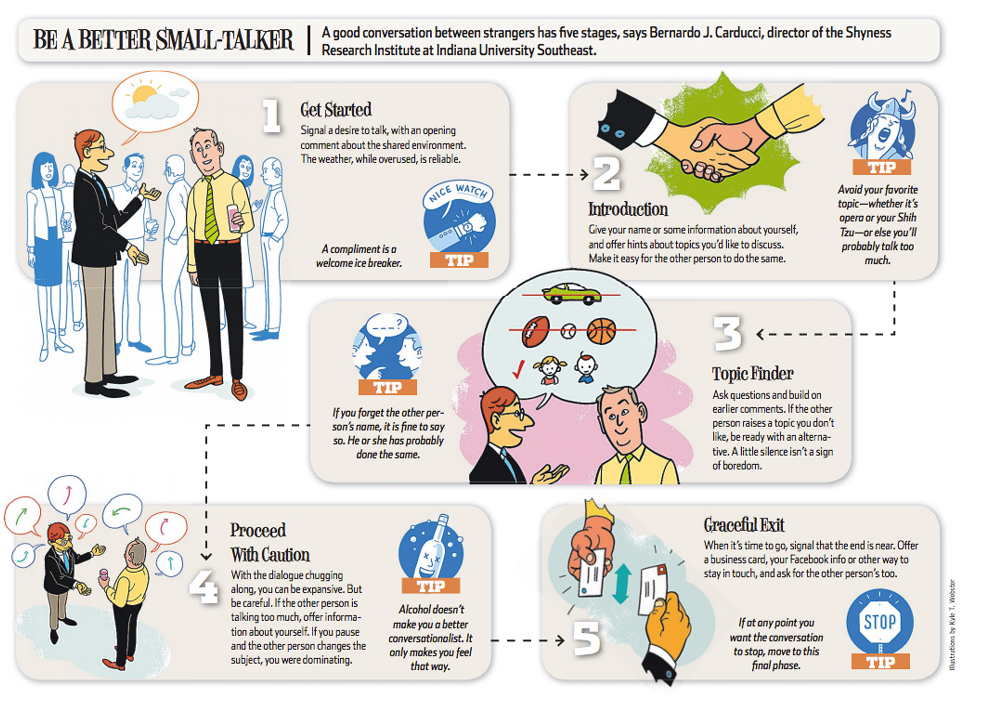
Screen shot 2015-04-01 at 8.11.51 AMSo OK – every relationship starts someplace. Maybe even at the office social. At one end of connecting therefore is that “What’s my opening gambit?” fear. How do I know if I even want to get to know X or Y more fully if I can’t pluck up the courage to say “Boo.”

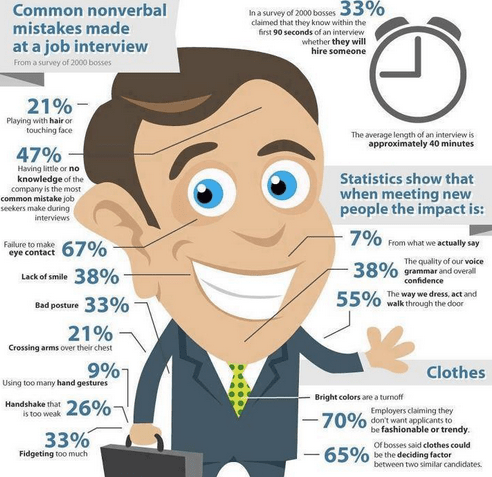
Here’s an info-graphic based on shyness-expert Professor Bernardo J. Carducci’s five (that “Five” again!) stages of a successful conversation.

But out beyond the initial connection, every-day connecting and re-connecting comprise the warp threads of long term relating. All day, every day – with people who matter to us – we’re structuring our relationship through conversational bids for connection. They look like this:

  • Did you see that sunrise? Boy it was breathtaking today!
  • I found a new farm for happy-chicken, free-range eggs. What do you think of them?
  • Oh, the neighbors are putting in a new planter box – I wonder what they’ll grow.

Yup – seriously folks. These are long-term-relationship conversational bids for connection. You know how you could blow it? By hearing them as slightly mad one-liners, instead of conversational openers. Sure they could be the mad mutterings of the old cat lady down the road, but if you want a great relationship with the mutterer in your life then you need to also hear what is underneath: you need to listen for the unspoken sub text, which is “Hi there! You’re on my radar. Am I on yours?” And yes, you need to respond.

These Connecting Conversations do not have to be long. A little friendly volley works wonders. Not in the mood? Nurturing the inner grump today? No worries, as Dan Wile writes, you can still honor the spirit of a Connecting Conversation by simply commenting on your state: “Hon, I’m all over those eggs. Right now I gotta dash. See you tonight – good luck with that meeting.” That right there – while brisk, is not brusque. It lets a partner know you heard and they are indeed still an important blip on your radar.
2.  Deepeningthe processing of life’s ups and downs

If Connecting is the warp thread, Deepening is the woof. Every day we rally forth into the world to study, work, play, teach, shop, search – whatever. And we come back with our share of triumph and tragedy. It’s with our loved ones that we process this stuff – or at least, ideally. It’s how we converse about these daily experiences that builds or erodes our mutual trust, love and attachment.

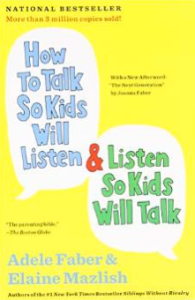
Screen shot 2015-04-01 at 2.01.31 PMThese conversations tend to go well to the extent one or both parties have some emotional fluency. For a brief overview I’m going to paraphrase from that master of emotional intelligence, Haim Ginott as explained in Chapter 1 of Faber & Mazlish’s  How To Talk So Kids Will Listen (yes, this works for grown-ups too).

So, imagine it’s the end of the day and you’re regrouping as a family. One of you has suffered some sort of indignation and wants to use this Deepening Conversation (though they don’t use that term!) to process what went down. They want to feel better. To understand why it felt so bad. To see if they need to respond. What do they need to keep this conversation feeling helpful and good?

Here are 7 things they do not need!

  1. Denial of feelings ~ “There’s no reason to be upset. It’s foolish to feel that way. You’re probably just tired and blowing the whole thing out of proportion. Come on, cheer up!”
  2. Philosophy ~ “Look, life’s like that. You can’t always get what you want. You need to learn how to take things in stride. Nothing’s perfect.”
  3. Advice ~ “Here’s what I think you ought to do. Tomorrow go here and say that. Don’t get sidetracked…”
  4. Questions ~ “Well what did you do that precipitated this whole thing? Didn’t you think of that? Didn’t this same thing happen last month?
  5. Defending the other person ~ “No wonder X did this. You were a total jerk! You’re lucky it wasn’t worse!”
  6. Pity ~ “Oh you poor thing! That’s just terrible! I feel SO sorry for you.”
  7. Psychoanalysis ~ “Has it ever occurred to you that the real reason you are so upset is that this reminds you of how your father treated you, and you always over-reacted to him?”

So, what might forward this conversation in a way that deepens your relationship?
  • Empathy ~ “Boy that sounds like a rough experience. To have that happen at work, in front of X and Y, especially after all the effort you put in, must have been pretty hard to take!”
  • Follow-up ~ “What do you need right now, to move forward with this?

So, deepening conversations do more than Connecting. They let the other person know you not only heard them, but you are seeking to understand their experiences and get on their team. Once you respond thoughtfully, empathically, these conversations will keep spiraling deeper – have a go. See what you notice.

3.  Transactingthe tasks of living and giving and taking that demand some finesse

Screen shot 2015-04-01 at 2.21.48 PMThese are those grittier conversations which often take place at that edge where we bug one another.

The proverbial toothpaste and toilet seat perennial arguments that marriages are purported to crash upon.

No more!

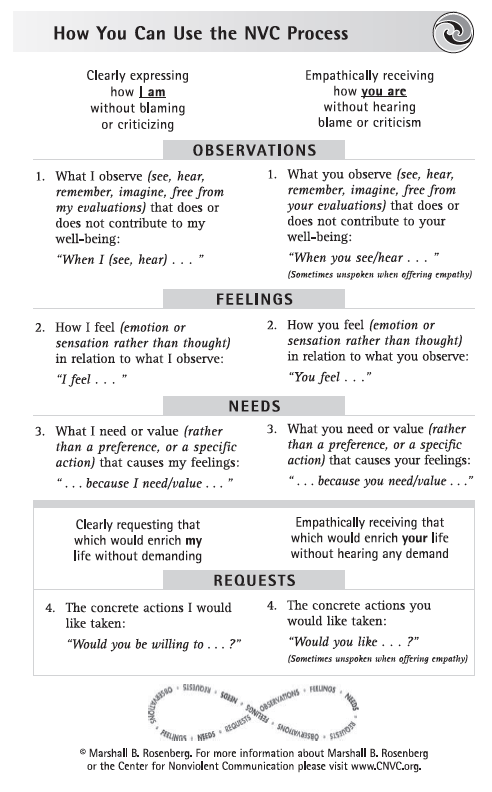
For these conversations, I am totally indebted to Marshall Rosenberg and his work in developing and teaching a process he calls Non-Violent Communication.

Whether you click on the graphic or download the PDF here – 4part_nvc_process – you’ll have a brief over-view of a hugely helpful 4 part process for figuring out how to have a conversation about needs that not only helps you get those needs met, but also deepens your relationship.
This is such a super important issue for great relationships, I’m dedicating the whole month of August to the topic. So – do please come back!

4.  Transformingthat invitation to grow oneself-up that relating precipitates

The origin of the word and concept behind “conversation” – according to the online etymology dictionary, is ~

mid-14c., “living together, having dealings with others,” also “manner of conducting oneself in the world;” from Old French conversation, from Latin conversationem (nominative conversatio) “act of living with,” noun of action from past participle stem of conversari “to live with, keep company with,” literally “turn about with,” from Latin com- “with” (see com-) + vertare, frequentative of vertere (see versus).

which seems to imply a more snap-shot of what is than a transformative anything.

Screen shot 2015-04-01 at 2.51.17 PMHowever, the fact of living together and being with one another can be transformative.

I’ve seen it in my work for years. We can be called forth to be better.

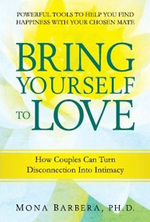
Again, a lofty topic worth taking time over, and here is a wonderful little book that will help you get there, from Mona Barbera.

Two key concepts to whet your appetite?

  1. The intense pain you think [the other person] is causing is really your own.
  2. No matter what [the other person] is dishing out, you can choose to give better back.

Mona’s book is targeting couples, but her ideas are universal and can absolutely help you use these forms of Transformative Conversation to do just that – to become a bigger you.

5.  Healing – the willingness to apologize and forgive when we hurt one another

Screen shot 2013-06-07 at 2.35.49 PM

Another whopper as far as relationship resiliency goes, and one that is getting covered in depth in October (Apologizing) and November (Forgiving).

If you are keen to get a feel for how these conversations might look, you could visit these articles I wrote in 2012:

Come Fall, I’ll rework these articles – so again, do come back!

FIRST TIME HERE?

This is the latest article in a year-long series on the “12-most-important-relationship-skills-no-one-ever-taught-me-in-school-but-I-sure-wish-they-had.

Click the box for the full list →    → Top 12 Relationship Skills

If you are interested in reading this blog in sequence, below are links to the series to date, beginning with the first posting at the top.

OVERVIEW

SKILLS FOR UNDERSTANDING

SKILL ONE ~ Recognize (and get to know) the many “yous.”

SKILL TWO ~ Learn how to be pro-active: choose how y’all show up.

 SKILL THREE ~ Accept (and get curious about) other peoples’ complexity

Is Understanding Overrated?

I’ve never forgotten the night my friend Peter agreed to wash his wife’s feet.

He had absolutely NO clue as to why she wanted those feet washed. But he accepted her request at face value, helped her to the edge of the bath, and washed them carefully.

They were trying to get out of the house around 3:00am so Anne could give birth in the hospital – not their living room. Water had broken. Labor was coming on hard. Anne simply insisted. “Peter – you have to wash my feet. Now.

Imagine how things might have gone if he’d said,“Now honey, why on earth do you want to wash your feet?

Right there, between “understanding” and “acceptance,” what did Anne need most?

In creating a year-long series about great relationships, I’ve just spent the first 12 weeks promoting “understanding.”

You know, stuff like understanding yourself and ~

And, enough of yourself already. I’ve been encouraging you to understand ~

I find myself wondering, if I have overestimated understanding?

Why do you ask “why?” ?

Possibility A ~ Because you are genuinely curious and want to understand as much as possible about this person in order to fully accept and appreciate them? This builds relationship – we all love to feel accepted and appreciated.

Possibility B ~ Because you think this person is a fruit loop and you want ammunition to prove this to them? This undermines relationship because it’s a slippery slope from here to contempt.

We might try and believe we’re “give-the-benefit-of-the-doubt, curious, A folks”. But my guess is more often than not we’re  “hang-’em-by-their-own-rope”  B folks.

In the normal scheme of things you can get away with that. But if you want a great relationship with someone you’re going to have to tone down that poised-for-attack “why” – which sounds more like “WHY!” than “why?”

Even more than understanding, great relationships rely on a whole heap of  ~

Screen shot 2015-03-18 at 9.56.55 PM

WHAT TO DO?

When you find yourself about to blurt the “why” bomb,  try this.

Be honest  –  What are you up to?

Do you want to understand this person so you can love and accept them more wholeheartedly?

Or have you already decided “Fruit-Loop!” and your “Why!” is more in scorn, disbelief and a hope they prove you right?

Consider  ~ your motive. Which of these two “why” alternatives is closest to what you mean?

A. “I’m interested. Would you be willing to tell me more about this?

B. “I can’t believe you just said that and now I want to know how nuts you really are, so do say more…

If your  thinking is closer to Option A your “why” will probably communicate interest and maybe even acceptance.

If your thinking is closer to Option B, it gets more complicated.

If you’re Peter and you love your wife and know it makes no difference how she might answer his “Why?” you could jump to “OK.”

If your kid has just announced his interest in knowing how many Oreos he can eat in 1 minute and you think this is gross and have no interest in indulging his curiosity, rather that a dismissive or scornful “Why!”  try simply acknowledging what you hear with a bit of warmth: “Wow – you wonder about that! Want to take a guess?”

If it’s your partner telling you something you don’t like try dumping the semi-hostile “Why!” (since you don’t really want to understand them anyway-right?) and try honesty. “Hum, I don’t agree. Do you want to tell me more so we can find a compromise?”

Why does this matter? ~ Respect always trumps disrespect & contempt.

I know! ~ There are loads of exceptions. Not all questions are asked because you want to get to “acceptance.” I’m writing this to move the bar a tad in that direction and invite you to notice how you use that all too ubiquitous three letter bomb.

What you discover could be interesting.

NEXT WEEK? With April, our focus shifts from Understanding, to Connecting.  First topic? Mastering the Art of Conversation.

FIRST TIME HERE? This is the thirteenth article in a year-long series on the “12-most-important-relationship-skills-no-one-ever-taught-me-in-school-but-I-sure-wish-they-had.

Click the box for the full list →    → Top 12 Relationship Skills

If you are interested in reading this blog in sequence, below are links to the series to date, beginning with the first posting at the top.

OVERVIEW

SKILLS FOR UNDERSTANDING

SKILL ONE ~ Recognize (and get to know) the many “yous.”

SKILL TWO ~ Learn how to be pro-active: choose how y’all show up.

 SKILL THREE ~ Accept (and get curious about) other peoples’ complexity

2 Magic Ratios for Great Relationships

Math that makes sense for your relationships . . .

 The 1 : 3 Rule

Every time you interact with another human being one of three things happens.

  1. You feel closer to them
  2. You reinforce what you already feel
  3. You feel more distant

Yes. Every time.

Day in and day out, you are constantly shifting position on some internal ratings scale on your partner’s scorecard. On your kid’s score card. On your boss’s score card. Though in truth these 3 constituencies are each tracking and scoring different things.

Partners want to know “Are we securely attached? Does h/she still love me?”

Children want to know “Is my parent on my team? Am I lovable?”

The boss wants to know “Is this employee worth what I pay him/her?”

More or less anyway.

We humans are counters, quantifiers and score-keepers when we are together.

Evolutionarily speaking it helped us – Is this person safe? Really safe? Not so safe?

Today we’re less evaluating physical safety (though this can be present to a certain degree), but we are evaluating emotional safety. And the thing is, this calculator never gets turned off!

Screen shot 2015-03-17 at 4.06.59 PMIf your spouse looks up in the morning when you come into the kitchen and smiles, or better yet gives you a big hug, they’ll get a point in your “I feel loved by this person” box.

Screen shot 2015-03-17 at 4.09.04 PMIf they behave in a way that seems – to a neutral observer – to be neither particularly loving nor particularly unkind, you probably won’t bother to score them. No new points get added either for or against. This simply reinforces what you already feel.

Screen shot 2015-03-17 at 4.11.03 PMIf, when you walk into the room, your partner walks out, or buries themselves in the newspaper, or gets busy with the social media so you feel excluded and unwelcome, then this person will get a point in your “I feel unloved and pushed away by this person” box.

Have you noticed this?

WHY THIS MATTERS

This matters because we live word by word. Look by look. Gesture by gesture.

Screen shot 2015-03-18 at 7.58.26 AM

Relationships are built or destroyed moment by moment.

Not “in one moment” – don’t get me wrong. But by the accumulation of moments, recorded on your scorecard. The way the stalactites and stalagmites grow in caves – one drop at a time until they are sharp enough to pierce your heart.

Moving on to a money metaphor, every day you are doing one of these three things in your relationships:

  1. Depositing good feelings.
  2. Ignoring the bank account (whilst either paying bank fees or accruing interest)
  3. Withdrawing or subtracting good feelings.

If you keep on withdrawing – you go broke. This is not rocket science!

If you are not paying attention to the balance sheet, you’ll find yourself suddenly out of love. You’ll have squandered numerous small occasions where you could have made a deposit.

And, just like your bank, if you drop below a certain minimum balance you get charged bank fees and if you are above a certain threshold the bank pays you interest, it’s the same difference with our emotional scorecards.

Even if you are behaving “neutrally” (being neither nasty nor nice) your partner will “score” you depending upon whether you’ve met certain minimum standards. If you are typically seen as loving and supportive, even your neutral behaviors will get the benefit of the doubt. But if you are typically seen as distant and unsupportive, your neutral stance will be judged negatively. You could be draining your love bank unwittingly…

WHAT TO DO?

Forewarned is forearmed.

Be aware of how anything you say or do might be received. Which scorecard will get a point if you say what you want to say right now? Can you afford this?

If what you plan to say is more likely to be perceived negatively – you better keep on reading . . .

The 5 : 1 Rule

If you want great relationships, you need to keep the ratio of positive interactions to negative interactions at a ratio of at least 5 positive to 1 negative – even in conflict.

Yup – negative interactions don’t immediately kill relationships.

You can slip up and be ~

  • Thoughtless
  • Unkind
  • Critical
  • Forgetful
  • Selfish
  • Defensive.

As long as you are also ~

  • Thoughtful
  • Kind
  • Supportive
  • Attentive
  • Generous
  • Responsible

 ~ five times more often,

And then, the odds will be ever in your favor.

This research was conducted by Dr. John Gottman and you can find out lots more on his web site.

So, no more excuses.

If you want to build a great relationship with someone remember:

1:3 ~ Every time you interact with this person you are doing one of three things

  1. Building a stronger relationship
  2. Maintain status quo (which might be good or bad)
  3. Undermining what you’ve got with this person.

&

5:1 ~ You want to have 5 positive interactions for every 1 negative one.

In April I’ll be talking more about  how to connect with people – what makes an encounter positive rather than negative (beyond the obvious!).

That’s all for now folks.

NEXT WEEK?

“Why Under-standing is Over-rated”.

FIRST TIME HERE?

This is the twelfth article in a year-long series on the “12-most-important-relationship-skills-no-one-ever-taught-me-in-school-but-I-sure-wish-they-had.”

Click the box for the full list →    →    →Top 12 Relationship Skills

If you are interested in reading this blog in sequence, below are links to the series to date, beginning with the first posting at the top.

OVERVIEW

SKILLS FOR UNDERSTANDING

SKILL ONE ~ Recognize (and get to know) the many “yous.”

SKILL TWO ~ Learn how to be pro-active: choose how y’all show up.

 SKILL THREE ~ Accept (and get curious about) other peoples’ complexity

How To Change Someone Else

I know. I know.

All those Self-Help books tell you to totally abandon any hope of changing anyone else.

Chapter upon chapter insist you recognize THE only things you have any control over are what you think and what you do.

Could the self help panoply of experts be wrong?

Could they be accused of keeping you overly ~

  • Deferential       “Goodness, it wouldn’t be right to impose my desires on someone else”;
  • Doubtful          “Oh I don’t think it ever works to try and change anyone else;”
  • Defeatist          “I tried once to change my partner and it didn’t work.”

Or maybe you’re more “It’s my way or the highway Bud!” and you wonder why you shed friends faster than an escaped lion empties a zoo.
If you’re in a relationship with someone you love (otherwise it’s not worth the effort) I hope you’ll let me persuade you to ~

  • Drop the deferential attitude – of course you are worthy of interactive relationships.
  • Ditch the doubt – trust in the power of relationship to transform.
  • Dump that defeatism – update your skill set instead.
  • Soften up the  “you’re with me or against me” attitude –  if we let them, other people help us grow in ways we could never devise on our own.

If you want to change the way someone close to you behaves, and maybe even how he or she thinks, here are four things to try.

1.   Meet them half way.

Screen shot 2015-03-10 at 11.40.36 AMLike God and Adam, both make a bit of an effort…

Depends on what you believe needs changing of course. But here are some examples I’ve seen where person A really wants person B to change. Could be a profound life transformation is desired, or a more modest habit change or temporary abatement.

Check these out.

  • A and B are married. A wants to adopt a Vegan lifestyle. B loves meat.
  • Mother A wants 15 year old daughter B to avoid all piercings while she is living at home under A’s roof. B wants a small tattoo and a belly ring.
  • A has fallen in love with B and wants to accept them as they are. But, B smokes a pack a day and A hates the habit.

Do these have to be win / loose?

If you want someone you care about to make a big change, think about it first from their point of view. What’s in it for them to make this change? Why might they want to? Is there something you can offer that might make this change more appealing? If you are inviting this person to get a bit uncomfortable, what discomfort might this request invite you into?

  • Might the Vegan be OK with their partner eating Vegan fare 3 nights a week and enjoying meat for the other 4?
  • Might the anxious Mum let go enough for a henna treatment, or one small, removable piercing?
  • Might the non-smoking partner be willing to discuss a cut-down, or smoking in designated areas?

Maybe give it a try?

2.   Get On Their Team

Screen shot 2015-03-11 at 12.23.41 PM

A man convinced against his will is of the same opinion still.”

A classic Ben Franklin quote.  So what might this look like?

Let’s take another stab at the 3 scenarios above using this idea.

What if the meat eater, the would-be body piercer, and the smoker actually wanted to make some changes?

A terrific way to “get” someone to make changes you wish they’d make, is to find out if there are any changes they want to make.  Maybe they’ve been thinking about a shift more or less in the direction you’ve been proposing. Find out. Join them. Get on their team.

Has the meat-lover ever expressed a desire to lower their blood pressure? Or grow a garden? Or only eat animals raised in humane conditions? Pay attention. Join them where they already are and support a desire they already have.

Yes great! I’d love to help you lower your blood pressure. What do you want to try? I’d be happy to research foods that might help…

Has the 15 year-old ever commented on how lovely Henna art is? Or has she noted other forms of body art that might be different and edgy but not full on tattoos and peircings – like coloring her hair or dressing differently? If she talks about some of these ideas,  get excited. Support her in expressing herself differently.

I love that you’re experimenting with new “looks.” I heard about a Thrift Shop up in Sun Valley that sells quality styles very cheaply.  Shall we check it out this weekend?

Has the smoker ever wished they could cut down? Maybe they worry that cutting down on cigarettes means they will ramp up on eating, or have no other way to manage their stress. Acknowledge their fears, join with their desires, get on their team.

You mentioned wanting outlets for managing stress as you think about lightening up on the smoking. I heard the local library is hosting a month-long series on meditation starting next week. I picked up this flyer for you.”

Screen shot 2015-03-11 at 12.25.22 PM

The solution might not be exactly what you had in mind. But your support for their goal is far more likely to be a wiin-win.

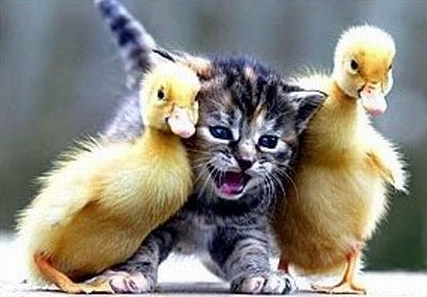
And hey – even a cat can find a way to join a duck in the water.

 3.   Feed The One You Love

Screen shot 2015-03-10 at 12.51.02 PM

     Remember this tale?

Well it works with the wolves around us as well as the wolves within.

We’ve all got an inner zoo. We show up in different ways. As angry wolves or serene wolves for sure. But also as ambitious and lazy; as extroverted and introverted; as nurturing and as harsh; as supportive and as critical.

Think of how often you find yourself saying “Part of me wants this, but another part wants that.”

(Check out Robin Williams as Mork and more about is idea here.)

If we can have multiple competing versions of ourselves, so can everybody else.

One of the most valuable lessons I’ve learned as a therapist is that in any relationship, we get the wolf we feed.

If we indulge or put-up-with whiny behavior from our pre-schoolers; rude behavior from our middle schoolers; disrespect from our teens; unkindness or indifference from our partners, the truth is, we’ve been feeding those wolves.

Once we get to the point of recognizing “Dang, I wish this person wasn’t  like that”  we get to behold our creation. Chances are we’ve been cultivating those very behaviors we now dislike for years.

What to do?

Feed a different wolf!

And yes – it takes time. But so did creating the wolf you’ve come to dislike.

When your toddler asks for something in a strong, clear, pleasant voice go overboard in your delight. You’ve glimpsed a different version of who this toddler is and how she can act. You want to build a relationship with that toddler – much more than you want to continue with the whiny one – right?

You can make it fun.

Well hello little Miss Sunshine, I love it when you show up. You’re way more fun than Old Grumpy! I’m certainly happy to push the swing for Little Miss Sunshine… let’s go!”

When your middle schooler rips a mighty belch and (for a change) quickly covers her mouth and says ‘Excuse me,” celebrate small victories. So easy to be sarcastic here – don’t be. Feed this polite wolf. “Thanks Betsy. Hey – I really appreciate this more polite “You”. She’s welcome to come eat in a restaurant with me any time!

When your teen momentarily thanks you for some kindness and forgets the eye roll as you say ‘You’re welcome” feed that wolf. “You know Son, I like being on your team. I hope you never forget that.”

When your partner one day asks, out of the blue, “Do you need help?” for heavens sake feed that wolf! I know how easy it can be when you’ve been hurt before to come back with some snide “Now you ask! Where have you been hibernating all winter when the drive-way needed shoveling and the kids were all sick…” but remember. When you show up like that – being that person, you’re only going to encourage the unkind and indifferent parts of your spouse.

Feed the “helpful wolf.”  “You know, you asked at just the right moment. I’d love help. Could you grab the rest of the groceries from the back of the car? I really appreciate it when you notice what I need and just show up for me like that – thanks!”

The secret here is remembering that IF this person in your life has ever exhibited the sort of behavior you wish s/he did more often, then that behavior is possible. It is already in their repertoire. That “Part” of them can be invited out more often. It’s not that you are inviting them to be someone new. You are just asking them to show up in a way that works better for you.

You are not saying

  • I don’t love you.
  • Or
  • “I want (all of) you to change.”

You are saying

  • “I particularly love this Part of you.”
  • &
  • “I love it when this Part of you shows up.”

4.   Be the change

Screen shot 2015-03-11 at 12.33.19 PMI’m sure this is not about you, but I’ve noticed that sometimes, in long-term relationships, when partner A feels stuck-in-a rut or gets bored with life, they believe it is up to partner B to “do something.” And this effort, A believes, will magically get both of them out of the rut and life will once more be  fascinating. Or at least, less boring.

So, in the unlikely event this ever happens to you and you find yourself feeling stuck and bored, and notice you are keen for your partner to ~

  • loose weight
  • try something new
  • suggest cool vacation plans
  • learn new stuff
  • get in shape

listen up and go find a mirror.

That person right there – staring glumly back at you – tell that person to

  • loose weight
  • try something new
  • suggest cool vacation plans
  • learn new stuff
  • get in shape

If you are bored in the relationship, you get to do something about it. And it’s way more liberating to grasp that fact than it is to play the grumble-criticize-hint-whine-complain game with your partner.

Be the change you want to see. Believe me – fresh energy is contagious!

That’s all for now folks. See you next week.

FIRST TIME HERE?

This is the tenth article in a year-long series on the “12-most-important-relationship-skills-no-one-ever-taught-me-in-school-but-I-sure-wish-they-had.”

Click the box for the full list →    →    →Top 12 Relationship Skills

If you are interested in reading this blog in sequence, below are links to the series to date, beginning with the first posting at the top.

OVERVIEW

 SKILLS FOR UNDERSTANDING

 SKILL ONE ~ Recognize (and get to know) the many “yous.”

 SKILL TWO ~ Learn how to be pro-active: choose how y’all show up.

 SKILL THREE ~ Accept (and get curious about) other peoples’ complexity

Join me for the whole series. You can sign up at the top of this page, on the right.

NEXT WEEK?

Find out what you are – unwittingly – doing all the time in relationships.

5 Non-Verbal Cues You Need to Know

Would you want to ~

  • Know what someone was feeling, without asking them?
  • Influence what someone thought about you, without saying a word?

This month, I’m hoping to boost your understanding of other people by beginning with the loudest messages that are coming at you – those silent, non-verbal ones.

This is definitely a brief whet-your-appetite piece since there is so much written about non-verbal communication.

However, armed with just these five non-verbal behaviors you’ll be way ahead of the game when it comes to understanding what someone else is feeling and thinking.

And – jolly helpful here – as you begin to crack these non-verbal languages, you can script what you’re broadcasting with a bit more care.

Here are 5 tips for translating those non-verbals into news you can use.

1.  The Walk

OK, gotta mention John Wayne here. Here’s a “John Wayne Moment” from The Birdcage (one of my all time favorite movies – this is the American version of  the French La Cage Aux Folles)   ~

Everyone has a walk.  John Wayne just had “such a walk”!

What matters about The Walk isn’t The Walk but rather it’s the fact you observe it.

If you pay attention, you can get to know a lot about a person by how they walk.

What is the baseline “norm” for any of these?

  • Your kid’s “I’m happy” walk?
  • Your partner’s brisk “exercising the dog” walk?
  • Your aging parent’s “grocery shopping” walk?

Once you know someone’s baseline walk, you can be aware of changes that might be telling you something.

  • When your kid comes home shoulders hunched, chin on chest, toes turned in – you might guess he’s feeling down, defeated or sad.
  • When your partner takes the dog around the block, hands thrust in pockets, forehead and shoulders leading as though into a gale force wind, you might wonder if they’re angry.
  • When your elderly parent shuffles more, or gets unsteady – it might be good to get a medical check up.

2. The Face

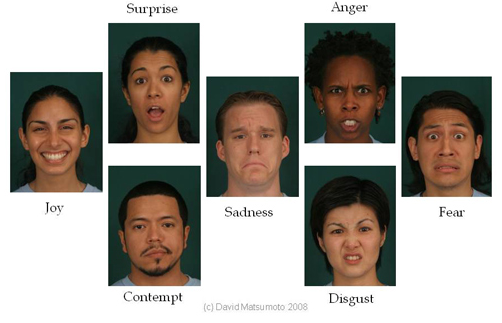
You – and good science – are right to look to the human face for reliable emotional feedback. Building upon Darwin’s original idea that certain specific expressions were universally recognizable, Paul Ekman has been studying facial expressions since the mid 1960s. To test the idea that there are certain universal facial expressions for emotions (even beyond the reach of global mass media which can blur specific cultural differences) click on the link below and take a brief test.

You will see the face of a Papua New-Guinea man asked to show how he would look in response to 4 experiences:

  • His child had just died
  • He stepped on a smelly dead pig
  • He was about to fight
  • Friends had come

Click below to see if you can identify how this man – from a  pre-literate, stone age culture – is feeling.

http://www.paulekman.com/universal-facial-expressions/

How did you do?

There is agreement on (at least) these 7 universal emotions – which are:

Screen shot 2015-03-03 at 6.12.58 PM

But of course, there are all sorts of nuances we can become aware of in people we know well. For a cheat-sheet, see Words for Feelings-2015

Knowing – or at least making an educated guess about – how someone else is feeling, allows you to be careful as you choose how to approach that person. This is often what we mean when we use the term “emotional intelligence.” Folks who miss facial emotional cues have a much harder time making friends. There is a non-verbal bond created when someone can both interpret and match our mood. If we are tired, it’s jarring to have a high energy encounter. If we are disappointed it can seem insensitive when someone approaches up triumphantly. When we are happy, we love it when our friends can rejoice with us.

Interested in learning more about reading emotions? Click here.

3. The Eyes

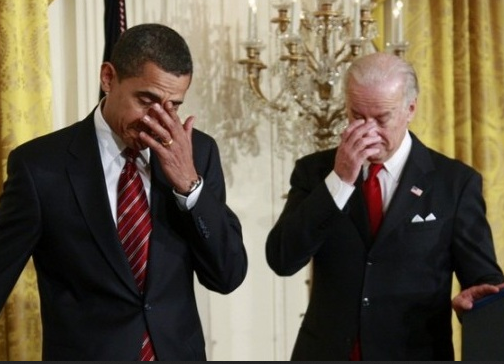
Screen shot 2015-03-04 at 11.16.37 AMWhat have President Obama and Vice President Biden just witnessed? How do they feel about it?

Dr. Jack Brown thinks it’s something like

“I wish I never saw that”, or “I can’t believe he did that”.”

Why?

Because they are using eye-blocking. Here I quote from Joe Navarro‘s book What Every Body Is Saying – An Ex-FBI Agent’s Guide to Speed-Reading People (page 176).

Our eyes . . . have evolved as the primary means by which humans receive information. In fact, we often attempt to censor incoming data through a limbic survival mechanism known as eye-blocking, which evolved to protect the brain from “seeing” undesirable images. Any decrease in the size of the eyes, whether through squinting or pupilary constriction, is a form of subconscious blocking behavior. And all blocking behaviors are indicative of concern, dislike, disagreement, or the perception of a potential threat.

Why is this useful? Here is a short vignette from Joe’s book (page 174) that might bring the relevance of this knowledge closer to home.

While walking with my daughter . . . we passed someone she recognized. She squinted slightly as she gave the girl a low wave. I suspected something negative had transpired between them, so I asked my daughter how she knew the girl. She replied that the girl had been a high school classmate with whom she had previously had words. The low-hand wave was done out of social convention; however, the eye squint was an honest and betraying display of negative emotions and dislike.

4. The Arms

OK – so you’re the boss. You have 2 teams working on a project. They have met twice before and you chance upon the teams during their third meeting.

Here is Team A

Screen shot 2015-03-04 at 11.47.33 AM

And here is Team B

Screen shot 2015-03-04 at 12.01.06 PM

If you had to put money on which team would successfully deliver the final product on time, with minimal interference from you, which team would you bet on? And why?

I’m putting my money on Team B for one main reason. Team B enjoys a much higher degree of trust. How do I know that?

Look at the arms of all 6 team members. Since our ancestors stood upright, we humans have been able to use our arms for self-defense. Here is Joe again (page 109).

In my work with the FBI, I have seen individuals shot in the arm as they used their upper limbs in an attempt to defend themselves from handgun fire. The thinking brain would realize that an arm simply cannot stop a bullet, yet the limbic brain will cause our arms to life and precisely block a projectile traveling at 900 feet per second.

Absent gun fire, we still use our arms to protect ourselves, crossing them over our chest when we feel vulnerable and withdrawing or lowering our arms when we feel fearful. Conversely, when we feel safe, happy or excited we’ll open or raise our arms, wave them about and air punch for victory.

When a person folds his or her arms across their chest or abdomen they are feeling uncomfortable in some way and are (often unconsciously) protecting themselves. If I noticed members of a working team needing to be so self-protected, I’d find a quiet moment to take each person aside and check in, specifically about trust issues. Trust can certainly be cultivated, but if you don’t notice when your employees are feeling unsafe, you may miss all sort of opportunities to make their working environment more conducive to good work.

5. The Hands

Screen shot 2015-03-04 at 2.17.25 PMHere’s a cool fact, again from Joe Navarro’s book (page 134)

The human brain is programmed to sense the slightest hand and finger movement. In fact, our brains give a disproportionate amount of attention to the wrists, palms, fingers, and hands, as compared to the rest of the body From an evolutionary standpoint, this makes sense. As our species adopted an upright posture and our human brain grew ever larger, our hands became more skilled, more expressive, and also more dangerous. We have a survival need to assess each other’s hands quickly to see what they are saying or if they portend ill (as in holding a weapon).

So, my guess is you notice when someone hides their hands in a meeting and if you want to be trusted, keep your hands visible too. But the really interesting stuff about hands?

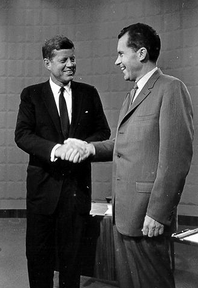
Screen shot 2015-03-04 at 2.08.32 PMThe handshake!

Now I was raised in a household where my great grandmothers’ motto was “Manners before morals!” (Seriously!) So I learned more than I will ever pass along to my children about interpersonal etiquette, both at home and in the endless stream of prim and proper boarding schools I attended.  But, what I’ve just learned about the art of the handshake is leaving me, well shaking my head.

Here’s a list of ten different kinds of handshakes and what they communicate – enjoy! http://socialanxietydisorder.about.com/od/copingwithsad/a/badhandshakes.htm

Oh, and fun fact about JFK which you can observe in the photo above.

Did you know that every time John F. Kennedy needed to shake hands with someone in public he made a practice of standing on the left-hand side of photographers? This trick makes the one to the left of the image appear to be in control. The experts who studied gestures of J.F.K. are convinced that his persuasive body language was precisely that won him the Presidency.

Quoted from Etiquette Tips.

That’s all for now folks. See you next week.

FIRST TIME HERE?

This is the ninth article in a year-long series about the “12-most-important-relationship-skills-no-one-ever-taught-me-in-school-but-I-sure-wish-they-did.”

Click the box for the full list →    →    →Top 12 Relationship Skills

If you are interested in reading this blog in sequence, here are links to  previous articles, with #1 being the first and #8 the article before this.

  1. My Top 12 Relationship Skills
  2. Part of Me Wants . . .
  3. Little Miss Sunshine
  4. The Purpose Driven Life
  5. Report The News – Don’t Act it Out
  6. Happy Families
  7. Self Leadership
  8. When Does A Relationship Need Help?

Join me for the whole series. You can sign up at the top of this page, on the right.

NEXT WEEK?

How to bring out the best in other people.

WANT MORE?

When Does A Relationship Need Help?

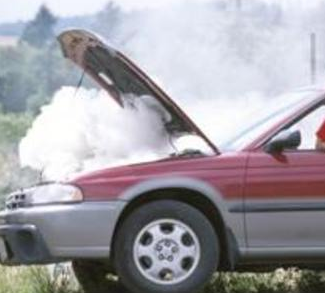
Your relationship with a car that’s important to you is not so very different from your relationship with a person who’s important to you.

Especially when it comes to maintenance, repairs and the willingness to notice and invest what is needed, when it’s needed.

My husband Mark tells a great story about a friend; a car; and that wonderful state of denial we can all get into.

************

It snowed in Seattle in the 1970s. Epic years. Mark and his friend (let’s call him “Steve”) were skiers. On this particular day, several more feet of snow had fallen in the mountains and the lads needed to get up there.

Screen shot 2015-02-25 at 6.53.22 AMFor reasons Mark no longer remembers, Steve took his father’s car for the trip without checking in with his folks. A nice, newer model Toyota Crown with a great heater, ski rack and winter tires. The oil pressure light was out, but other than that this was a great, reliable car.

[Yeah, sometimes you know you ought to spend money to fix a small thing, but hey – you can remember to top up the oil. No big deal.]

Apparently neither Steve nor Mark noticed a small slip of paper fall from the dash board and out onto the garage floor….

[Sometimes we miss those important memos, caught up in the momentum of our days.]

Excited for the powder they set off East on Highway 2. Music blaring.

They got gas at a service station at Monroe, but didn’t check any of the other fluids. No warning lights? No problem!

[That “if it ain’t broke don’t fix it” attitude, right?]

Not long after, they began to hear a click, click, click.

They kept driving.

[What do you mean we’ve got to talk?]

Which progressed fairly quickly into a clunk, clunk, clunk.

They kept driving.

[Sure, things might not be perfect, but I’m going to keep my foot on the gas and just keep hoping that s/he will be fine / get over it / change / shut-up / be happy again. It’s worked in the past.]

Then a Bang! Bang! Bang!

They kept driving.

[Now things are so loud I’m frightened it might be serious. Certainly don’t want to know about that – gotta ski!]

Then three things happened in quick succession.

Screen shot 2015-02-25 at 3.04.15 PM

  • Smoke began to pour out from under the hood;
  • Steve pulled over
  • The car died.

Steve flipped the hood release and the lads peeped into the engine.

Mark takes over: “So there we are looking in. It’s all steam and heat and burning smells. I look down into the heart of the engine just in time to see a molten piece of metal drip onto the snow beneath. Literally – the engine is so burnt up it’s melting! And Steve turns to me and asks – incredulously – “Hey Mark, do you think it’s serious?”

That moment, right there ~ you need help!

 Not (only) because your engine / relationship is broken probably beyond repair.

But because you might, finally, be sufficiently motivated to ask.

However, if you’ve been reading between the lines, you’ll have noticed that there are all sorts of other moments, long before the death of your car / relationship when a peep under the hood and some proactive attention, service and repair could have saved the situation from ruin.

Here’s a checklist for you.

If any one of these relationship tools is weakened or outright broken, I highly recommend you get some professional help.

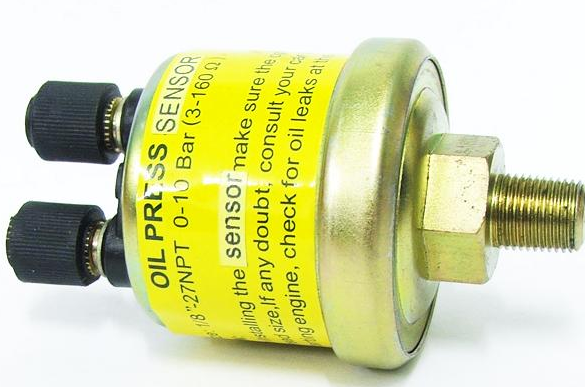
Screen shot 2015-02-25 at 2.05.29 PMYOUR INTERNAL SENSORS

 Like that oil pressure sensor in the Toyota, you have on-board sensors that can fall silent.

You may need professional help if your emotions (anger, resentment, frustration etc) are disconnected from the possible causes of these emotions. Put another way, if you’re walking around with a stew pot of feelings and no idea why – your sensors are off.

Screen shot 2015-02-25 at 2.43.26 PMYOUR FEEDBACK SYSTEM

Is the light on your dashboard burnt out?

Even if you can figure out what is making you angry or jealous or disappointed, if you can’t find a way to bring this feedback to the person who most needs to hear it, your relationship is at serious risk.

As a family therapist I can state this is perhaps THE most common reason relationships fail. Once one or both parties stop bringing useful feedback into the system, the system begins to decay.

There are lots of reasons why folks stop speaking up for what they feel, need and want, and if you are one of these folks this is a great reason to seek professional help.

Screen shot 2015-02-25 at 2.47.22 PMYOUR COMMUNICATIONS

When Steve and Mark took off skiing, they did not notice as a small memo fell out of the car. Steve’s dad had left it on the dashboard. It read:

“Add 3 quarts of oil before driving.”

Had they seen this (and acted upon it), the car would not have ended up on the scrap heap.

In this case, Steve’s dad simply did not make sure his note would be seen. Maybe he should have taped it to the window; or made an announcement over dinner the night before.

So, it’s all very well to have inner sensors and prompt and timely feedback, but if the way this feedback is communicated is ineffective, the car may still end up in the junk heap.

Think about it. Are you too vague, too hostile, or too late with the feedback you give? Do you dissipate your truth in gossip to all the wrong people?

“Problems communicating” is the number #1 reason couples give for why they seek help and a little coaching here can go a long way.

Screen shot 2015-02-25 at 2.30.26 PM YOUR REGULAR CHECK UPS

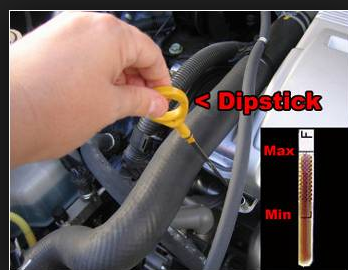
Had the lads been curious about the overall health of the car, a simple dip-stick oil check at the Monroe service station would have given them a clue about the car’s oil crisis.

Relationships get heavy wear and tear, especially in long term partnerships involving kids, pets, houses, mortgages, savings, elderly relations, a business etc.

  • There’s a reason that cars have scheduled service checks ups.
  • There’s a reason our bodies get wellness check ups.
  • There are many good reasons for why it would be a good idea to stay curious and open to noticing if your emotional relationships are happy and healthy, or could use some tune ups.

To paraphrase:    “Just because it don’t seem broke don’t mean it ain’t.”

If you are not sure about the health of your relationship, ask your partner.

And… see below.

Screen shot 2015-02-25 at 2.39.26 PMYOUR ABILITY TO ATTEND TO SMALL WARNINGS

Right at that “click, click, click” stage, had Steve pulled over, diagnosed a lack of oil and added some, the car might still have been saved.

By all means stay curious (see above) but  definitely get more curious if you begin to sense some warning signals.

Is anything less enjoyable or happy than before? Is silence replacing communication? Is one of you getting extra busy, or staying away?  Might your physical symptoms have an emotional cause?

If you can no longer have a honest heart-to-heart  (what my daughter calls a “D & M” for deep-and-meaningful) conversation,  it would be wise to schedule a session for you both with a professional just to see what’s under the hood.

Screen shot 2015-02-25 at 2.59.25 PMYOUR ABILITY TO TAKE ACTION

Remember the “clunk, clunk, clunk” stage? It still might not have been too late to stop, take stock, and solve the problem.

But, those lads kept right on driving. It’s so wonderfully, understandably human to put the blinkers on and hope that s/he will be fine / get over it / change / shut-up / be happy again. However, if you want to keep the relationship alive, prompt and “just right” action is needed.

Question is, what action?

Often this is where the affair, drinking binge, show-down-fight, new baby, or “mid-life crisis” becomes the action-of-choice.

If you are at the stage of wanting to do something – anything – to take care of your emotional pain, make an appointment with a good relationship therapist, pronto!

Screen shot 2015-02-25 at 3.02.00 PMYOUR ABILITY TO OVERCOME YOUR FEAR

Still stuck like a deer in the headlights? Is your head pounding or your heart thumping like that poor, straining engine in its last revs?  Are you too frightened to admit there is a problem, and too clueless as to what to do?

Meet FEAR. Utter, paralyzing terrifying fear.

It’s emergency room time folks.

Before you hit the “I’m outta here ~ this relationship is dead” button, make an appointment. Alone. Together. It does not matter at this point. Remember, you are by the roadside. Your engine is near dead. It’s time for the experts to give an honest opinion and offer some solutions.

Screen shot 2015-02-25 at 3.11.39 PMYOUR ABILITY TO LEARN FROM PAST MISTAKES AND MOVE ON

When Mark and Steve look at that engine dripping its molten metal onto the snowy roadside and Steve asks “Hey Mark, do you think it’s serious?” we all know the truth, right?

That engine has died.

Too much damage has been done.

Too many opportunities to make small repairs have come and gone.

This happens with relationships too.

There can come a time when what was once a robust, lively vibrant family car / relationship is now unrecognizable and beyond hope of revival.

It can still be a good time to get some help grieving, and learning how things could be different “next time.” Especially if this is not the first car you’re wrecked. Or the first once-wonderful relationship that has burned up before your eyes.

END NOTE

What did Steve and Mark do?

Screen shot 2015-02-25 at 12.39.06 PMAccurately appraising the situation — “Well, the car’s not going anywhere now!” — they grabbed their ski gear, locked the car and hitched up to the ski area. After an epic day they hitched down to town, got a towing company to move the car to a nearby gas station off the road, and confessed to Steve’s dad.

This is perhaps the most surreal part of the story. Astonishingly he was not mad! He took responsibility for his part in the communication break down. They were down one car for a while, and then the family bought another car, which they still let Steve drive!

FIRST TIME HERE?

This is the eighth article in a year-long series about the “12-most-important-relationship-skills-no-one-ever-taught-me-in-school-but-I-sure-wish-they-did.”

Click the box for the full list →    →    → Top 12 Relationship Skills

If you are interested in reading this blog in sequence, here are links to  previous articles, with #1 being the first and #7 the article before this.

  1. My Top 12 Relationship Skills
  2. Part of Me Wants . . .
  3. Little Miss Sunshine
  4. The Purpose Driven Life
  5. Report The News – Don’t Act it Out
  6. Happy Families
  7. Self Leadership

Join me for the whole series. You can sign up at the top of this page, on the right.

NEXT WEEK?

In March I’m exploring the third in my Top 12 Relationship Skills series.  For January and February we’ve been focusing on only 50% of any given relationship ~ YOU.

In March we’ll talk about the skills you need when handling the other 50% ~ THE OTHER PERSON.

How can you take all you’ve learned in January and February and use it to understand other people?  Ready for a little primer in how to think like a therapist?

Self Leadership

Screen shot 2015-02-18 at 1.06.49 PMYou’re poised, hand on the doorknob, about to enter a challenging situation.

Inside are people whose words, deeds, whispers and decisions will impact you.

Your heart’s racing, your head’s throbbing, your jaw is clenched, your shoulders tense. Your face is a shifting map of anxiety.

Right then, do you wish you’d made time for some emotional preparedness, or are you fine with that same old charge-in-and-deal-with-the consequences mode?

Some of us go through our whole lives charging about and dealing with the emotional fall-out. But sometimes, after one emotional blitzkrieg too many, it occurs to us that maybe there’s another way.

We left Holly right here last week as she was about to attend a niece’s birthday. There, at yet another family gathering with her four married siblings and their flock of offspring, she would typically experience herself as being pitied and gossiped about. All traces of her strong, professional and capable self would be replaced by a self-doubting, fumbling and emotionally labile alter-ego. It could have felt, yet again, like a no-win situation.

This time however, things were very different.

Holly had had enough of the cross-her-fingers-drink-too-much-and-hope-things-won’t-be-too-awful approach to relationships with her family.

  • She’d recognized how she could be strong-yet-compassionate in most places, yet weak and whiny around her family. Hummm… so there was more than one version of herself.
  • She’d seen how these weak and whiny Parts of her seemed to show up in familiar ways, and how she’d behave as if she was being run by a much younger vulnerable and reckless version of herself.
  • She’d learned how to notice these shifts – to be both the one with the emotions and the one noticing herself emoting.
  • And she’d had some experiences lately where she was able to notice the younger, emotional Parts of herself and interview them as if they were separate people. She could attend to those Parts and find out what they believed and feared.
  • And, most important for today’s post, she’d learned how to bring compassionate leadership to these inner Parts.

She’d started down the life-long path toward Self-leadership.

************

We left off last week wondering about Self-leadership.

SELF ~ I described Self as that which remains once all the chatter of your inner Parts quiets down.

If you meditate, this might be a familiar concept.

Meditation, like encountering your Self, brings perspective and freedom. The moment you notice your mind as it thinks, chatters, forms and shares opinions, fosters fears and tells tales – then you are not your mind. You are your mind + an observer. So, who is the observer?

“You” – some separate “You” – is noticing the drama, which means that you are not the drama.

There are loads of advantages to spending time connecting to this centered place (here are 20-scientific-reasons-to-start-meditating)

But inviting this centered “You” to be a Leader for your inner world expands upon the benefits of normal meditating in an astonishingly helpful way.

The WHAT ~ SELF-LEADERSHIP describes a state where your inner, loving, wise Self brings a healing combination of genuine curiosity and loving compassion to all your inner Parts such that they can tell their story, feel heard, release their extreme positions and let go of untrue limiting beliefs so they can trust You, your Self, to lead the way. It really is a leadership thing.

Huh?

I’ll break this down using Holly’s situation. (See here is you missed meeting Holly last week).

Remember, Holly is already practicing 4 important things:

  1. She recognizes there’s not just one Holly; that she has a variety of inner Parts;
  2. She notices how these Parts interact and have a purposeful relationship with one another;
  3. She is so aware of her rich inner family of Parts that she can actually speak FOR these different Parts; e.g., “Part of me is dreading this family gathering, as usual. But another Part’s excited to try something different.”
  4. And, she is finally coming to believe she doesn’t have to be a victim of her moods and frightened young Parts. She is ready to cultivate ~

The HOW ~ SELF-LEADERSHIP

To teach something, I think it helps to break it into clear steps. However, over time this way of bringing your full compassionate Self into any given moment can happen instantly.

Know too that initially it helps to put some time and effort into this sort of self-reflection, before you encounter a tough situation. Holly chose to work with me for a few sessions to make sure she was on the right path. But this work can be done alone – which is why I am excited to share it with you here.

Here’s the process ~

1.   ROLL CALL ~ Identify the Parts who might get triggered by a specific event.*

It helps to get an image in your mind’s eye and treat each Part as an intact person, with feelings and needs. Here are the five Parts Holly identified.

  1. Her inner recluse
  2. Her no-nonsense task-master
  3. Her vulnerable, not-good-enough-because-I’m-not-married
  4. Her devil-may-care
  5. Her yearning-to-connect

* This can be hard so don’t beat yourself up if you are only aware of 1 or 2 Parts of you. If you are interested in getting better at this visit here for an IFS therapist in your area. A couple of sessions with a professional who is trained in helping you discover these Parts can make a big difference. Or drop me a line (gemma@gemmautting.com) and I’ll give you some pointers.

2.   CHECK-IN ~ One at a time, check in with each Part.

Keep it simple. Just ask ~

  1. What are you afraid will happen?
  2. What do you need from me to make sure that doesn’t happen?

Here’s Holly and her Recluse demonstrating.

Holly          So I hear you’re worried about an upcoming family birthday. I’d love to know what you’re worried about.

Recluse      I’m worried it’s going to be so noisy and chaotic and I’ll feel trapped in there with everyone thinking I’m going to freak out!

Holly          Yes, I know that feeling and it sucks! What do you need this time to feel less trapped?

Recluse      Well,  I guess I’d feel better if I could give myself permission to take a break when things get too loud. Maybe I could just let Sally know I’m going to take the dog around the block for 20 minutes, which might help a lot.

3.   MAKE A PLAN ~ Take each fear seriously, and make a plan.

Stay compassionate with all these Parts of yourself. Chances are they are young and they need you to take their concerns seriously. Imagine a little fellow in his footie PJs is frightened the under-the-bed monster is back. He just needs you to take a peek and let him know if it’s all clear. Then he can feel safe. Would you do that for him? Same difference here.

Does this seem too simple?

Here’s what is going under this simple façade ~

1.   You’ve gathered great data. By focusing not only on what’s “out there” in the external world of people, you’ve also focused “in here”, on your internal family of Parts.

2.   You’ve taken stock, assessed potential dangers and identified potential allies. You’re forewarned.

3.   You’ve taken charge. When you feel a situation is heading south (which you can do easily now since you’re in communication with those Parts of you on the emotional front lines) you are in a position to check-in with all the Parts who are triggered; weigh their possibly conflicting needs;  review the pre-planned solutions; make a decision and lead your inner family of Parts in a way that is as good as possible for the all of you.

Remember how it was before you knew this stuff?

Screen shot 2015-02-18 at 1.06.49 PMRemember that  doorknob?

You were poised, about to enter a challenging situation. Inside were people whose words, deeds, whispers and decisions would impact you.

Your heart was racing, your head throbbing, your jaw clenched, your shoulders tense. Your face was a shifting map of anxiety.

You had no control over anything. Talk about a vulnerable place to be!

And, now that you have some skills?

Screen shot 2015-02-18 at 1.43.58 PM

Same challenging situation behind those doors.

Same possibility that the words, deeds, whispers and decisions of the people inside might impact you.

Screen shot 2015-02-18 at 1.51.00 PM

But this time, you’re not alone.

You’ve invited your wise Self along.

Your younger Parts have been encouraged to share their concerns. They feel much less anxious now they’ve been heard.

You’ve got a plan.

Your Self has your back.

That’s Self Leadership.

FIRST TIME HERE?

This is the seventh article in a year-long series about the “12-most-important-relationship-skills-no-one-ever-taught-me-in-school-but-I-sure-wish-they-did.”

Click the box for the full list →    →    →Top 12 Relationship Skills

If you are interested in reading this blog in sequence, here are links to  previous articles, with #1 being the first and #6 the article before this.

  1. My Top 12 Relationship Skills
  2. Part of Me Wants . . .
  3. Little Miss Sunshine
  4. The Purpose Driven Life
  5. Report The News – Don’t Act it Out
  6. Happy Families

Join me for the whole series. You can sign up at the top of this page, on the right.

NEXT WEEK?

Screen shot 2015-02-18 at 2.38.13 PMMy friend Hannah and I love to swap good quotes. One of her favorites is from Eeyore, who comments to Pooh one day

“Not all of us can. And some of us don’t.”

That is of course true for lots of things, including this sort of inner work. Sometimes, try as we might, we can’t bring our Self to have enough authority to lead our pack of inner Parts.

Try as we might, we get triggered by things our partner, boss, child, in-laws or friends say to us. Next week I’m gong to talk about what you can do then, when you feel you’ll be forever held hostage by your highly emotional Parts. Because, I suppose, the opposite of Eeyore’s statement would be ~

“Not all of us can’t, and some of us do.”

WANT MORE?

You might enjoy this.

The Brain’s Ability to Look Within: A Secret to Self-Mastery

The author makes a great case for the benefits of tuning into our inner selves.

Happy Families?

Imagine your family is oblivious to your feelings and needs, but still demands your loyalty, presence and engagement with family events. The “Lady Edith” dilemma. This is also Holly’s (whom you’ll meet in a minute) predicament.

Is there anything either of them can do to improve this situation?

Maybe this isn’t your problem, but perhaps you have other relationships which leave you feeling bruised, frustrated and yearning to change?

Welcome! This is a place to explore what it means to cultivate great relationships with partners, family, friends, kids, neighbors, work mates. With people you love deeply, and with people you’re tempted to dislike, or even write off.

In January I made the case that step one in creating great relationships is to get to know yourself in a whole new way. In brief:

  1. Recognize there’s not just one “you”. Notice how different people elicit a different version of you. We have distinct inner Parts. See here.
  2. Your Parts exist in relationship to one another. Tune into your inner chatter and you’ll hear one Part persuading, critiquing, judging, dismissing, ignoring or protecting another Part. See here.
  3. This is not random. Your Parts each behave purposefully in one of three ways: to proactively manage your day to day, to exile your deepest vulnerabilities or to dowse your inner pain when it is triggered. See here.

This month I’m exploring how – in the midst of this community of Parts – we can become proactive and choose how we show up.

************

Meet Holly (with the tough family). Her story is an amalgam of several prior client situations. She’d love to improve her relationship with her family and we meet her now as she anticipates attending a family birthday.

Holly’s one of five kids and the only one not yet popping out the grand-babies for her folks who have morphed from stern, judgmental, distant parents into indulgent and fawning grandparents.

It’s yet another birthday for a niece or nephew, and Holly’s been summoned to attend since, as her mother says every year and for every birthday “How could you miss! Don’t you want to celebrate with your family?

Holly is already familiar with her variety of Parts who get triggered by these events:

Screen shot 2015-02-09 at 7.39.17 AMHer inner recluse starts screaming and a feeling of suffocation begins to overwhelm her at the thought of the noise and chaos that happens when 20 people gather to eat sugar and offer too many gifts to a small child;

Screen shot 2015-02-09 at 7.40.21 AM

Her no-nonsense task-master starts trying to plan how to entertain the younger kids so there will be some planned cohesion to the afternoon’s chaos;

Screen shot 2015-02-09 at 7.44.20 AM

Her vulnerable, not-good-enough-because-I’m-not-married Part swoops in and she finds herself alternately sobbing and raging at her parents’ agenda for her in the days leading up to the event;

 Screen shot 2015-02-09 at 7.46.34 AM

Her devil-may-care Part makes sure she brings several additional bottles of Prosecco so she can always pour another glass when the going gets too tough;

Screen shot 2015-02-09 at 7.47.26 AM

And her yearning-to-connect Part braces for the disappointment that usually follows when Holly tries to have a meaningful conversation with her favorite sister Sally at family gatherings.

Holly has done some terrific emotional homework.

She’s discovered her ~

Managers – the recluse & her no-nonsense-Parts

Exiles – her vulnerable-not-good-enough-because-I’m-not-married, & yearning-to-connect Parts

Firefighters – her devil-may-care Part

(see this Post if you are not familiar with these terms)

And she knows how these Parts tag-team to keep her functioning at these family events. Her Managers keep her alternately seeming like a one-woman island unto herself, or chivvying everyone like a kindergarten teacher, both of which are acceptable to her family and serve to minimize her need to connect at any meaningful level with them. Alternating aloof with busy has the added advantage of minimizing her exiled emotional pain which is easily triggered by her family’s judgment and distance. And, as soon as the pain is tapped into, it’s “fire-fighters-to-the-rescue” and somehow her glass is constantly re-filled with the highly effective “lets-numb-out-on-booze” response.

But she wants to do this differently. These behaviors only reinforce her family’s dim view of her mental stability and life choices. She wishes she could be with them as she is in other contexts, where she experiences herself as strong, interesting and capable.

Holly knows no one in the family (with the possible exception of Sally) has the desire or ability to change how they all relate, so it’s up to her.

With me, as well as working to understand the variety of ways she shows up and how they can trip her up, Holly is also learning to speak FOR her Parts, not FROM them. This means (with reference to the upcoming birthday party) that rather than act out her feelings of frustration with her family by huffing, sighing, rolling her eyes and snapping at them, she can say (even if only to herself to start with)  “You know, Part of me gets frustrated by these high-stress family gatherings, but there’s also a Part of me who’s happy to be invited and wants to continue to try and connect with my siblings.” See here to learn more about this idea.

So – what should Holly do?

Below are 4 options for Holly. You choose ~

_____a.   Cross her fingers and just go.

  • Pros: no effort needed in prior planning and you never know! The family might be attentive, kind and finally interested in her life; the kids might be calm and the cake tasty.
  • Cons: This never happens! Last birthday ended up with her leaving early, drunk, and in tears after screaming at Sally.

_____b.   Decline the invitation and avoid the whole thing.

  • Pros:            She would not get hurt that day.
  • Cons:            She’d pay for it for years to come in guilt trips from the family.

_____c.   Just pick one Part and stick with it. Right now she’s totally blended with the imagined security of her no-nonsense Part. That’s the one!

  • Pros:            If she could do this, it might work. She’d organize the smaller relatives, stay busy, avoid talking with anyone else, and leave early.
  • Cons:            Zero buy-in from the other Parts pretty much guarantees that they’ll show up. And then we’re back to option a.

_____d.   Practice some pre-emptive self-leadership so she is aware of her inner dynamics and can trust her Self to finesse whatever happens.

  • Pros:            Knowing she can keep her Parts attended to, Holly is free to enjoy the Party. She can risk having conversations with family members because even if they can’t control how they are with her, she can handle what is going on for her. As she masters her ability to be compassionate and present with her internal community of Parts, she notices she is able to feel acceptance and compassion toward her external community of people.
  • Cons:            Getting to this stage takes a strong desire, a willingness to be honest, and a level of compassion toward oneself that takes time to cultivate.

OK – if Holly’s goal is to improve her relationships with her family, which of the above scenarios would you pick for her?

Most folks choose options a, b or c and those are good if your goal is to simply cope, or get through something. But improving things takes a different approach.

If Holly is committed to improving her relationships, then it’s up to her to BE someone else, and DO something different, which makes (d) a compelling option.

What’s this pre-emptive self-leadership Holly needs before she can enjoy herself at the party?

Self-leadership describes a state where your best self, or maybe your true self, becomes the wise, loving adult to all your younger inner Parts.

This true Self (which I’ll now refer to as Self) is the you which remains once all the chatter of your inner Parts quiets down.

Self is present when your heart melts into compassion for these young Parts, instead of the usual judgment, criticism, and impatience.

You’ve met this Self before.

It’s the still point at your center when you meditate.

It’s where music and art can take you.

Or the particular beauty of earth ~

DSCF0323

Or the vast, unknowable majesty of space ~

Screen shot 2015-02-10 at 7.22.32 AM

Self is the still-point amidst all the hubbub.

NEXT WEEK

Discover how to connect to your Self, and learn how to bring this Self into a loving relationship with your Parts. This is the key to that pre-emptive Self-Leadership Holly will need (we all need) if we are to connect deeply with others. And it begins when we connect with our Self.

FIRST TIME HERE?

This is the sixth article in a year-long series about the “12-most-important-relationship-skills-no-one-ever-taught-me-in-school-but-I-sure-wish-they-did.”

Top 12 Relationship Skills

Click the box for the full list →    →    →

If you are interested in reading this blog in sequence, here are links to  previous articles, with #1 being the first and #5 the article before this.

  1. My Top 12 Relationship Skills
  2. Part of Me Wants . . .
  3. Little Miss Sunshine
  4. The Purpose Driven Life
  5. Report The News – Don’t Act it Out

Join me for the whole series. You can sign up at the top of this page, on the right.

Report The News – Don’t Act It Out

Welcome!

This is the fifth article in a year-long series about the “12-most-important-relationship-skills-no-one-ever-taught-me-in-school-but-I-sure-wish-they-did.”

Click the box for the full list →    →    →Top 12 Relationship Skills

January’s tip was to Recognize (and get to know) the many “yous.

See January 7th14th, 21st & 28th).

The next important skill I wish I’d learned builds upon these ideas: I wish I’d learned how to be pro-active and choose how I show up in my relationships.

Put another way, who is really in charge of all these inner parts? Do they duke it out and the Part with the meanest emotions gets to win? It can certainly feel like that. What happens when I swear up and down I’m going to be ~

  • A calm good listener when my teenager has a melt down – but I end up screaming too;
  • Trusting as my spouse goes through job interviews – but I end up offering advice and we fight;
  • Open to feedback at my annual review – but I’m defensive and whiny;
  • Patient with my aged parents – but frustration totally takes over.

Not that I’m comparing or anything, but it seems to me that some folks can actually stay on script. If they decide to be good listeners, or trusting or open minded or patient – astonishingly they are. They have “a decider” and they listen to him or her.

They seem to have some on-board leadership.

This month I’ll help you discover and strengthen your own self-leadership.

************

WHAT DOES SELF-LEADERSHIP LOOK LIKE?

Being self-led is in the same area of self-mastery as ~

  • self-control
  • being conscious
  • having the lights on in the attic
  • being awake
  • being enlightened.

They are big ideas and can seem too grand or unattainable.

But, when you bite off one small ability at a time, this is a very do-able skill. Brings to mind my motto for this year which is on my favorite mug .Cup & PotThe goal (or “aim” since this is not a goal-oriented journey) of self-leadership is that you become increasingly aware of what you ~

  • Feel
  • Think
  • Believe
  • Say
  • Do

This idea underpins every self-improvement journey – emotional, cognitive, spiritual, narrative & behavioral  – that you undertake. What we are looking for here is a way to take a meta position in our day to day experience. This means we are able to cultivate a little distance between the ~

  • one who feels, and the one who notices that you have certain feelings
  • one who thinks, and the one who notices that you have certain thoughts
  • one who believes, and the one who notices that you have certain beliefs
  • one who speaks, and the one who notices that you are saying certain things
  • one who acts, and the one who notices that you are acting in a certain way.

Do you see it?

You are already more than one person. You are the one feeling, thinking, believing, speaking and acting, as well as the one who notices your self doing all of this.

Of all the 12 relationship skills I’m exploring this year, getting your heart and mind around this one point will probably pay the biggest dividends.

The best metaphor I can come up with today is . . . the weather report.

Yup – the weather report on TV. It’s not meant to be entertaining. It’s meant to give you useful news-you-can-use as you go about your day. It’s usually delivered in a similar format you come to count on, and it’s not too hyped up or prone to exaggeration.

Here’s one from the BBC describing the weather expected on June 12, 2011. You don’t need to watch much to get the idea. The reporter calmly observes what is happening and what might soon be happening. There’s not too much drama and this allows you to take it all in.

Now watch the one below and notice the difference.


The second one is goofy and fun, I know. But here’s how to use this contrast to think about the first step in becoming more conscious about your own emotional, Parts-driven process.

There is a BIG difference between reporting the weather with some perspective of the big picture, and reporting the weather by acting out each possible meteorological event. The first method gives a reassuring sense that the BBC and its reporters will prevail – no matter what the weather. The second one has us feeling buffeted and concerned that the studios themselves will be knocked off-kilter by the storms they are reporting on.

Same for how you report on your inner Parts. If you can cultivate that bit of distance from their emotional content, and report on them from a distance, the listener will have the sense that there is someone in charge. But if you get pulled into any particular Parts storm (screaming, crying, arguing, playing victim, etc) the listener gets buffeted about and will be reacting to just that Part. Instead, you want them to be in relationship to you. The all of you. When that one who notices does the reporting, he or she can see the big picture and take the lead.

Here is what it looks like to report FOR your Parts versus FROM your Parts.

A) FOR YOUR PARTS – “You know, Part of me feels a bit skeptical about this explanation and another Part is frustrated since finding just the right metaphor is tough. But I gotta tell you this is playful and fun and there are Parts of me really hoping you like this.”

Versus

B) FROM YOUR PARTS – “You might hate this and I’m having a really hard time figuring out how to describe my main point. But I really hope you like it.”

What do you notice about your reaction to these two ways I’ve just communicated with you?

What I notice is that when I speak FOR my parts (example A), I am able to hold my ideas and agenda more lightly. I’m able to see which Parts of me are showing up. Noticing and reporting lets me slow things down. And as I name the Parts I don’t feel so overtaken by them. In fact, just the act of reporting on them give me some perspective and distance.

When I speak FROM my parts, I feel less resourceful, more wedded to an agenda (that you like my work) and somehow I feel more needy. Like my happiness is dependent upon your response to me. Yuk!

OK, let’s go back to the 4 examples at the start of this bog written in blue type. These are examples of how I want to behave in one way, but end up behaving quite differently. Here’s how these situations could be transformed by this one skill: The skill of Reporting FOR instead of speaking FROM your Parts.

READY?

 You want to be ~

1)            A calm good listener when your teenager has a melt down, but you end up screaming too;

  • Think S.O.S.
  • STOP                    and take a deep breath.
  • OBSERVE             your impulses. What Parts are up?
  • SPEAK UP            Report on your inner Parts situation, like the weather person does.

e.g.; “Oh boy Molly. When you end up screaming at me, Part of me wants to scream right back at you. I’m a whole mix of emotions. Part is just plain mad for sure. But Part of me is frightened – I always worry when you are out in the car late. Part of me is disappointed since I thought we’d been through this last week and made a plan. And Part of me totally empathizes with you. I did things like this when I was your age.”

2)            Trusting, as your spouse goes through job interviews, but you end up offering advice and  having a fight;

  • Think S.O.S.
  • STOP                    and take a deep breath.
  • OBSERVE             your impulses. What Parts are up?
  • SPEAK UP            Report on your inner Parts situation, like the weather person does.

e.g., “You know Bill, when you tell me about your interviews I have all these mixed responses. Part of me wants to help by giving advice but I know that bugs you and makes you think I don’t trust you. Part of me feels so proud of you – that you keep on going even after several rejections. Part of me wants to rescue you and say to give up – it’s too hard! What do you need from me right now?”

For the above examples, you could give your Parts report out loud.

These next two are more subtle because you’ll be better off giving yourself your own inner Parts Report before you say anything. You want to be ~

3)             Open to feedback in your annual review – but you are defensive and whiny

  • Think S.O.S.
  • STOP                    and take a deep breath.
  • OBSERVE            your impulses. What Parts are up?
  • SPEAK UP           Report to yourself on what is happening for you.

e.g., “Humm I can feel my cheeks reddening and I’m mad this guy hasn’t noticed all the great things I’ve done. I want to defend myself but don’t want to come off as defensive and whiny. Let me think of what to say that keeps me respectful but powerful.”

 4)            Patient with your aged parents – but frustration totally takes over.

  • Think S.O.S.
  • STOP                    and take a deep breath.
  • OBSERVE            your impulses. What Parts are up?
  • SPEAK UP           Report to yourself on what is happening for you.

e.g., “Ok deep breath time. I know Dad is lonesome and loves to tell his tales. But I’ve heard that story what — 1,000 times now? Part of me is about to hit the walls and another Part wants to interrupt and head him off at the pass. Can I think of a story that I might actually enjoy hearing again?”

WANT TO TRY SOMETHING?

See if you can report on your inner Parts – like the BBC reporter. You can try saying what you notice out loud to someone “You know, Part of me wants to go to that movie with you, and Part of me really wants to stay home with a good book.”

NEXT

Once you know how to notice and report on your inner Parts activity, you’ll be ready to know how to make decisions, based upon this information. Like the “go-to-movie-or-stay-home” dilemma above. Now you notice the varying points of view, how does your decider decide?

HINT – it has a great deal to do with the wisdom of your inner “one who notices.”

FEATURED IMAGE

Prince Charles reading the Scottish weather forecast on the BBC, back on May 10th 2012.