Monthly Archives: December 2015

The #1 Relationship Skill

This past year – 2015 – I challenged myself to identify and share the “12-most-important-relationship-skills-no-one-ever-taught-me-in-school-but-I-sure-wish-they-did.”

Here’s the list – and at the end of this article are links to each of the posts I’ve written on this journey:
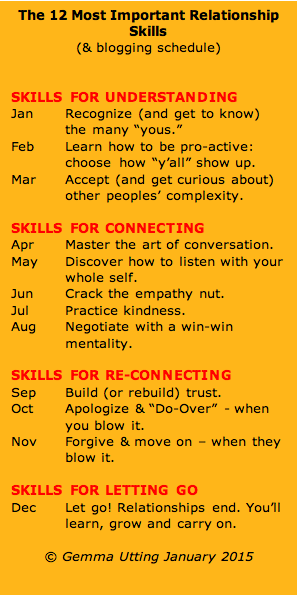
Top 12 Relationship Skills

As a Marriage & Family Therapist I spend time every day with brave people who’ve hit some relational wall with a spouse, partner, sibling, parent, child or co-worker and who want to understand what went wrong, how to fix it and  – best of all – how not to hit that wall again in the future.

Sometimes, with some people, it’s relatively easy to help them identify the problem, make a repair and build in some good healthy alternative patterns. With some folks it’s much harder but the love and commitment are deep enough to sustain them through the effort.  And some folks decide it is time to move on.

Screen shot 2015-12-30 at 6.37.17 AMThroughout this year of drilling down into what I consider to be the top 12 relationship skills we all need I’ve been hoping I’d unearth the Rosetta Stone of Loving Relationships.

I so wished there would be one theme, one thread, one skill or attribute which – if found as helpful between one dyad – might also be discernible as a key skill for happy relating between all partners, parents and children, siblings and friends.

Faith traditions have of course held the same question and answered with variations on the theme of Love.

“Love one another.”

It’s darned good advice as far as it goes, and we even have some behavioral injunctions from Saint Paul in his letter to the Corinthians ~

  • Love is always patient and kind; love is never jealous; love is not boastful or conceited,
  • it is never rude and never seeks its own advantage, it does not take offense or store up grievances.
  • Love does not rejoice at wrongdoing, but finds its joy in the truth.
  • It is always ready to make allowances, to trust, to hope and to endure whatever comes.
  • Love never comes to an end.

However, folks tend to come to me when they’ve run out of that loving feeling or they’ve lost the will to practice these loving behaviors. So then what?

 

Screen shot 2015-12-30 at 7.28.49 AMThen what indeed.

I’m going out on a limb here.

I’m going to claim that I think there is one skill, one way of being that helps everything.

I’ve not named it as one particular skill in my list of 12 so I need to figure out how to do that. But I have discovered it weaving through all of the skills I’ve written about.

It’s not so much a Rosetta Stone metaphor as a “how does a fish know it’s in water” question.

Screen shot 2015-12-30 at 7.32.30 AM

Question:

So what is this one thing which, if applied to any relationship, makes the biggest difference?

Answer:

It’s the ability to bring conscious awareness to each moment. It’s the ability to be in your life, in each moment, at the same time as you are aware of your life and yourself in each moment.

It’s the ability to be “The one who watches.”

Why?

Because each of these 12 skills –

  1. Recognize and get to know the many versions of you
  2. Learn how to choose which “you” shows up in any given moment
  3. Accept and get curious about other people’s complexity
  4. Master the art of conversation
  5. Listen with your whole self
  6. Cultivate empathy
  7. Be kind
  8. Negotiate with a win-win mentality
  9. Build or re-build trust
  10. Be genuinely sorry and apologetic when necessary
  11. Forgive and move on when necessary
  12. Let go of past resentments, present blindness and future expectations ~

each of them, depends upon your ability to do this. To nurture the intelligent life within your heart and mind and body and stay awake and aware of your moments.

If you are not present to your own moments, how will you know ~

  1. what mood you’re in?
  2. which version of you needs to show up?
  3. how others are responding to you?
  4. how you’ll speak if you’re not connected to your heart?
  5. how to listen if you’re unaware of what ears you’re listening with?
  6. how the other chap is feeling to foster empathy?
  7. what kindness in this moment might look like?
  8. what win-win means for the two of you?
  9. how trust can arise?
  10. what you’ve done that is hurtful?
  11. what you are genuinely capable of forgiving within your own heart?
  12. what you are holding onto in the past, present or future that you may wish to lighten up?

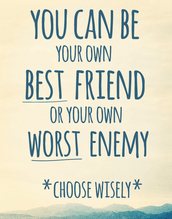
At the heart of this celebration of conscious awareness is a big, fat, juicy invitation to fall more deeply in love with yourself. Here’s a sweet reminder from Anne Lamott

If you don’t believe in God, it may help to remember this great line of Geneen Roth’s: that awareness is learning to keep yourself company. And then learn to be more compassionate company, as if you were somebody you are fond of and wish to encourage. I doubt that you would read a close friend’s early efforts and, in his or her presence, roll your eyes and snicker. I doubt that you would pantomime sticking your finger down your throat. I think you might say something along the lines of, ‘Good for you. We can work out some of the problems later, but for now, full steam ahead!” 

I mean, it’s hard to cultivate a satisfying reciprocal loving relationship if we’re not so fond of the person we’re asking this other person to love back – right?

When I set out on this path my hope was

That you’ll become more aware of what you do that works – what brings you closer to people. And that you’ll become more hopeful and empowered as you consider those relationships that are fragile or cracked. Are there ideas here that will help you build a firmer footing?

So I guess I’ve come full circle.

At the end of a year spent identifying which skills help you cultivate great relationships with others, I’ve actually unearthed a skill which helps you cultivate a great relationship with yourself.
Screen shot 2015-12-30 at 9.18.17 AMGood old T.S. Eliot nails it again!


Makes sense!

May each of us grow in conscious awareness.

May we increasingly discover the joy that arises when we see and accept ourselves for the gift of our existence.

* * * * * * * * * * * *

To those who have subscribed to this blog – a huge thank you! My commitment to weekly blogging will be changing and these ideas will take on a new form. I’d love to have your company as this next iteration evolves.

To those who have stumbled here via some other portal, thank you! I’d love your company moving forward so do please sign up so we can stay in touch.

FIRST TIME HERE?

This is the last article in a year-long series on the “12-most-important-relationship-skills-no-one-ever-taught-me-in-school-but-I-sure-wish-they-had.”

If you’re interested in reading this blog in sequence, below are links to the series to date, beginning with the first posting at the top.

OVERVIEW

SKILLS FOR UNDERSTANDING

SKILL ONE ~ Recognize (and get to know) the many “yous.”

SKILL TWO ~ Learn how to be pro-active: choose how y’all show up.

SKILL THREE ~ Accept (and get curious about) other peoples’ complexity

SKILLS FOR CONNECTING

SKILL FOUR ~ Master the Art of Conversation

SKILL FIVE ~ Learn How To Listen With Your Whole Self

SKILL SIX ~ Crack The Empathy Nut

SKILL SEVEN ~ Practice Kindness

SKILL EIGHT ~ Negotiate with a Win-Win Mentality

SKILLS FOR RE-CONNECTING

SKILL NINE ~ Build (or rebuild) trust.

SKILL TEN ~ Apologize & “Do Over” When You’ve Blown It

SKILL ELEVEN ~ Forgive and Move On When They’ve Blown It

SKILL TWELVE ~ Let go. Relationships end. You’ll learn, grow and carry on.


Screen shot 2015-12-30 at 9.06.34 AM

I’ve gathered this list together from a variety of sources. Principally I want to acknowledge ~

  • Dr. Richard Schwartz and Internal Family Systems;
  • Marshall Rosenberg and Non Violent Communication;
  • Dr. Haim Guinot and Between Parent and Child;
  • Dan Wile and Collaborative Couples Therapy;
  • Dr. John Gottman, and 7 Principles for Making Marriage Work;
  • Dale Carnegie and How To Win Friends & Influence People
  • My parents, whose individual lives were rich and principled yet whose marriage was tough. Their difficulties motivate my quest.
  • And my own family – husband Mark, son Charlie and daughter Mona, who know how much I fall short of my efforts to relate well, and yet who love me anyway.
  • Stuart Schnell, whose critical thinking, inquiring mind and generous nature have pushed several of these essays into greater clarity. I know there are more improvements needed Stuart!
  • My rich and wonderful community of friends. You know who you are. You are supportive, forgiving, funny, kind, persistent, generous, giving and more. Oh – and you keep some champagne in your fridge “just in case!”
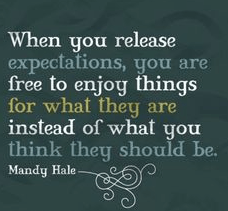

Great Expectations – A Story

Screen Shot 2015-12-15 at 10.55.09 PM

EVERY year my mother would hope, in her heart of hearts, that my father would think about her and get one small thing, anything, something, as a gift under the tree.

And every year my mother “ran” Christmas single-handedly. She was the planner; shopper; cook; Santa; tree trimmer; gift-giver; guest-list maker; party-thrower; Christmas Card author and holly-bough-swagger while my father kept well out of her way.

In his defense my Dad was one-eyed and color-blind; had lost his sense of taste after a war-time head wound and had lost the feeling in his hands and feet after taking Thalidomide for insomnia in the 1950’s. This meant he covered everything he ate in tomato ketchup and tended to break glassware, tree ornaments and tiny Christmas lights.

He was, in his own terms, “a man’s man” and back in the day “manly men” didn’t help with Christmas. One year he and the Uncles were deputized for Santa duty, but that was also the year the pre-Christmas party rendered all the Santas overly merry, and they were summarily fired by the women “so as not to wake the children.”

Every year my mother would drop tiny hints as to suitable gifts. However, her hints were so small even her own mother would have missed them and they certainly blew right past my Dad. Until the year something landed and my father actually did what my mother thought she wanted.

Some back story:

DSCF2053.jpgMy mother had a sense of style and an eye for beauty. She was formally trained as a dress designer and raised in a home speckled with antiques. She herself haunted local auction houses and slowly built up a small but tasteful collection of Georgian and Edwardian items which added a certain flair to parts of our home.

Whether she was nesting in a British-army-issue barracks, or in the occasional civilian home my family bought, she made the place lovely.

DadMy Dad – “the man’s man” – was one of five Irish boys who attended an all-boys boarding school; played Rugby for Ireland; joined the army; fought in WWII; and worked most of his career in an all-male environment. Living in a houseful of women (wife and five daughters) he had three modest demands for happiness on the home front: 
  1. A male dog (we always had one);
  2. A sturdy arm chair positioned by his book shelf with a bright light;
  3. Tomato ketchup with every meal.

All this not-with-standing, when I was about 14 and the only daughter still based at home, he approached me in mid-November with a conspiratorial air.

Gem, I need your help! I’ve got an idea for your mother this Christmas.”

I was thrilled! Things between them were perpetually dodgy and maybe this spasm of thoughtfulness signaled a fresh start? They’d be loving and attentive and happy… my mind took off down a rosy-tinted Rabbit hole.

Then my father produced his idea in the form of a catalog of the most ghastly, fake-looking reproduction antiques I’d ever seen. I think I gasped.

Marvelous, eh!” beamed my father.

I’m thinking your mother needs a nice new bedside table,” and he turned to a page of beauties. Sickly cream-colored edifices, with channeled spindly legs poorly painted, and with a sort of glazed faux-marble surface that looked like a 1950’s kitchen counter tear-out. 

Screen Shot 2015-12-15 at 10.12.39 PM

I was now on the horns of an excruciating dilemma. An exquisitely designed web of expectations beset all three of us ~

  • my father expected to make his wife happy, for a change;
  • my mother expected to be disappointed, as usual;
  • I expected the above two expectations to collide, unhappily.

Here is how things looked to me that November.

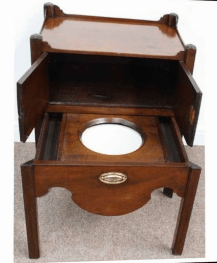
Screen shot 2015-12-16 at 7.55.45 AM.pngFrom my mother’s viewpoint, she had a wonderful bedside table but it had perplexed my father for years since it had a hole in it.



A bit like this one, these Georgian mahogany commodes had a spot for the porcelain chamber pot in that lower drawer.

Pre-indoor plumbing at its most gracious.

My mother’s explanations about the beauty of the wood, the elegance of the form, the particular joy it gave her to pop flowers in the porcelain pot – left my father bemused and seemed to call forth some here-to-fore dormant “man-must-fix-problem-of-hole” instinct.

I knew, without a whisker of doubt, that this reproduction side table my father favored would elicit a reaction closer to nausea than joy from my mother.

From my father’s point of view, he’d totally scored. He’d paid attention to this issue of the hole in his wife’s bedside table; he knew my mother was fussy about furniture and preferred old so clearly new-old, “functional but-elegant” (as the brochure copy reassured him) was clearly what she needed.

I also knew, without a whisker of doubt, that if my mother reacted to his gift with anything other than delight she might as well kiss goodbye to any future attempts. This was my Dad trying something new and it had to go well.

From my point of view . . what can I say?

I desperately wanted my parents to connect. I needed (but did not expect without my intervention ) ~

  • my Mum to see the intention and effort behind the actual (hideous) offering;
  • my Dad to feel effective, like he could get things right with my Mum sometimes;
  • to feel emotionally safe that Christmas.

So – facing my fears  I started down the path of managing expectations, with a delightfully unexpected outcome.

I spent time looking at the catalog with my Dad, making appreciative noises and steering him toward what I thought was the least objectionable choice. He settled upon a piece that would more or less fit the space the Georgian commode occupied. It was lower (a much better height don’t you think Gem? ) and given the “some assembly required” warning, I felt the two of us could put it together with minimal chaos.

And then I agonized as to what to do about my Mum’s reaction. Would she wince and smile wanly? Would my Dad notice her lack-luster response? Would she run from the room in tears? Which, as I thought about it, would be preferable as I could interpret this for my Dad as “tears of joy.”

But maybe she would be genuinely delighted. I mean – how many years had she wanted him to make an effort?  Who was I to blow the surprise? And around the worry wheel I’d go again.

Fortunately, a truck delivered the large flat package on a Saturday while mum was out shopping. The box was clearly crushed on one corner which initially my father did not notice. We smuggled it up to his study and opened the thing.

“Some assembly” is apparently not new to IKEA and as multiple parts spilled out from the crushed cardboard box my father’s face took on a look of mounting horror. We encountered ~

  • 4 spindly legs with flimsy off-center screws at the top end;
  • 1 “realistic faux marble” top with a slightly crushed corner;
  • 4 “gilt-embossed” edge pieces which neither one of us remembered from the catalog photo;
  • 1 lower level shelf also graced with “realistic faux marble”;
  • dozens of loose screws and instructions written a language neither of us could interpret.

It dawned of both of us at the same time I think  – the gift was a disaster.

We took to our task however with fine British/Irish fortitude, stoicism and a mis-placed optimism entirely fueled, I remember hazily, by sherry.

Two days later, when we’d done all we could with the side-table, it looked like a distant runner-up at a middle school wood-working expo. There were minimal 90 degree angles. The damaged edge revealed the telltale sawdust of cheap chip-board. The legs with off-centered screws gave the thing a distinct lopsided air.

My father and I surveyed the replacement for the Georgian commode. We were in too deep to bale now. He covered it with a blanket and wrote a gift tag: To Tina, With All Love, Charles.

“It’ll be alright Gem” he said. We both highly doubted it.

Screen Shot 2015-12-15 at 2.20.01 PM


I’d managed nothing concrete with my mother – although I’d tormented myself (and possibly her) with my own version of little hints.

  • “Mum – you like any gifts – right?”
  • “It’s the thought that counts isn’t it? You always say that.”
  • “I don’t mind if I don’t get gifts this year . I mean, Christmas isn’t about the gifts really , is it.”


Screen Shot 2015-12-15 at 2.24.36 PM

Christmas dawned. Our home had filled up with returning sisters;  aunts, uncles and cousins. And the un-nerving presence of my Dad who was showing up in a way I wasn’t used to. Despite the fact mornings were hard for him (he never slept well after the war) he was attentive. He was – what? Nervous? 

For reasons I never fathomed, my father had decided it would bode best for his foray into gift-giving if he positioned his present where it was destined: next to my mother’s bed where the Georgian Commode used to be. So sometime during the day’s festivities he must have made the switch. As the family gift giving wound down and the pile of gifts was replaced by a pile of wrapping paper, my father took deep breath and said, looking at my mother,

“Could you come upstarts? There’s something I’d like to show you?”

I felt all the air leave the room. My hearing went. My heart pounded so violently in my chest I thought folks could hear it. Ought I go up there too? Dad hadn’t invited me. I looked at my mother – kinda sorta hoping she’d fix me with a pleading look. She didn’t.

Oh heavens Charles, what do you need...” but she stood and followed him upstairs.

No one seemed to know how enormous the moment was. The Uncles cracked jokes. The aunts fussed over wonderfully home-made gifts. My sisters did whatever older sisters do when satiated by Christmas. 

I strained to listen.

Screen Shot 2015-12-15 at 9.37.43 PM

It wasn’t until much later that night I caught up with my mother. She’d been gone for ages and then bustled about making sure the guests had libations and the kids were happy and the next food-event served. We all chipped in and the mood was warm, a bit hazy with champagne and brandy and I was altogether exhausted. Finally, I took her arm and asked:

What did Dad want upstairs?” 

“Oh Gem darling, you know perfectly well! Your father gave me an extraordinary  bedside table and told me all about how you helped him choose it, and assemble it, and how he was a bit worried about the quality. But you know, I’m so happy he went through with it. That you both went through with it!”

“But – it’s so ugly, isn’t it!” I ventured, now snuggled into my mother’s bed beside the darned thing.

“Yes, your father and I both agree, it’s a disaster. But neither one of us can remember laughing so hard together for ages and ages and that – my darling – made it the best gift of Christmas!”

I had just asked,   “Will you keep it?”

when my Dad walked into the room.

He answered for her.

She’s agreed to keep it until she can’t stand it any more. And then, you know what, we’ll find someone who needs it. Something born from such noble expectations deserves a good home!”

Wishing you & yours a wonderful Holiday Season.

May you find yourselves long on laughter, short on expectations and filled with gratitude for the chaotic wealth of life, exactly as it is.

  ***************************

FIRST TIME HERE?

This is the penultimate article in a year-long series on the “12-most-important-relationship-skills-no-one-ever-taught-me-in-school-but-I-sure-wish-they-had.”

Click the box for the full list.  →Top 12 Relationship Skills

If you’re interested in reading this blog in sequence, below are links to the series to date, beginning with the first posting at the top.

OVERVIEW

SKILLS FOR UNDERSTANDING

SKILL ONE ~ Recognize (and get to know) the many “yous.”

SKILL TWO ~ Learn how to be pro-active: choose how y’all show up.

SKILL THREE ~ Accept (and get curious about) other peoples’ complexity

SKILLS FOR CONNECTING

SKILL FOUR ~ Master the Art of Conversation

SKILL FIVE ~ Learn How To Listen With Your Whole Self

SKILL SIX ~ Crack The Empathy Nut

SKILL SEVEN ~ Practice Kindness

SKILL EIGHT ~ Negotiate with a Win-Win Mentality

SKILLS FOR RE-CONNECTING

SKILL NINE ~ Build (or rebuild) trust.

SKILL TEN ~ Apologize & “Do Over” When You’ve Blown It

SKILL ELEVEN ~ Forgive and Move On When They’ve Blown It

SKILL TWELVE ~ Let go. Relationships end. You’ll learn, grow and carry on.


In This Moment, Let This Go…

and you’ll open yourself up to more ~

  • calm
  • clarity
  • confidence
  • compassion
  • creativity
  • connection
  • courage
  • happiness
  • patience

in your life and your relationships.

“Seriously?”

You think I’m pulling your leg.

Or writing one of those over-promise/under-deliver catchy titles.

 You know the sort…

“Click here to see THE funniest home video” and you click and it’s just lame.

Screen shot 2015-12-07 at 3.30.55 PM

But I actually mean this.

I really want you to know that there is one thing you are probably holding onto in most – if not all – of your moments and that if you released this one idea, this one belief, everything would shift.

But because you don’t know about this one mind-trap you’re caught in you un-knowingly participate in undermining some really important relationships. Relationships that mean a huge amount to you because you want very much to enjoy your ~

  • partner
  • child
  • parent
  • friend
  • co-worker

but this way of thinking is distorting your view of them.

Before I share this one thing I’m inviting you to release, here’s a personal story about that moment when I first recognized it’s power.

Screen shot 2015-12-08 at 8.03.11 AM.png

In the mid 1980’s I volunteered for the King Country Crisis Clinic because I was terrified a complete suicidal stranger might randomly phone my number one night and shout:

I’ve got a loaded gun. It’s pointed at my head. Give me one good reason not to pull the trigger.

Sounds like an odd fear, but it was hearing a  BBC news story about exactly this that triggered both my concern, and my decision to learn all I could about working with people “in-extremis”.

So, I approached the King Country Crisis Clinic because I figured they’d have to teach their volunteers to handle calls like that. Folks call a crisis line when they’re homeless; frightened of their abusive partner; lonesome; delusional; drunk; about to be evicted; contemplating an overdose and yes – in the midst of what was called “an active suicide.”

By way of learning, we potential crisis-desk-phone-bank volunteers role played practice calls about all sorts of things, and one night it happened. I picked up the phone and heard:

I’ve got a loaded gun. My wife just left and took the kids. I’m broke, alone and done. I’m going to pull this trigger unless you can think of one good reason I shouldn’t.

And I froze!

In the BBC story I write about, the woman responds simply with “Because I don’t want you to” and I was contemplating giving the same response. But time stood still and after a ridiculously long pause during which – had this been a real call – I’m sure I’d have heard gun shot, a trainer materialized by my side. I leapt up from my seat frantically gesturing that she should role-model how this ought to be done.

She settled in and calmly took the phone. Here’s how it went.

*SANDY ~ I’m so glad you’ve called. My name’s Sandy. What may I call you?

BRAD ~ Huh? Call me Brad – why do you care?

SANDY ~ Brad, I care very much. I really hear there’s a part of you in so much pain right now that you’re ready to pull trigger to end your suffering. And Brad, I also hear that there’s another part – a small part maybe but a part of you none-the-less – who picked up the phone just now to see if there might be one good reason not to pull the trigger. Can I speak with that part Brad? Can I speak to that part of you who wants to talk about reasons to live?

(* Confidentiality is important to have everyone feel safe. Real names do not need to be used.)

BINGO!

Sandy had not frozen in the face of the call because she had not seen Brad as 100% suicidal. And in truth, if he had been, he’d have pulled the trigger and not called the help line.

But that’s the magic folks.

Sandy had released her thought that what was coming out of Brad’s mouth, what Brad was saying to her right then, was “the all of Brad.”

She understood that there might be other parts of Brad who might want to speak up but – because we don’t have that Vulcan mind-meld thing quite down yet – we have to say things in a sequence over time.

While she heard that there was a sad, hopeless part of Brad who had teamed up with his take-action-to-end-the-pain part who held the gun, she also heard a different part. The part in fact who initiated the call because this part was holding on to a sliver of hope.

Dramatic as it may sound – this was one of those life-changing “Ah-Has” for me.

I have gone on to study the idea of multiplicity of the mind in greater depth with particular thanks to Richard Schwartz  and his Internal Family Systems model. As a relationship therapist using this idea with my clients, it’s revolutionized not only how much more fun this inner work is, but also how quickly people can make changes that bring them happiness.

It’s an idea that makes all the difference, and I’ll show you why.  But first I’ll remind you that you probably already think this way sometimes.

  • Your friends call to invite you to join them at the pub. You find yourself thinking,”Hum, part of me would love that, but part of me is content reading my book by the fire at home.
  • Your boyfriend sometimes seems like two people. Home with you, out on dates, hanging with your family he’s gentle, funny, kind and thoughtful. But get him around his old college friends and he’s a knuckle-dragging-grunting-monosyllabic throw back. 
  • Or do you remember as a kid, how you were terrified of Sister Francis (if you went to Catholic Boarding school like me), or of Mr. Mean (if you attended another school which hired monsters) and you absolutely knew this person thought of you as a delinquent imbecile permanently up to no good. Until one day you saw them with your parents – and suddenly they beamed sunlight, said kind things, looked at you tenderly and reassured your parents you held “promise.” Huh? 

So why do I make the claim that when you let go of your belief that both you and the person you’re communicating with are totally of one mind  you’ll open yourself up to more ~

  • calm
  • clarity
  • confidence
  • compassion
  • creativity
  • connection
  • courage
  • happiness
  • patience

in your life and your relationships?

Here are 3 reasons.

  1. Because people are so rarely ever of one mind it’s a false and unhelpful assumption.
  2. We’re all complex with layers of thinking we’re mostly oblivious to. I mean right now – what are you thinking? And what do you think about that thought? There – you’ve  already found two parts: the one thinking a particular thought and the one with an opinion about that original thought. And that’s just the start!
  3. Becoming aware of how your thoughts reveal an inner community of parts with a variety of feelings, needs and beliefs means you have options. You go from believing you can sing only one note to becoming aware of your 2 to 3 octave range. Now you can get creative with your responses. And once you start getting creative and flexible, guess what? The folks you’re talking to will feel more expansive and free as well.

Here are 2 examples of how this looks in practice.

WITH A CHILD

Screen shot 2015-12-09 at 9.47.05 AM


Your child is angry or sad, but definitely emoting.

Loudly.

Before you do anything, remember – think Parts!

And these 3 simple steps.

#1  Ask yourself – who am I right now? What parts of me are “up?”

This is important, because how you show up to your child will impact how she shows up.

What context are you in? This tends to impact who we are in any given moment.

If you’re feeling judged (in a supermarket; by your in-laws) you may notice that part of you who parents for the onlookers more than for your child. Maybe you’ll be tempted so hush your child, handle her a bit roughly to show them you mean business, or to get angry back at your judging audience.

If you are feeling supported (with your spouse or friends with kids) you may notice that part of you who is calm and able to prioritize your child’s needs.

Take a breath and notice, and do your best to choose which part you want to show up with. Calm is clearly preferable!

#2  Ask yourself – who is my child right now? What parts of her are “up?”

This is important, because who she is right now will determine who you need to be for her.

What context is she in? What just happened in her world?

What might she be feeling? Jealous? Hurt? Frightened? Lonely? Mad? Frustrated? Kids are complex, but their emotional range when upset tends to reflect one of these feelings. Then say to yourself, “OK, right now, my child is showing me that part of her who feels  [pick one].”

Your job then is not to stop her feeling what she is feeling. Your job is to help her understand and name her experience and help her move on when she is ready. Which could be in 3 seconds, or 30 minutes.

#3  Acknowledge what you see with your child.

Hummm, I see a little girl who’s got a big frustrated feeling going on right now.” [Guess…. she may even correct you if you’re wrong, depending upon her age and level of emotional understanding]

Do you know what she needs?”

If you can separate the child from the feeling – as in you see a girl who is experiencing an emotion rather than a girl who is that emotion then she begins early on to recognize she is more than any one emotion. And, in fact, she can experience several different emotions at the same time.

Usually we say something closer to “I see you’re frustrated.” That’s not bad. It’s shorter and less cumbersome. But do you also see how it blurs the distinction and continues to reinforce that all-of-one-mind, less-helpful thinking?


WITH YOUR SPOUSE

Screen Shot 2015-12-09 at 2.20.25 PM

Your sweetie comes home down-hearted and grumpy.

Typically this goes badly. You try and cheer him up. He gets more distant and you both end up grumpy.

Before you do anything, remember – think Parts!

And these 3 simple steps.

#1  Ask yourself – who am I right now? What parts of me are “up?”

This is important, because how you show up to your partner will impact how he shows up.

What mood are you in? Listen to your thoughts and feelings and see if you can identify –  from the scripts running through your head and emotions running through your body – which parts need your attention right now.

If you notice parts who feel grumpy, drained, or in need of attention after a tough day, it may be hard to give attention because these parts really want to receive it.

If you’re noticing parts who are impatient or excited to get into your next event, it might be hard to listen to your partner because you’re a twitchy little ferret inside.  

Take a breath and notice your choices. You could be honest and let your partner know you’re feeling a bit grumpy and needy too. You can let him know you want to be there for him, but need to go let off steam first and take a run. Or, maybe just noticing these parts will allow them to calm down, and you can listen with neither neediness nor resentment.

#2  Ask yourself – who is my sweetie right now? What parts of him are “up?”

Unlike dealing with a child (see above), your spouse can possibly tell you what’s going on. Or, you may know him so well that as soon as you hear him walk down the hall, you think: “Yup, here comes Grumpy!”

Take heart! Remember, he’s not 100% Grumpy. He’s only somewhat Grumpy. And that will make all the difference.

#3  Acknowledge what you see with your partner.

 “So – I have this sense that Grumpy’s in. Tough day? I really want to listen to you and, I gotta say, I’ll be a whole lot nicer after a run. I was fit to be tied by lunch and still had to make nice to that irritating off-site manager and do most of Felicity’s work. Would you be up for a nice long de-brief over drinks in 45 minutes?

Might not be Grumpy’s first choice, but you’ve probably reminded your complicated sweetie that he is not 100% grumpy . Which means he might bump into a calmer inner part and be much better company when the two of you meet later.

So – now that you’ve heard my claim, which is that when you let go of your belief that both you and the person you’re communicating with are totally of one mind  you’ll open yourself up to more ~

  • calm
  • clarity
  • confidence
  • compassion
  • creativity
  • connection
  • courage
  • happiness
  • patience

in your life and your relationships

What parts come up for you?

* * * * * * * * * * * 

FIRST TIME HERE?

This is the latest article in a year-long series on the “12-most-important-relationship-skills-no-one-ever-taught-me-in-school-but-I-sure-wish-they-had.”

Click the box for the full list.  →Top 12 Relationship Skills

If you’re interested in reading this blog in sequence, below are links to the series to date, beginning with the first posting at the top.

OVERVIEW

SKILLS FOR UNDERSTANDING

SKILL ONE ~ Recognize (and get to know) the many “yous.”

SKILL TWO ~ Learn how to be pro-active: choose how y’all show up.

SKILL THREE ~ Accept (and get curious about) other peoples’ complexity

SKILLS FOR CONNECTING

SKILL FOUR ~ Master the Art of Conversation

SKILL FIVE ~ Learn How To Listen With Your Whole Self

SKILL SIX ~ Crack The Empathy Nut

SKILL SEVEN ~ Practice Kindness

SKILL EIGHT ~ Negotiate with a Win-Win Mentality

SKILLS FOR RE-CONNECTING

SKILL NINE ~ Build (or rebuild) trust.

SKILL TEN ~ Apologize & “Do Over” When You’ve Blown It

SKILL ELEVEN ~ Forgive and Move On When They’ve Blown It

SKILL TWELVE ~ Let go. Relationships end. You’ll learn, grow and carry on.


Letting Go of The Past

When our son Charlie was little he had a passion for sticks.

20151201_122317_2

Every walk to the beach, park or forest it would begin.

First one perfect small one. “Look Mum, it fits in my pocket!”

Then another. Well, who has only one pocket?

And another. This time bigger. Maybe stuffed down a sweater.

Then another, under an arm.

And another, and another, and another.

Until our small boy would be staggering under arms-full of sticks.

I remember one hike up in the deciduous forests of Canada’s Laurentian Shield where the forest floors are awash with straight, smooth, long and perfect sticks. Charlie’s arms were full to overloading and we all knew he could never get all his treasures home on the flight back to Washington State.

Then he saw it: (another) perfect stick.

He looked at his hands, arms, sweater and pockets but they were all full to bursting.

And the enormous truth dawned upon him.

He could not physically carry one more stick.

If he wanted to pick up this stick – this perfect stick – he’d have to let one go.

Maybe more than one.

And he wept bitter tears for a long time at the injustice of this realization: That to take on what you want in this present moment, sometimes you have to let go of what you’re already holding onto and sometimes, it pays to keep a little space for good things yet to come.

Screen shot 2015-12-01 at 10.10.07 PM

At the end of a year spent exploring relationships skills, it seems fitting to talk about letting go.

I mean think about it – making space to flourish in a relationship will most certainly require two hands, both arms and an over-stuffed sweater or two.

There are lots of ways to slice it, but I’m going with the structure of time to show how you can flourish so much more in your relationships to the extent you let go of certain aspects of your ~

  • Past
  • Present
  • Future

Today – I’m focusing on the Past.

* * * * * * * * * * * Screen shot 2015-12-01 at 9.45.47 PM

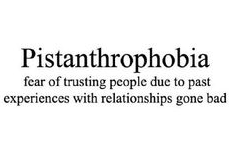
While “Pistanthrophobia” hasn’t yet made it to the Oxford English Dictionary, it is making the rounds of urban and crowd-sourcing haunts and it captures a rather fascinating idea: the fear of trust in present relationships due to bad stuff in times gone by.

The two biggest dead-weights from past relationships that people haul into their present and future are ~

  • Unfinished business, which creates lose ends, puzzle pieces, ghosts of emotions with no place to rest.

Screen Shot 2015-12-02 at 4.22.38 PM

  • Outdated interpersonal strategies which keep you all geared up to slay – and protect you from – dragons long gone.

Screen Shot 2015-12-02 at 2.16.24 PM


1) How to release unfinished business from past relationships

There are so many ways to have unfinished business. Maybe there’s someone in your distant or recent past who ~

  • died
  • moved far away
  • cut you off emotionally
  • divorced or left you
  • remarried
  • became unrecognizably ill 
  • became severely mentally unstable

but you notice that you’re still reacting to this person. Still holding onto resentments, expectations, longings, rage and ghosts of all sorts in this new relationship you are in. Or with your children, or partner or friends.

Usually, if we’ve truly loved the person who’s gone, we’re still looking for wisps of him or her in our current relationships. I have to admit when at age 23 I met my now husband Mark I remember what drew me to him was that he felt somehow familiar (who knows how or why) and that he was very, very kind. These just happened to be two things I was missing desperately after my mother – to whom I was super close – died when I was 19.

Likewise, if we’ve really suffered in a relationship with someone who has now gone we’ll be on high alert to avoid people who remind us of them. If your ex was controlling, you’re likely to hit the roof if your new date says or does anything that even remotely smacks of control. 

While I lucked out with Mark – who happens to have loads of other qualities I also vastly appreciate – I could have been lulled into a marriage simply because I felt particularly needy for familiarity and kindness. 

So – it pays to bring some conscious awareness to these past relationships, to figure out what you love and want more of, and what you didn’t appreciate and want less of. And THE biggest difference in how you release or transform any unfinished business depends upon the ratio of love to loathing.

In other words it’s important to ask yourself ~

  • What aspects of this past relationship do I love so I can celebrate and be grateful for all that was wonderful about this person in my world; grieve what is now lost; and integrate what I cherish so these aspects of this person may be part of my future life?
  • What aspects of this past relationship do I dislike so I can express my negative emotions (like anger, disgust or disappointment) toward the impact of this person on my world; mine the experience for lessons learned so I can work on forgiving both of us; and shift into gratitude for my resiliency now that this experience is in the rear view mirror?

The truth is, very rarely is the person we’ve lost 100% loved or loathed. We are all nuanced human beings, which is why doing this work can be so helpful to you in your current or future relationships. Here are 3 suggestions for how to move through this process.

1. Write.

Hiking at Mount Rainier last week Mark and I stumbled upon a poignant tribute. Tucked into a crevice between 2 rocks was a vase with a posy of recently wilted and now frozen flowers. Nearby was a sodden and blurry note.  I picked it up and tried to decipher the words only to discover it was a letter of release. The writer – whose name I could not decipher but whose hand seemed feminine – wrote: “It is time for me to let you go.” Catching only every few words between smudges she named some things she loved,”You were my rock, my friend, my confidant.” And she named some things she regretted; “But you never came to me for help, you never let your guard down…

She included a poem, and a wish and a blessing and put in the letter that this was going to be her final goodbye. She was moving on.

This is such a wonderful process. Name it all. Bring this person to mind – again no matter the ratio of love to loathing here – name it all. What did you appreciate? What didn’t you? What will you take forward into your life? What will you release?

If you’re more visual you could make a collage using images to represent qualities you want to keep, and qualities you’re ready to release.

The only goal is conscious awareness.

2. Emote.

Anyone who knows me knows I’ve been a total pill over the past year as I’ve worked to gradually sift and sort through what seem to be the ashes of an old friendship. I’ve raged, I’ve cried, I’ve stomped my feet and laughed. And bit by bit I’ve noticed glimmers of peace beginning to settle in. I still get pinged when I’m reminded of things I miss or things that make me mad about this person, but by noticing what I feel when I feel it, and by finding OK ways to express what I feel, I am moving through this process.

I know it all helps. Let it out. Let it out with friends. Let it out under bridges. Let it out in the shower or the forest. Let it out with therapists and spiritual advisers. Be there for yourself as if you were a loving parent with a sad six year old. Nothing to be done but hug, listen and making soothing noises.

3. Grow.

This is your journey. Sure, you can move through your life with blinkers and blinders, getting gifts or wounds and being equally oblivious to both. Totally a choice. But, it is so much more deeply rewarding to be on a journey of self-discovery. To wake up. To notice you have options. To appreciate choosing.

The process of reflecting upon past relationships to discern what you want to be grateful for and integrate is one of the best gifts you can give  yourself, and those around you.

So, take charge. Decide how you want this to go. What do you need to do? Whom do you want around for support? What can you call in to help?

Beginning this journey with the end in mind, it can be helpful to have a sense for how you want this to go. Maybe a gentle intention,  something along the lines of ~

X is no longer with me. I am choosing to feel love and appreciation for these things [list], and I am choosing to release with gratitude for lessons learned, these things [list].  Today is a fresh start and I’m glad I get to grow from all that life offers.”

(Or whatever you want to say – remember, you’re the boss of this enterprise!)

2) How to release outdated interpersonal strategies designed to protect against dragons long gone.

Screen Shot 2015-12-02 at 5.22.24 PM

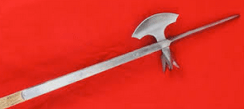
When I married Mark and moved to the USA from England, I was hauling a vault full of armor, spears, shields and defensive sling-shots from my childhood.

I’d built my protective layers and excellent arsenal in reaction to some pretty brutal nuns at boarding school; a family who loved me but had issues (surprise!); and from the recent, sudden death of the person I loved and depended upon most in the word – my mother.


Here’s what that looked like:

Because the nuns didn’t approve of whining and complaining, I had decided long ago never to ask for what I wanted, since not only was I unlikely to get it, I’d be criticized or ridiculed for even asking: for even having needs!

HINT: This is NOT a helpful strategy for making a marriage work!

SOLUTION: The hard way? Day by day, issue by issue – Mark had to work with me to show up; to risk having an opinion; to risk making a suggestion; to say no. That, and group therapy and good friends.

The youngest of five daughters, I was acutely familiar with how tough my parent’s marriage became  & I began to think in rather black-and-white terms: my mother was right, my father was wrong. I extrapolated that right/wrong thinking into all sorts of unhelpful places.

HINT: This is NOT a helpful strategy because it cuts you off from people who are nuanced, rich, complex and very interesting.

SOLUTION: When a strategy seems to be too small, too restrictive, too limiting – it’s a great time to examine it. Maybe then you’ll realize you’ve outgrown it and can let it go.

Because I grew up in an English/Irish family who didn’t discuss emotions, I was fabulously guarded against ever being seen as not OK. No whining, no complaining, no feelings, no needs and certainly no therapy for me thank you very much!

HINT: This strategy self-destructs. At some point, one’s bottled up emotions come spewing out as depression, anger, illness… trust me. It all comes out.

SOLUTION: When it comes out (see above) get help. It’s a fabulous opportunity to learn about feelings and needs.

When my mother died, I decided the pain of losing someone I loved so very much was not anything I ever wanted to go through again, so I built a deep and effective moat around my emotional core. It’s marvelous for keeping people at bay. Not so great when I need or want to let someone in.

HINT: Love and loss go hand in hand. 

SOLUTION: There are NO guarantees so this one too had to be re-examined. I had to face the risk of losing Mark before I could love him. I had to risk the pain of losing a child, before I felt I could bring one into my heart. I don’t like that vulnerable place it puts me – but I like it more than not having made these choices.

Screen shot 2015-12-02 at 8.27.24 PM

Not to rain on your parade or anything, but you have your own armor too. You’ve been putting it on, one piece at a time, since birth. You’ve been putting it on so slowly that you possibly don’t even notice you are wearing it nor feel it’s weight around your heart.

How to release these outdated protectors is as unique as your protection. But there are three super simple little tips:

  1. Know that when you impulsively react – as opposed to thoughtfully respond – to some interpersonal challenge, that’s your old, outdated protection leaping to the rescue.
  2. If you pay attention to that reaction, to that impulse, you can follow it inside and get to know it more by asking yourself:  When I just reacted that way, what did I not want to feel? What was I protecting myself from?
  3. If you can find out what feeling you did not want to feel – what it was your protector was protecting you from – ask yourself, “What do I need so I can be more OK with this feeling now?  Can I be there for myself when I feel pain, loss, shame, fear, vulnerability, loneliness?

Example:

Your partner says – I’ve invited the neighbors over for BBQ on Saturday.

You react with – I can’t believe you did that without checking with me! I’ve got a totally full weekend and now it’s up to me to put on a huge social event!

Your partner says – Hey, relax! I’ve already shopped. I’ll cook. I thought you’d appreciate the night socializing.


Step 1 – You notice you reacted strongly and with disapproval.

You could have responded from a much less reactive place, e.g.,  

  • Thanks, great idea!
  • Oh – tell me how you see the evening unfolding?
  • Oh boy – a sweet idea but I feel a bit overwhelmed actually – I’ve filled my weekend up so tight. Can we talk about it?

Step 2 – Notice what you did not want to feel.

Truth is – if you are honest – you didn’t want to feel judged by these new neighbors. You’re feeling out of shape, tired, the house is a mess and the yard’s not much better. It triggered some old vulnerabilities about not being “good enough”.

Step 3 – What do you need to be OK with this feeling?

Probably own it and talk about it with my partner. “You know, I had this flash of fear of being judged by those new neighbors. They’ve fixed up that place so lavishly. But, if I slow it down, I love our old place and goodness, I really am ready to let go of keeping up with the Jones. Hmm…isn’t their last name Jones?!

By all means pick up a few sticks in life, but let yourself put some down as they become heavy and unwieldy. And leave a little space for that just perfect one you may find – tomorrow.

Screen Shot 2015-12-02 at 7.31.11 PM

NEXT WEEK – how to let go of some aspects of this present moment to improve your relationships.

* * * * * * * * * * * 

FIRST TIME HERE?

This is the latest article in a year-long series on the “12-most-important-relationship-skills-no-one-ever-taught-me-in-school-but-I-sure-wish-they-had.”

Click the box for the full list.  →Top 12 Relationship Skills

If you’re interested in reading this blog in sequence, below are links to the series to date, beginning with the first posting at the top.

OVERVIEW

SKILLS FOR UNDERSTANDING

SKILL ONE ~ Recognize (and get to know) the many “yous.”

SKILL TWO ~ Learn how to be pro-active: choose how y’all show up.

SKILL THREE ~ Accept (and get curious about) other peoples’ complexity

SKILLS FOR CONNECTING

SKILL FOUR ~ Master the Art of Conversation

SKILL FIVE ~ Learn How To Listen With Your Whole Self

SKILL SIX ~ Crack The Empathy Nut

SKILL SEVEN ~ Practice Kindness

SKILL EIGHT ~ Negotiate with a Win-Win Mentality

SKILLS FOR RE-CONNECTING

SKILL NINE ~ Build (or rebuild) trust.

SKILL TEN ~ Apologize & “Do Over” When You’ve Blown It

SKILL ELEVEN ~ Forgive and Move On When They’ve Blown It

SKILL TWELVE ~ Let go. Relationships end. You’ll learn, grow and carry on.

  • Let go of the past